
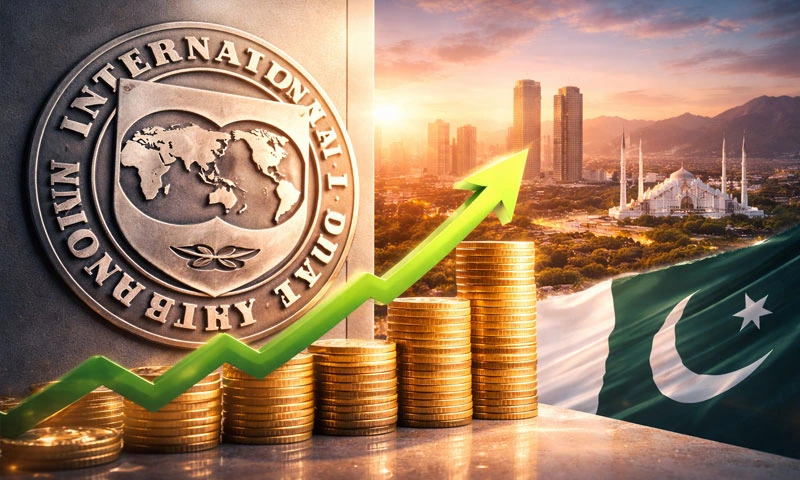
The International Monetary Fund (IMF) has welcomed Pakistan’s continued implementation of economic reforms and confirmed that a review mission will visit the country from February 25, 2026, to assess progress and discuss the next step under its financial support programme. IMF officials said the government’s policy efforts are stabilising the economy, curbing inflation and rebuilding investor confidence.
The IMF is expected to begin formal discussions with Pakistani authorities in the last week of February as part of the third review under the Extended Fund Facility (EFF) and the second review under the Resilience and Sustainability Facility (RSF). These reviews determine the pace of future funding and policy adjustments under Pakistan’s ongoing IMF-supported programme.
Read More: IMF, Pakistan Discuss Electricity Tariff Revisions with Focus on Protecting Households
According to IMF spokesperson Julie Kozack, Pakistan’s fiscal performance has shown marked improvement under the EFF. She noted that the economy has posted a primary fiscal surplus of 1.3 percent of GDP for the fiscal year 2025, a key indicator that Pakistan is aligning with IMF-agreed targets. Kozack added that inflation has remained relatively contained while the country recorded its first current account surplus in 14 years.
Focus Areas of the Review Mission
The IMF mission will spend about two weeks in Pakistan, reviewing economic performance from July to December 2025. Officials will examine progress on key policy benchmarks, including tax reforms, energy sector restructuring, monetary policy implementation and foreign exchange reserve management. This in-depth assessment will guide recommendations for future reforms and disbursements.
Officials will also discuss privatisation progress, including developments related to the Pakistan International Airlines (PIA), a critical element of structural reform under the IMF programme. Evaluators will analyse whether reforms have translated into tangible performance gains and compliance with agreed fiscal targets.
Read More: Moody’s Revises Pakistan’s Banking Outlook to Stable: What It Means for the Economy
The IMF’s latest Governance and Corruption Diagnostic Report has outlined a range of reform proposals aimed at increasing transparency, simplifying tax policy design, creating a level playing field in public procurement and improving asset declaration systems. Pakistan has responded with a 15-point action plan to address these issues and strengthen institutions.
Background and Broader Context
Pakistan first entered an IMF programme in September 2024 through a $7 billion Extended Fund Facility, aiming to stabilise its economy after years of macroeconomic instability. The country had faced a severe economic crisis between 2021 and 2024, marked by inflation spikes, foreign exchange shortages and rising public debt. Recent IMF reviews, including one completed in December 2025, endorsed Pakistan’s reform agenda and enabled the release of about $1.2 billion in funding.
Read More: Pakistan Declares Export Emergency to Transform Economy
Outlook and Expectations
Economists say continued progress on reform benchmarks could unlock further IMF funds and build investor confidence. Officials expect enhanced macroeconomic resilience and improved fiscal discipline if Pakistan maintains its commitments during the upcoming review mission.
The mission’s outcome could shape Pakistan’s economic policy priorities in the near term, influencing budget framing, tax strategies and structural reforms designed to support long-term growth and stability.