

As temperatures rise across the globe, a disturbing trend is gaining attention: domestic violence against women tends to increase during hot weather and heatwaves. Multiple studies from different regions show a clear connection between higher temperatures and a rise in intimate partner violence, highlighting an often-overlooked social impact of climate change. Research indicates that even moderate increases in temperature can lead to heightened aggression and conflict within households, disproportionately affecting women. Scientific evidence confirms alarming trend A growing body of global research confirms that domestic abuse incidents rise during warmer days. A large-scale study found that domestic violence increases when temperatures exceed 27°C, pointing to a direct link between heat and aggression. Another analysis of nearly one million incidents revealed that “violence increased with warmer weather” and that the effect of heat was stronger on domestic violence than other types of crime. Researchers have also found that for every 1°C rise in temperature, cases of physical violence against women can increase by over 4 percent in South Asia. Heatwaves intensify risk of severe violence The danger becomes even more severe during extreme heat events. Studies from Spain showed that the risk of intimate partner femicide increases significantly following heatwaves, with incidents peaking just days after temperatures surge. In some cases, abuse rates have been found to rise by up to 28 percent during prolonged heatwaves, underscoring the scale of the problem. Similarly, research in New Orleans linked extended periods of extreme heat to spikes in emergency calls related to domestic violence. Why heat triggers violence Experts say the relationship between heat and violence is complex, involving both psychological and social factors. Extreme temperatures can increase irritability, stress, and sleep disruption, all of which can escalate conflict within households. Heat is also associated with increased alcohol consumption and reduced tolerance, further contributing to aggressive behavior. Additionally, during very hot weather, people tend to stay indoors more often, increasing prolonged exposure between victims and abusers, which can heighten the risk of violence. Climate change worsening the crisis With global temperatures rising due to climate change, experts warn that domestic violence could become more frequent in the future. Studies suggest that extreme heat plays a “dominant role” in increasing the risk of violence in intimate relationships, especially in low- and middle-income countries. Regions like South Asia, including Pakistan, are particularly vulnerable due to rising temperatures and existing social inequalities. A hidden public health emergency Domestic violence is already one of the most widespread human rights violations globally, and the link with heat adds a new layer of urgency. Experts argue that climate policies must consider social impacts such as gender-based violence, alongside environmental and economic concerns. They also stress the need for stronger support systems, including helplines, shelters, and awareness campaigns, especially during extreme weather events. Growing call for action As awareness grows, policymakers and advocacy groups are urging governments to integrate gender-based violence prevention into climate response strategies. This includes early warning systems, community support networks, and targeted interventions during heatwaves. The emerging evidence makes one thing clear: rising temperatures are not just an environmental crisis but also a social one, with women often bearing the greatest burden.

Heart Surgeon Reveals 4 Habits That Can Change Your Life
A leading cardiovascular surgeon has highlighted four simple yet powerful lifestyle habits that can significantly improve overall health in 2026, emphasising that small daily changes can lead to long-term benefits for both physical and mental wellbeing. Consistency in Sleep is Key Dr Jeremy London, a board-certified cardiovascular surgeon with over 25 years of experience, stressed the importance of maintaining a consistent sleep schedule. He noted that going to bed at the same time every night is just as important as waking up at a fixed time. Experts say consistent sleep supports the body’s natural circadian rhythm, which regulates vital functions such as heart rate, metabolism, and hormone levels. Poor or irregular sleep patterns can increase stress hormones and strain the cardiovascular system over time. Health professionals generally recommend seven to eight hours of quality sleep each night for optimal recovery and heart health. Daily Walks After Meals Another key habit suggested by Dr London is taking short walks after meals. According to him, even a brief walk can improve digestion and help regulate blood sugar levels. Research shows that post-meal movement can reduce glucose spikes and improve metabolic health, which plays a crucial role in preventing heart disease and diabetes. Stay Hydrated Throughout the Day A newly emphasised habit is maintaining proper hydration. Drinking adequate water throughout the day supports blood circulation, helps regulate body temperature, and reduces strain on the heart. Medical experts note that dehydration can thicken the blood slightly, making it harder for the heart to pump efficiently. Staying hydrated also improves energy levels, focus, and overall bodily functions. Weekly Aerobic Exercise Matters The fourth habit highlighted by the surgeon is engaging in regular aerobic exercise at least once a week. Activities such as running, cycling, or swimming help strengthen the heart, improve circulation, and boost overall fitness. Experts recommend combining aerobic exercise with moderate daily activity to maximise health benefits and reduce the risk of chronic diseases. Small Changes, Big Impact Dr London emphasised that these habits are not extreme or difficult to follow, but their effectiveness lies in consistency. “Going to bed at the same time” and maintaining routine lifestyle patterns can create long-lasting health improvements when followed regularly. Health specialists agree that simple, sustainable habits are often more effective than drastic lifestyle changes, which are harder to maintain over time. Growing Focus on Preventive Health The advice comes at a time when preventive healthcare is gaining global attention. Experts increasingly stress that lifestyle choices play a larger role in long-term health than genetics alone. With rising cases of heart disease, diabetes, and lifestyle-related illnesses, adopting healthier routines has become more important than ever.

Top Tips for Diabetics Who Want to Fast This Ramadan
Ramadan fasting means no food or drink from dawn to sunset, and it is a central religious obligation for healthy adult Muslims. However, Islam allows exemptions for people whose health would be harmed by fasting, including some people with diabetes. Islamic jurists explain that if fasting may harm a sick person, they may break the fast and make up later or offer fidyah (feeding a poor person) instead. Even so, many Muslims with diabetes still desire to fast. Clinicians and diabetes organisations agree that some people with diabetes can fast safely, but only with careful planning, monitoring, and medical guidance. Consultation and Pre-Ramadan Planning Before Ramadan begins, people with diabetes should visit a healthcare provider. A pre-Ramadan medical assessment reviews overall health, blood sugar control, medications, and complications. This allows the doctor to classify risk and individualise plans. Patients who are at high risk (e.g., frequent low sugars, kidney issues) may be advised not to fast or to plan partial fasting under supervision. A structured education session reduces complications. Research shows patients who received education about Ramadan saw fewer episodes of dangerously low sugar compared with those who did not prepare. Read More: The Science of Ramadan Fasting: What 30 Days Does to Your Body Monitoring Blood Sugar Does Not Break the Fast One common worry is whether testing glucose during fasting breaks the fast. Medical and Islamic authorities agree that checking blood sugar does not invalidate the fast, because it does not involve eating or drinking. Regular monitoring helps detect dangerously high or low levels early and keeps fasting safer. Doctors often recommend checking glucose multiple times: before suhoor, midday, before iftar, and after iftar, and whenever unwell. Clear targets such as keeping glucose above 70 mg/dL are used, and levels below or above safety thresholds mean the fast should be broken immediately. Medication and Diet Adjustments Medication timing and doses often need adjustment. People on insulin or certain tablets are at increased risk of low blood sugar during the day. Healthcare providers may recommend changing when insulin is given, especially rapid-acting types which are usually taken at iftar and suhoor. Oral diabetic medicines may need dose reduction or switching. At suhoor, eating slow-release carbohydrates, protein, and plenty of water helps sustain energy and reduces glucose swings. At iftar, breaking the fast with balanced food and avoiding high-sugar heavy meals prevents a sharp post-fast rise in glucose. Read More: The Resilience of Ramadan: How Faith Survives Conflict and Loss When to Break the Fast Most health guidance emphasises that if blood sugar falls below 70 mg/dL or rises above 300 mg/dL, the fast must be broken immediately and treatment started. Symptoms like dizziness, shaking, confusion, or weakness are warning signs of hypoglycemia or hyperglycemia that need urgent action. The Bottom Line Many people with diabetes can participate in Ramadan fasting safely if they plan ahead with their healthcare team, monitor glucose often, adjust medications appropriately, and listen to their body. Islamic rulings support exemptions for those who would be harmed, and glucose testing does not break the fast.
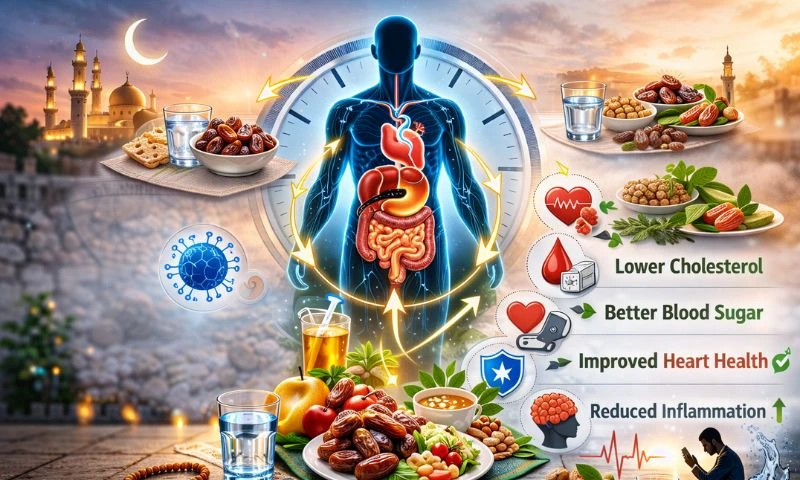
The Science of Ramadan Fasting: What 30 Days Does to Your Body
Ramadan fasting differs from popular diet trends because it involves abstaining from food and drink from dawn to sunset for 29 to 30 consecutive days. Unlike continuous calorie restriction, Ramadan fasting follows a daily cycle of fasting and refeeding. Scientists classify it as a form of intermittent fasting with time-restricted eating. So what does a full month of Ramadan fasting actually do to the body? Metabolic Reset and Fat Utilization During the fasting hours, the body first uses stored glucose. After several hours, it begins shifting toward burning fat for energy. Researchers describe this as “metabolic switching.” A review published in the New England Journal of Medicine explains: “Periods of dietary energy restriction sufficient to cause depletion of liver glycogen stores trigger a metabolic switch.” This shift increases fat oxidation and ketone production. Studies specifically on Ramadan fasting show measurable metabolic improvements. A 2019 systematic review in Nutrients found that Ramadan fasting is associated with modest weight loss, reduced body fat percentage, and improvements in lipid profiles, especially in healthy adults. Most participants lose between 1 to 3 kilograms during Ramadan, according to pooled analyses. Some weight may return after the month, but improvements in cholesterol markers often persist for weeks. Cholesterol, Blood Pressure, and Heart Health Cardiovascular health markers frequently improve during Ramadan. A review published in the Journal of the American Heart Association found that Ramadan fasting was linked to reductions in LDL cholesterol and triglycerides, particularly when diets were balanced. Blood pressure often declines as well. Research published in Frontiers in Nutrition showed that both systolic and diastolic blood pressure decreased modestly during Ramadan in many participants. These changes are linked to improved insulin sensitivity, better fat metabolism, and structured meal timing. Blood Sugar and Insulin Sensitivity Ramadan fasting can improve insulin sensitivity in healthy individuals. A study in Diabetes Research and Clinical Practice reported improved glycemic control in many fasting participants, particularly those who maintained balanced iftar meals. Lower insulin levels during fasting hours allow the body to access stored fat more efficiently. However, people with diabetes must fast under medical supervision, as blood sugar fluctuations can pose risks. Inflammation and Cellular Repair Emerging evidence suggests Ramadan fasting may reduce inflammation. A study published in Annals of Nutrition and Metabolism found decreases in inflammatory markers such as CRP after Ramadan. There is also growing interest in autophagy, the body’s cellular repair process. While human evidence is still developing, fasting periods are associated with biological pathways that support cellular clean-up and renewal. Mental and Hormonal Effects Beyond metabolism, Ramadan fasting influences hormones such as cortisol and growth hormone. Many participants report improved focus and mood stability after the first adjustment phase. Sleep changes can occur, especially due to late-night prayers and early suhoor meals. Studies note that sleep quality plays a key role in determining overall benefits. The Bottom Line A month of Ramadan fasting can lead to modest weight loss, improved cholesterol levels, better blood sugar control, reduced blood pressure, and lower inflammatory markers in healthy adults. The benefits depend heavily on food quality, hydration after sunset, and sleep patterns. Ramadan fasting works best when iftar meals avoid excessive sugar and fried foods. Science shows that when practiced safely, Ramadan fasting can offer measurable metabolic and cardiovascular benefits. It is not just spiritual discipline. It is also a structured metabolic reset.

How to Lose Weight During Ramadan: Simple Expert Tips That Work
Ramadan is not only a time for spiritual reflection and fasting but also a period when many people aim to improve their health and manage their weight. While skipping food from dawn (Suhoor) to sunset (Iftar) burns calories naturally, unhealthy eating after sunset can undo fasting benefits. Experts now say that with a few smart changes, you can lose weight in Ramadan without compromising your energy or health. Why People Gain Weight in Ramadan Although fasting reduces eating hours, many people tend to overeat high-calorie foods at Iftar and Suhoor. Sugary drinks, fried snacks like samosas, and heavy desserts lead to excess calories, poor sleep, and bloating. Read More: The Best Mobile Apps to Track Sleep, Hydration and Fitness in Ramadan Nutritionist Dr. Shameem Ahmed notes, “People often break their fast with sweet drinks and fried food. These choices spike blood sugar and cause weight gain rather than help with weight loss.” This shows that food quality matters as much as fasting itself. Expert-Recommended Tips for Weight Loss in Ramadan Health professionals suggest simple changes that help maintain energy while promoting fat loss: 1. Start Iftar With Water and Dates Drink water first to rehydrate and eat one or two dates for natural sugars. This helps control hunger and prevents eating large portions later. Dates also provide important vitamins and potassium. 2. Choose Protein-Rich Meals Include lean proteins such as chicken, fish, lentils, or eggs at Suhoor and Iftar. Protein boosts metabolism and keeps you full longer, reducing snack cravings later at night. 3. Avoid or Cut Back on Fried Foods Fried snacks like pakoras and samosas are high in calories and fat. These foods cause weight gain and digestive discomfort. Replacing them with baked or grilled alternatives can help control calorie intake. Read More: The Smart Ramadan Shopping Plan That Cuts Costs Without Cutting Joy 4. Limit Sugary Drinks and Desserts Sweet drinks and sugary desserts add calories without nutrition. Try herbal teas, fresh fruit, or plain yogurt instead. Reducing sugar also helps improve energy levels during fasting hours. 5. Stay Active, Even Lightly Gentle activity such as a short walk after Iftar can boost digestion and burn calories. Moderate exercise does not need to be intense; consistent movement helps keep your metabolism active. 6. Eat Balanced Suhoor for Sustained Energy Suhoor should include slow-digesting carbohydrates like oats, whole wheat toast, and fruits. These foods provide sustained energy and prevent hunger pangs later in the day. Why These Changes Work Experts say that losing weight in Ramadan is less about eating less and more about eating smart. A balanced diet that focuses on hydration, protein, healthy fats, and fiber helps control hunger, regulate metabolism, and prevent energy crashes. Read More: 5 Morning Drinks to Kickstart Weight Loss in 2026 Dr. Ahmed adds, “Fasting gives your body a break, but what you eat at Iftar and Suhoor sets the tone for weight loss or gain.” This underlines the importance of mindful eating during Ramadan. Gentle activity such as a short walk after Iftar can boost digestion and burn calories. Moderate exercise does not need to be intense; consistent movement helps keep your metabolism active.

Doctors Say Many Cancers Are Preventable: New Global Data Explains Why
A major new global analysis has revealed that nearly four out of every ten cancer cases worldwide could be prevented through lifestyle changes and public-health actions. The World Health Organization (WHO) and its cancer research arm, the International Agency for Research on Cancer (IARC) published the findings ahead of World Cancer Day on February 4, 2026. The study, published in Nature Medicine, analysed cancer incidence data from 185 countries and 36 cancer types, focusing on 30 known modifiable risk factors. Researchers found that about 37–40% of new cancer cases in 2022 — roughly 7.1 million diagnoses — were linked to causes people and governments could influence. Read More: Pancreatic Cancer: The Silent Killer and the Science Breakthrough No One Expected According to WHO Team Lead for Cancer Control Dr André Ilbawi, this is “the first global analysis to show how much cancer risk comes from causes we can prevent.” He added that the data provide “governments and individuals with actionable evidence to stop many cancers before they start.” Top Preventable Causes The study identified tobacco use as the leading preventable cause, linked to around 15% of new cancer cases globally. Infections — including HPV (human papillomavirus) and Helicobacter pylori — accounted for 10%, and alcohol consumption contributed about 3% of new cancers. Read More: Sound Therapy Breakthrough: Could 40 Hz Frequency Treat Alzheimer’s? Experts say lung, stomach, and cervical cancers together make up nearly half of all cancers linked to preventable risk factors. Lung cancer showed strong associations with smoking and air pollution. Stomach cancer was heavily tied to bacterial infections, while cervical cancer was most often linked to HPV. Regional and Gender Differences The analysis also found significant differences in preventable cancer rates across regions and between sexes. About 45% of new cancer cases in men were related to preventable risks, compared with 30% in women. Risk factor exposure varied by region. East Asian men had the highest proportion of preventable cancer, while rates among women were highest in sub-Saharan Africa. Researchers say these patterns reflect differences in lifestyle, pollution exposure, healthcare infrastructure, and prevention policies. What This Means for the Public Health experts emphasize that many of these risk factors are linked to daily behaviors and environmental exposures. Avoiding tobacco, reducing alcohol intake, maintaining a healthy body weight, increasing physical activity, and reducing air pollution are key steps. Vaccinations, like those for HPV, can also cut the risk of certain cancers significantly. Read More: No Gym, No Problem: A Simple 2-Day Split to Get Stronger Fast The findings underscore that cancer is not always inevitable. Public health initiatives that focus on prevention, early screening, and lifestyle education have the potential to reduce the global cancer burden dramatically. As the global community marks World Cancer Day, officials are urging countries to invest more in prevention strategies and stronger health systems.

Anxiety Isn’t Just Overthinking: The Symptoms People Miss and What Helps
Anxiety is a normal human alarm system. It can help you prepare, focus, and stay safe. But when fear and worry become constant, intense, or hard to control, anxiety can shift from a feeling into a health condition that affects sleep, work, relationships, and the body. The scale is not small. The World Health Organization says 359 million people were living with an anxiety disorder in 2021, making it the most common group of mental disorders, and estimates about 4.4% of the global population experiences an anxiety disorder. What anxiety looks like in real life Anxiety doesn’t always look like “panic.” Many people feel it first as physical discomfort, a racing mind, or an inability to relax. Common symptoms include: Persistent worry that feels hard to stop Restlessness, irritability, or feeling “on edge” Trouble concentrating Sleep problems (difficulty falling asleep or staying asleep) Fast heartbeat, tight chest, shortness of breath Stomach issues, nausea, or changes in appetite The World Health Organization describes anxiety disorders as involving “excessive fear and worry” and notes symptoms can be severe enough to cause “significant distress or significant impairment in functioning.” Triggers: why anxiety can rise over time Anxiety is often fueled by a mix of biology, stress exposure, and daily habits. Common triggers include: Work pressure, financial stress, or family conflict Major life changes (moving, marriage, childbirth, exams) Trauma, illness, or ongoing health worries Stimulants (too much caffeine or energy drinks) Poor sleep and lack of movement Research tracking anxiety burden shows it is widespread and persistent across countries and age groups. When it becomes a health issue A good rule: it’s time to take anxiety seriously when it is frequent, lasts weeks, and starts shrinking your life. Red flags include: Avoiding normal tasks (work, social events, travel) due to fear Repeated physical symptoms that don’t match medical tests Panic attacks or sudden surges of fear Anxiety that disrupts sleep most nights Using alcohol, nicotine, or sedatives to cope If you ever feel unsafe or have thoughts of self-harm, seek urgent support from local emergency services or a trusted medical professional right away. What treatment actually works The evidence-backed approach is not “one-size-fits-all.” Many people improve with therapy, medication, or both—plus practical lifestyle support. The National Institute of Mental Health states: “GAD treatment typically involves psychotherapy, medication, or both.” Clinical guidelines also support a stepped-care approach, where cognitive behavioral therapy (CBT) is a key option, and medications such as SSRIs/SNRIs are commonly used when needed. Lifestyle changes help too, especially as “maintenance”: consistent sleep timing, regular walking, reducing caffeine, and building stress skills (breathing exercises, journaling, time boundaries). They don’t replace care when symptoms are severe—but they can reduce relapse and improve day-to-day control.

Pakistan Tightens Traveller Screening to Block Nipah Virus Entry
Pakistan has ordered strict and enhanced health screening of all travellers at international borders, airports, seaports and land crossings to guard against the Nipah virus threat, authorities announced this week. The move aims to prevent cross-border transmission after recent confirmed cases in West Bengal, India. The Border Health Services-Pakistan (BHS-P) under the Ministry of National Health Services issued a comprehensive advisory directing 100% health screening for arriving travellers, including passengers, crew members, drivers and support staff. Travel and transit histories from the past 21 days must be verified for everyone entering the country, regardless of nationality or status. The enhanced screenings will involve thermal checks and clinical assessments to detect early symptoms such as fever, headache, respiratory distress and neurological signs like confusion or altered consciousness. Anyone showing signs consistent with Nipah virus infection will be isolated immediately and restricted from onward travel, and then referred to designated isolation facilities or tertiary care hospitals. Officials emphasised that every traveller must be granted health clearance by BHS-P before entering Pakistan. False declarations of travel origins or concealment of travel history will be treated seriously and reported for further action. Nipah virus, carried naturally by fruit bats and sometimes pigs, is classified by the World Health Organization (WHO) as a priority pathogen due to its high fatality rate — ranging from 40% to 75% — and potential for human-to-human spread through close contact. There is currently no approved vaccine or specific cure. Health authorities have also urged provincial labs to strengthen capabilities for safe sample handling and transport, and rapid response teams are to be placed on standby for contact tracing and cluster investigations if a suspected infection emerges. While no human cases have been reported in Pakistan so far, the National Institute of Health (NIH) issued alerts to healthcare providers and authorities, warning that outbreaks in neighbouring regions could pose risks. Reuters reported that India has confirmed Nipah virus cases in West Bengal, prompting increased screening across the region. Experts have stressed vigilance but also cautioned against panic. Prof Dr Javaid Usman, a microbiologist, noted that the virus spreads through droppings from fruit bats and pig contacts, meaning any introduction to Pakistan would likely occur via carriers rather than community transmission. Infectious disease expert Dr Rana Safdar explained that Nipah outbreaks have occurred sporadically in South and Southeast Asia. “The risk of spread to surrounding countries thus far remains moderate to low, but surveillance and preparedness must stay strong,” he told Dawn. Public health authorities are urging returning travellers who develop symptoms within 21 days of exposure to self-isolate, seek medical care early and share their travel history with providers.

Pancreatic Cancer: The Silent Killer and the Science Breakthrough No One Expected
Scientists in Spain have taken a major step forward in the fight against pancreatic cancer, one of the deadliest forms of the disease. Researchers led by Dr. Mariano Barbacid, a prominent Spanish molecular biochemist, have developed a triple-drug combination therapy that completely erased pancreatic tumors in mice — an achievement that could pave the way for future human treatments. Pancreatic cancer is notoriously aggressive, with most patients diagnosed at a late stage and fewer than 10% surviving five years after diagnosis. This poor prognosis is due in part to the cancer’s resistance to traditional therapies and its complex biology. The new study, conducted at the Spanish National Cancer Research Centre (CNIO) in Madrid, used a combination of three drugs that together target key pathways in tumor growth. In laboratory mice with the most common and lethal type of pancreatic cancer — pancreatic ductal adenocarcinoma (PDAC) — the therapy not only eliminated tumors but also prevented them from returning over extended observation periods. 🚨🇪🇸 BREAKING — Spanish Scientists Cured Pancreatic Cancer in Rats. pic.twitter.com/F4GSpN8Ed7— ✦✦✦ 𝙿𝚊𝚖𝚙𝚑𝚕𝚎𝚝𝚜 ✦✦✦ (@PamphletsY) January 28, 2026 What makes this development particularly remarkable is that the triple therapy appears to work without significant toxicity. In the mouse models, animals remained tumor-free for months after treatment and showed few side effects. The research was published in the Proceedings of the National Academy of Sciences (PNAS), emphasizing its scientific significance. Dr. Barbacid is not new to cancer research. He is widely recognised for his earlier work isolating the first human oncogene — a gene that can transform normal cells into cancer cells — which laid the foundation for understanding malignant growth at a molecular level. Experts caution that success in animal models does not guarantee a cure for humans yet, but the results are undeniably promising. Translating these findings into clinical trials will require careful safety evaluation, regulatory approvals and likely several years of additional research. Still, the progress marks a critical milestone in pancreatic cancer science. Pancreatic cancer research is advancing on multiple fronts. Other groups worldwide are exploring innovative treatments such as immunotherapy combinations, targeted gene inhibitors, and new diagnostic tools for early detection — all aimed at overcoming the disease’s biological defenses. For example, novel immunotherapy strategies are showing promise in preclinical models by encouraging tumor regression, and new blood tests may help detect pancreatic cancer at an earlier, more treatable stage. The CNIO breakthrough adds a powerful new candidate to the growing list of experimental therapies. If future research confirms these results in human clinical trials, it could one day transform treatment for a cancer type that today offers patients very limited options.

Nipah Virus Explained: Symptoms, Risks and Why Authorities Are on Alert
Health authorities across South Asia are on alert after India confirmed an outbreak of the Nipah virus (NiV) in the eastern state of West Bengal in January 2026. This deadly virus has a high fatality rate and no approved vaccine or specific treatment, causing concern among healthcare officials and travellers. The outbreak was linked to a cluster of cases around Kolkata and nearby districts. Five confirmed infections were reported, and dozens of people who had close contact with the patients were placed under home quarantine. At least one case was critical, and medical teams immediately launched contact tracing to contain further spread. Nipah is a zoonotic virus carried by fruit bats, pigs and other animals. It can transmit to humans through direct contact with secretions or bodily fluids from infected animals or people. Once infected, people can spread the virus to others through close personal interactions, especially in healthcare or household settings. The World Health Organization (WHO) lists NiV as a priority pathogen because of its epidemic potential and severe outcomes. Signs of infection begin with fever, headache, muscle aches and sore throat, progressing in severe cases to respiratory problems, neurological issues, seizures or encephalitis (brain swelling). Because these early symptoms resemble those of flu or dengue, timely detection depends on vigilant screening and diagnostic testing. In response to the outbreak, several Asian countries have reinforced health screening at airports and border points, reminiscent of systems used during the COVID-19 pandemic. Thailand, Nepal and Taiwan expanded use of temperature checks, symptom questionnaires and isolation procedures for arrivals from affected regions. Health officials also distributed advisory cards that explain Nipah symptoms and recommended next steps. Experts emphasise that airport screenings are early detectors, not definitive tests. “If a traveller shows symptoms or reports recent contact with an infected person, health teams must act swiftly,” says a regional health official. This approach aims to catch possible cases before they spread further. While the outbreak remains limited geographically, authorities urge the public to practice good hygiene, avoid contact with sick animals or people, and report symptoms early. Continued surveillance and cooperation between countries remain key to stopping broader transmission.
