

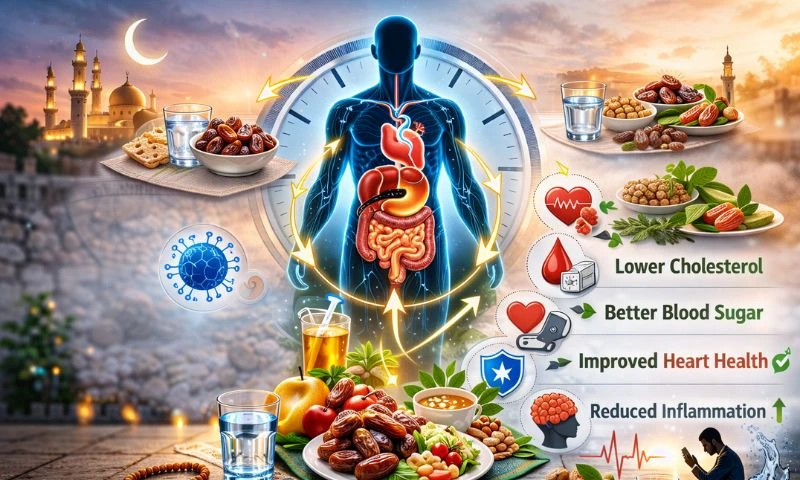
Ramadan fasting differs from popular diet trends because it involves abstaining from food and drink from dawn to sunset for 29 to 30 consecutive days. Unlike continuous calorie restriction, Ramadan fasting follows a daily cycle of fasting and refeeding. Scientists classify it as a form of intermittent fasting with time-restricted eating.
So what does a full month of Ramadan fasting actually do to the body?
Metabolic Reset and Fat Utilization
During the fasting hours, the body first uses stored glucose. After several hours, it begins shifting toward burning fat for energy. Researchers describe this as “metabolic switching.”
A review published in the New England Journal of Medicine explains: “Periods of dietary energy restriction sufficient to cause depletion of liver glycogen stores trigger a metabolic switch.” This shift increases fat oxidation and ketone production.
Studies specifically on Ramadan fasting show measurable metabolic improvements. A 2019 systematic review in Nutrients found that Ramadan fasting is associated with modest weight loss, reduced body fat percentage, and improvements in lipid profiles, especially in healthy adults.
Most participants lose between 1 to 3 kilograms during Ramadan, according to pooled analyses. Some weight may return after the month, but improvements in cholesterol markers often persist for weeks.
Cholesterol, Blood Pressure, and Heart Health
Cardiovascular health markers frequently improve during Ramadan. A review published in the Journal of the American Heart Association found that Ramadan fasting was linked to reductions in LDL cholesterol and triglycerides, particularly when diets were balanced.
Blood pressure often declines as well. Research published in Frontiers in Nutrition showed that both systolic and diastolic blood pressure decreased modestly during Ramadan in many participants.
These changes are linked to improved insulin sensitivity, better fat metabolism, and structured meal timing.
Blood Sugar and Insulin Sensitivity
Ramadan fasting can improve insulin sensitivity in healthy individuals. A study in Diabetes Research and Clinical Practice reported improved glycemic control in many fasting participants, particularly those who maintained balanced iftar meals.
Lower insulin levels during fasting hours allow the body to access stored fat more efficiently. However, people with diabetes must fast under medical supervision, as blood sugar fluctuations can pose risks.
Inflammation and Cellular Repair
Emerging evidence suggests Ramadan fasting may reduce inflammation. A study published in Annals of Nutrition and Metabolism found decreases in inflammatory markers such as CRP after Ramadan.
There is also growing interest in autophagy, the body’s cellular repair process. While human evidence is still developing, fasting periods are associated with biological pathways that support cellular clean-up and renewal.
Mental and Hormonal Effects
Beyond metabolism, Ramadan fasting influences hormones such as cortisol and growth hormone. Many participants report improved focus and mood stability after the first adjustment phase.
Sleep changes can occur, especially due to late-night prayers and early suhoor meals. Studies note that sleep quality plays a key role in determining overall benefits.
The Bottom Line
A month of Ramadan fasting can lead to modest weight loss, improved cholesterol levels, better blood sugar control, reduced blood pressure, and lower inflammatory markers in healthy adults.
The benefits depend heavily on food quality, hydration after sunset, and sleep patterns. Ramadan fasting works best when iftar meals avoid excessive sugar and fried foods.
Science shows that when practiced safely, Ramadan fasting can offer measurable metabolic and cardiovascular benefits. It is not just spiritual discipline. It is also a structured metabolic reset.