
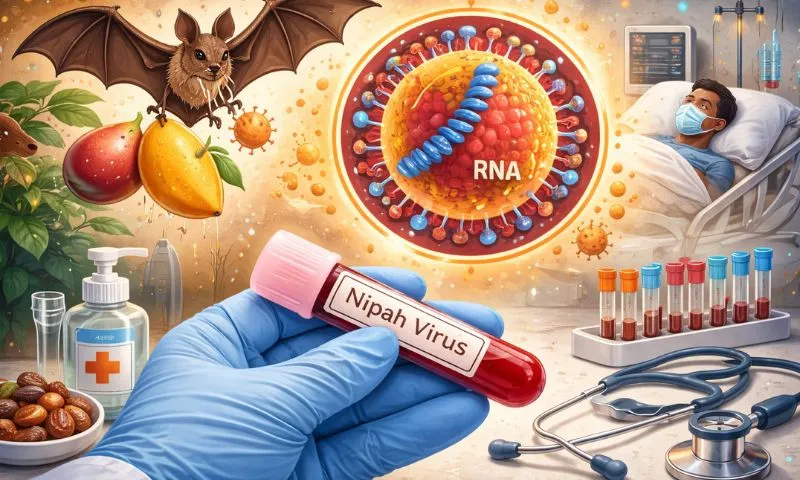
Health authorities across South Asia are on alert after India confirmed an outbreak of the Nipah virus (NiV) in the eastern state of West Bengal in January 2026. This deadly virus has a high fatality rate and no approved vaccine or specific treatment, causing concern among healthcare officials and travellers. The outbreak was linked to a cluster of cases around Kolkata and nearby districts. Five confirmed infections were reported, and dozens of people who had close contact with the patients were placed under home quarantine. At least one case was critical, and medical teams immediately launched contact tracing to contain further spread. Nipah is a zoonotic virus carried by fruit bats, pigs and other animals. It can transmit to humans through direct contact with secretions or bodily fluids from infected animals or people. Once infected, people can spread the virus to others through close personal interactions, especially in healthcare or household settings. The World Health Organization (WHO) lists NiV as a priority pathogen because of its epidemic potential and severe outcomes. Signs of infection begin with fever, headache, muscle aches and sore throat, progressing in severe cases to respiratory problems, neurological issues, seizures or encephalitis (brain swelling). Because these early symptoms resemble those of flu or dengue, timely detection depends on vigilant screening and diagnostic testing. In response to the outbreak, several Asian countries have reinforced health screening at airports and border points, reminiscent of systems used during the COVID-19 pandemic. Thailand, Nepal and Taiwan expanded use of temperature checks, symptom questionnaires and isolation procedures for arrivals from affected regions. Health officials also distributed advisory cards that explain Nipah symptoms and recommended next steps. Experts emphasise that airport screenings are early detectors, not definitive tests. “If a traveller shows symptoms or reports recent contact with an infected person, health teams must act swiftly,” says a regional health official. This approach aims to catch possible cases before they spread further. While the outbreak remains limited geographically, authorities urge the public to practice good hygiene, avoid contact with sick animals or people, and report symptoms early. Continued surveillance and cooperation between countries remain key to stopping broader transmission.
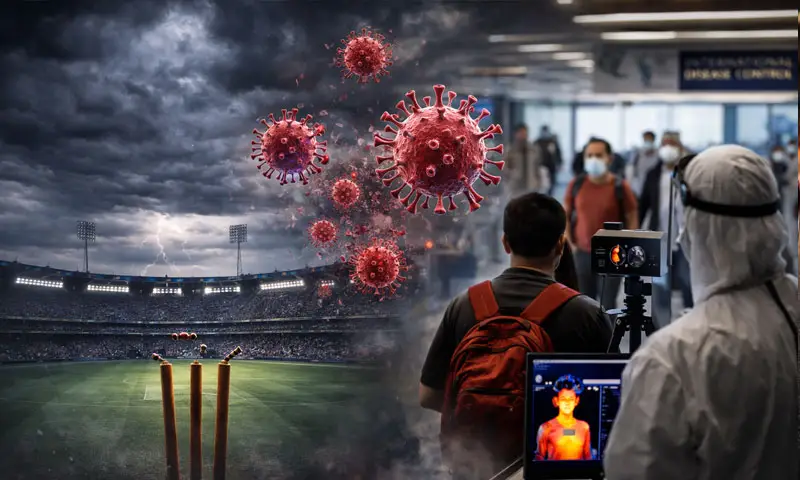
Deadly Virus Outbreak Puts T20 World Cup in India at Risk, Pakistan May Reconsider Participation
The ICC Men’s T20 World Cup 2026, scheduled to begin in India on February 7, is facing growing uncertainty after the emergence of a deadly Nipah virus outbreak in the country, raising serious concerns over player safety, travel, and tournament logistics. Health authorities in India have confirmed multiple cases of a new strain of the Nipah virus in West Bengal, a region close to Kolkata — one of the host cities for the upcoming World Cup. According to Indian media and health officials, at least five people have tested positive so far, including two nurses and a doctor, all reported to be in critical condition. More than 100 individuals have been placed under quarantine as surveillance and containment measures are intensified. The outbreak has triggered alarm beyond India’s borders. Several regional countries have stepped up health screening for travellers arriving from affected areas. Thailand has begun screening passengers from West Bengal at major airports including Suvarnabhumi, Don Mueang and Phuket, while China has included Nipah virus disease in its updated list of monitored infectious diseases alongside COVID-19 and HIV/AIDS. South Korea has already classified Nipah as a top-tier infectious disease requiring immediate reporting and isolation. Medical experts warn that the Nipah virus poses a significant threat due to its high fatality rate — estimated between 40 and 75 percent — and the absence of any proven treatment or vaccine. The virus, which spreads from bats to humans and can also transmit through close human contact, primarily attacks the brain and lungs, often leading to encephalitis and respiratory failure. According to the World Health Organization and regional disease control agencies, symptoms include fever, headaches, confusion, drowsiness and coma. While transmission is considered relatively limited compared to airborne viruses, health officials stress that hospital-based and household spread remains a serious risk. The outbreak comes at a sensitive time for international cricket. The World Cup has already been mired in controversy after Bangladesh refused to travel to India, citing security concerns. The ICC rejected Bangladesh’s request to relocate its matches to Sri Lanka and replaced them with Scotland — a decision that sparked debate across the cricketing world. The Pakistan Cricket Board later supported Bangladesh’s position, stating that Pakistan’s participation would be subject to approval from the Government of Pakistan. Sources have also indicated that Pakistan may reconsider playing matches in India if health and security risks escalate. With teams, officials, broadcasters and fans expected to travel from across the globe, experts caution that any further spread of the virus could complicate visa processing, travel arrangements, biosecurity protocols and emergency planning for the tournament. While Indian authorities have moved quickly to contain the outbreak, the situation remains fluid. The coming weeks are likely to be critical in determining whether the T20 World Cup can proceed as scheduled or whether contingency plans will need to be activated to safeguard participants and spectators.

Smog Isn’t “Normal” Anymore: Why South Asia’s Air Is Turning Dangerous
Air pollution used to feel like a seasonal problem—winter smog, traffic fumes, a dusty week. Now it shapes daily life across many cities, especially in South Asia. What makes this crisis different is scale. WHO says 99% of people worldwide breathe air that exceeds its guideline limits. That’s not just a statistic. It explains why more people feel tired, cough more often, and struggle with headaches on “normal” days. It also explains why doctors keep warning that pollution doesn’t only hit the lungs. It affects the heart, brain, pregnancy outcomes, and long-term life expectancy. The numbers behind the fear The latest global health data shows how serious the risk has become. Air pollution caused 8.1 million deaths globally in 2021, making it the second leading risk factor for death, including for children under five. In 2021, more than 700,000 deaths in children under 5 were linked to air pollution—about 15% of all global deaths in that age group. WHO says the combined effects of outdoor and household air pollution link to 6.7 million premature deaths each year. WHO estimates outdoor air pollution caused 4.2 million premature deaths in 2019, and 89% of these deaths occurred in low- and middle-income countries. Even when people don’t “feel sick,” fine particles still harm the body. WHO explains that PM2.5 can penetrate deep into the lungs and enter the bloodstream, raising cardiovascular and respiratory risks. What’s actually in the air? Air pollution is not one thing. It’s a mix of gases and tiny particles. PM2.5 often causes the most damage because the particles are small enough to reach deep into the body. WHO’s 2021 guideline for annual PM2.5 is 5 µg/m³. Cities also face nitrogen dioxide (NO₂) from vehicles and industry, plus ozone that forms in sunlight. These pollutants can trigger asthma, worsen COPD, and increase emergency visits. South Asia’s smog season is becoming a lifestyle season South Asia sits at the center of the global pollution burden. Dense populations, rapid urban growth, brick kilns, traffic, industrial emissions, and crop burning all collide—then winter weather traps it near the ground. Pakistan shows how quickly pollution can disrupt life. In November 2024, Punjab set up a “smog war room” after Lahore’s AQI surged to 1,165, and authorities shut schools in several areas. Reuters also reported that some districts recorded AQI levels as high as 1,900. The hidden cost: years of life lost One of the clearest ways to understand pollution is to measure what it steals: time. A 2025 Pakistan factsheet from the Air Quality Life Index (AQLI) estimates: The average Pakistani could live 3.3 years longer if PM2.5 dropped to the WHO guideline. In Lahore, residents could gain 5.8 years of life expectancy if particulate pollution met the WHO guideline. From 1998 to 2023, average annual particulate concentrations in Pakistan increased 55.7%, cutting life expectancy by about one additional year. A separate Reuters report, citing research on South Asia, said rising air pollution can reduce life expectancy by more than five years per person across the region. Why it feels worse now Air pollution hits harder today for three simple reasons: 1) More exposure, more often Cities keep expanding. Traffic grows. Construction dust rises. People spend more time commuting. 2) Heat makes smog angrier Heat boosts ozone formation and can intensify wildfire smoke. It also raises electricity demand, which can increase emissions when grids rely on fossil fuels. 3) Your body can’t “adapt” to PM2.5 The body can adjust to some discomfort. It cannot build immunity to long-term particle exposure. Fine particles keep causing inflammation and stress inside the body. What you can do today (without pretending it’s all on you) WHO is clear: most pollution sources sit beyond individual control, so policy and enforcement matter most. Still, people can reduce personal exposure—especially on peak-smog days. At home Keep windows shut during peak pollution hours. Use a HEPA air purifier in bedrooms if possible. Avoid indoor smoke (incense, trash burning, smoky cooking). Outside Check air quality before long outdoor time. Reduce outdoor exercise during severe pollution. Wear a well-fitted particulate mask on the worst days. The bigger fixes (the ones that truly change outcomes) WHO highlights steps that consistently work: cleaner energy, cleaner transport, strong vehicle standards, better waste management, and stopping open burning. WHO Director-General Dr Tedros framed the urgency like this: “Current energy concerns highlight the importance of speeding up the transition to cleaner, healthier energy systems.” And WHO’s Dr Maria Neira added: “After surviving a pandemic, it is unacceptable to still have 7 million preventable deaths and countless preventable lost years of good health due to air pollution.” The bottom line Breathing should be automatic. In many places, it now carries risk. The science is not vague anymore. The deaths, the hospital visits, and the life years lost have names and numbers. For South Asia and for Pakistan clean air is no longer only an environmental goal. It’s a public health emergency that shows up in daily routines, school calendars, budgets, and lifespans.

The Quiet Shift: Why Natural Health Is Becoming a Long-Term Lifestyle
A few years ago, “natural health” sounded like a trend. Today, it looks more like a long game. People are not only buying healthier products. They are changing routines – sleep, food, movement, stress, and even the air they breathe. One reason is simple: chronic illness is everywhere. The World Health Organization says noncommunicable diseases (such as heart disease, stroke, cancer, diabetes, and chronic lung disease) account for 74% of all deaths worldwide. When the biggest health risks build slowly, “quick fixes” feel less convincing. It’s also an economy now, not just a mindset The wellness industry has become massive, which both reflects and fuels behavior change. The Global Wellness Institute (GWI) estimates the global wellness economy reached $6.3 trillion in 2023, about 6% of global GDP. In other words, millions of people are spending on healthier eating, fitness, sleep tools, mental wellness, and prevention—often as a response to stress, burnout, and rising healthcare costs. GWI defines wellness as “the active pursuit of activities, choices and lifestyles that lead to a state of holistic health.” That framing matters because it turns health into daily decisions, not a once-a-year checkup. Pakistan’s reality makes “natural” feel practical In Pakistan, “natural health” is often less about luxury and more about survival habits. Diabetes is a major driver: IDF estimates 34.5 million adults (20–79) in Pakistan had diabetes in 2024, and calls Pakistan the highest-prevalence country in that age group. That scale pushes families toward prevention – walking more, cutting sugar, and building food routines that can last. Air quality also shapes choices. IQAir has reported Pakistan’s 2024 average PM2.5 at 73.7 µg/m³, nearly 15 times the WHO annual guideline. When smog seasons hit, people rethink outdoor timing, masks, and indoor habits. The “natural health” shift is really a prevention shift Public health messaging increasingly supports small, repeatable steps. As WHO’s Ruediger Krech said: “Increasing physical activity not only helps prevent and manage heart disease, type-2 diabetes and cancer.” And the American Heart Association puts it bluntly: “Healthy habits are the best defense against heart disease.” The long-term appeal of “natural health” is that it fits real life. It is cheaper than crisis care. It is easier than perfection. And it works best when it becomes routine.

From Breakfast Cereals to Ready Meals: WHO Prepares Guidance on Ultra-Processed Foods
Ultra-processed foods (UPFs) are everywhere in modern diets, from packaged snacks and sugary drinks to instant noodles and ready meals. They are not simply “processed” in the everyday sense. Under the widely used NOVA system, UPFs are industrial formulations built from refined ingredients plus additives designed to boost taste, texture, and shelf-life. So what counts as ultra-processed? NOVA’s architects say the quickest test is the ingredients list. “A practical way to identify an ultra-processed product is to check to see if its list of ingredients contains” items rarely used in home kitchens (like hydrogenated oils or hydrolysed proteins) or “classes of additives designed to make the final product palatable” (like flavours, colours, emulsifiers, sweeteners, thickeners). The debate is now big enough that the World Health Organization is preparing global guidance. In a May 15, 2025 notice, WHO said it is “planning much needed global guidance on the consumption of ultra-processed foods” to complement its nutrition guidance for countries. WHO has since assembled a guideline development group and notes that “consumption of such highly processed or ‘ultra-processed’ foods has been associated with a myriad of negative health effects.” Why the urgency? The evidence base keeps expanding. A major 2024 BMJ umbrella review pooled findings from 45 meta-analyses covering 9,888,373 participants. It found direct associations between UPF exposure and 32 (71%) health parameters, spanning mortality, cancer, mental health, cardiometabolic disease, and more. Another signal comes from mortality research. A 2025 paper in the American Journal of Preventive Medicine reported a linear dose-response: each 10% increase in the share of calories from UPFs was associated with an RR of 1.03 for all-cause mortality (about a 3% rise in risk). Researchers stress these are mostly observational links, not proof of cause. Still, they align with concerns that UPFs often deliver more salt, sugar, and unhealthy fats, while displacing fibre-rich whole foods. How to spot UPFs fast (shopping in 10 seconds) Long ingredient list with many unfamiliar terms Cosmetic additives (flavour enhancers, colours, emulsifiers, sweeteners) Hyper-convenient format (ready-to-eat/heat; shelf-stable for long periods) “Food-like” texture (puffs, bars, reconstituted meats, sweetened drinks)

Heartburn After Painkillers? Here’s What They Do to Your Stomach
Over-the-counter painkillers like ibuprofen and naproxen are household staples in Pakistan, especially during winter aches, headaches, and fever. But doctors warn that taking these NSAIDs on an empty stomach can raise the odds of acid irritation, reflux symptoms, and—over time—ulcers or bleeding, especially in higher-risk users. The risk is not theoretical. Large population research has linked NSAID use with a sharp jump in serious stomach complications. A Danish study tracking upper gastrointestinal bleeding (UGIB) found 365 UGIB cases during “NSAID-only” use periods—about 3.6 times higher than expected. Reviews of GI safety data also report that non-selective NSAIDs increase the risk of peptic ulcer disease by ~5-fold and upper GI bleeding by ~4-fold. Why does an empty stomach matter? NSAIDs reduce prostaglandins that help protect the stomach lining. Without that protection, stomach acid can irritate tissue more easily, which can feel like burning, nausea, or reflux, and can progress to ulceration in susceptible people. Clinical reviews note that NSAIDs can cause foregut symptoms and peptic ulcer disease, sometimes complicated by bleeding or perforation. Regulators and health systems give simple, consistent advice. The U.S. FDA’s ibuprofen Drug Facts Label tells users: “take with food or milk if stomach upset occurs.” The UK’s NHS similarly advises swallowing ibuprofen “ideally with or after food.” MedlinePlus also notes ibuprofen “may be taken with food or milk to prevent stomach upset.” Safer habits that reduce risk Don’t treat NSAIDs like candy. Use the lowest effective dose for the shortest time. Avoid doubling up. Many cold/flu products include pain relievers; mixing can happen by accident. Know your higher-risk profile. FDA warnings highlight higher risk with age 60+, history of ulcers/bleeding, and use with blood thinners or steroids. Watch for red flags like black stools, vomiting blood, faintness, or persistent stomach pain—seek urgent care. For many people, taking an NSAID with food won’t erase all risk, but it can reduce irritation. If reflux or stomach pain keeps returning, it’s a sign to stop self-medicating and get medical guidance.

No Gym, No Problem: A Simple 2-Day Split to Get Stronger Fast
Strength training is having a moment, but the most useful plan for beginners is also the simplest: two days a week, repeated long enough to become routine. Major guidelines agree that adults should do muscle-strengthening activities at least two days per week, alongside weekly aerobic movement. The health case is strong. A 2022 systematic review and meta-analysis linked resistance training to a lower risk of all-cause mortality, with the biggest benefit seen at roughly about 60 minutes per week. A 2024 American Heart Association scientific statement also notes that adults who report doing resistance training show around 15% lower risk of all-cause mortality compared with those who report none. For beginners, frequency matters because it drives consistency. As Harvard Health reports, “Two days a week of full-body training can produce measurable changes in muscle strength,” says Katie Granito. That’s the core logic behind a two-day split that actually sticks: you train the whole body twice, keep sessions short, and leave recovery space. The 2-day beginner split (A/B), 35–55 minutes each Day A (Squat + Push focus) Squat or goblet squat Dumbbell or machine chest press (or push-ups) Row (cable/band/dumbbell) Hip hinge (Romanian deadlift or hip hinge drill) Plank or dead bug Optional: farmer carry or light cardio finisher Day B (Hinge + Pull focus) Deadlift pattern (trap bar, kettlebell, or hip hinge) Lat pulldown or assisted pull-up Overhead press (dumbbells or machine) Split squat or step-ups Glute bridge/hip thrust Side plank or Pallof press Aim for 1–3 sets of 8–12 reps per move. Use a load that feels challenging near the end while form stays clean. The Mayo Clinic advises a level heavy enough to fatigue muscles after about 12–15 reps for a set. Rest a day between sessions, and add weight gradually as reps become easier. ACSM guidance also supports 2–3 days per week for novice lifters. If you want the plan to last, keep the first month “easy enough to repeat.” Two days is not minimal. It’s strategic.

Sound Therapy Breakthrough: Could 40 Hz Frequency Treat Alzheimer’s?
Researchers are exploring a surprising new frontier in Alzheimer’s disease treatment: sound therapy. Recent scientific studies suggest that specific sound frequencies especially 40 Hz could help the brain clear toxic proteins and slow cognitive decline, offering hope for a future non-invasive therapy for the devastating neurodegenerative condition that affects millions worldwide. Alzheimer’s disease causes memory loss, confusion, and impaired thinking. These symptoms are linked to the buildup of abnormal proteins like beta-amyloid plaques and tau tangles in the brain, which damage neurons and disrupt brain function. Current treatments can ease symptoms, but there is still no cure that stops the disease’s progression. A recent study that has gained attention from scientists and the public examined 40 Hz sound stimulation in non-human primates. In this research, elderly rhesus monkeys listened to a low-frequency 40 Hz sound for one hour each day for a week. Scientists found that levels of beta-amyloid in the cerebrospinal fluid increased, indicating that the brain was clearing toxic proteins more effectively. This effect didn’t disappear quickly — it persisted weeks after the sound stimulation ended. Experts believe this type of therapy might work by resynchronizing brain activity and enhancing the brain’s waste-clearing system. In healthy brains, synchronized electrical rhythms help regulate processes like cleaning out harmful proteins. But in Alzheimer’s, these rhythms become disrupted. Sound stimulation at specific frequencies at least partially restores these rhythms, helping the brain flush out beta-amyloid plaques. The underlying mechanism of this effect has been studied in rodents and humans as well. Research shows that 40 Hz sensory stimulation whether light or sound can reduce amyloid burden and improve measures related to cognition in animal models. Early small human trials also suggest that daily 40 Hz sensory stimulation may slow cognitive decline and reduce biomarkers linked to Alzheimer’s progression. This approach, sometimes referred to as gamma frequency sensory stimulation, is being tested in larger clinical trials. Devices delivering coordinated light and sound at 40 Hz are under evaluation to determine if long-term use can help patients in the real world. A phase III clinical trial is underway to assess the effectiveness of such interventions in a broader group of Alzheimer’s patients. Separately, traditional music therapy and familiar audio have long been used to improve mood, social interaction and emotional well-being in people with dementia, though not specifically as a disease-modifying treatment. While researchers caution that sound therapy is not yet a proven cure, the accumulating evidence suggests it could become a valuable part of future Alzheimer’s treatment strategies — one that is non-invasive, affordable, and safe.

Doctors Discover Baby Inside Boy’s Chest During Surgery in Rahim Yar Khan
In a highly unusual medical case in Rahim Yar Khan, doctors at Sheikh Zayed Hospital successfully removed a malformed foetus from the chest of a five-year-old boy, in one of the rarest congenital anomalies known to medicine. The operation has drawn attention across Pakistan and sparked global interest because of its complexity and medical significance. The young patient, named Rehan, had suffered from persistent breathing difficulties, chest infections, coughing, and recurrent fevers since infancy. Despite multiple visits to doctors over the years, his condition remained undiagnosed until a recent CT scan revealed the shocking cause: an underdeveloped twin inside his chest. Surgeons discovered that the malformed foetus was located near the boy’s main heart artery and lungs, making the surgery extremely delicate and risky. The condition, medically referred to as “fetus in fetu” (FIF), occurs when a malformed twin becomes embedded in the body of its sibling during early embryonic development. Worldwide, this condition is exceptionally rare, with an estimated occurrence of one in every 500,000 births. Leading the surgical team was thoracic surgeon Dr Sultan Mahmood Owaisi, who said the operation required meticulous planning and execution. Officials described the procedure as complex but successful, with the foetus removed without injuring the boy’s vital organs. The child is now recovering in the hospital’s thoracic ward and is reported to be in stable condition under close medical supervision. According to Dr Sultan, the foetus had developed several body parts including a spine, hair, and teeth but it lacked a fully formed head. It weighed about one kilogramme and was hidden inside the chest for five years, undetected until advanced imaging uncovered its presence. Fetus in fetu is often confused with teratomas — complex tumours containing abnormal tissues — but FIF is distinguished by a greater degree of organized development, such as vertebral structures and organ formation. Medical literature shows most FIF cases are found in the abdominal cavity, which makes Rehan’s chest case even more rare and medically noteworthy. Rehan’s mother expressed immense relief and gratitude to the medical team for saving her son, crediting the hospital for its care and expertise. Doctors emphasised that early diagnosis and imaging are crucial for similar unexplained symptoms in children. This extraordinary case highlights not just a medical curiosity but also advances in diagnostic imaging and surgical techniques in Pakistan that make handling such rare anomalies possible.

How Much Sugar Is Too Much? Doctors Finally Agree on the Limits
Sugar is one of the most debated ingredients in modern diets. It provides quick energy, yet excess intake especially through drinks and processed foods can quietly increase the risk of weight gain, tooth decay, and heart disease. Health experts today focus less on banning sugar entirely and more on how much, what type, and how often it is consumed. What actually counts as sugar? Not all sugars are the same. Naturally occurring sugars are found in foods like whole fruits and plain milk. These come packaged with fiber, protein, or nutrients that slow digestion. The main concern is free or added sugars. These include sugar added during cooking or food manufacturing, as well as sugars found in honey, syrups, fruit juices, and concentrates. The World Health Organization (WHO) urges people to cut back specifically on free sugars because they add calories without providing fullness or essential nutrients. When sugar actually helps the body Despite its bad reputation, sugar plays a real role in certain situations. Glucose, a basic form of sugar, is a key fuel for the brain and muscles. Doctors use fast-acting sugar to treat low blood sugar (hypoglycemia). The American Diabetes Association recommends the “15–15 rule”: consume 15 grams of fast-acting carbohydrates, wait 15 minutes, then recheck blood sugar. Sugar can also support endurance exercise. Sports medicine guidelines often recommend 30 to 60 grams of carbohydrates per hour during workouts lasting longer than one hour to delay fatigue and support performance. Where sugar becomes a health risk Most health problems linked to sugar come from high intake of added sugars, especially through sweetened drinks. The WHO links excess free sugar to unhealthy weight gain and recommends keeping it below 10% of daily calories, with added benefits seen below 5%. Dental experts warn that sugar fuels tooth decay. The American Dental Association explains that oral bacteria feed on sugars and release acids that damage tooth enamel. Large studies also connect sugar-sweetened beverages to higher risks of heart disease and metabolic problems, mainly because they add calories without reducing hunger. How much sugar is too much? Health authorities agree on one clear message: less is better. WHO: Free sugars under 10% of calories; ideally under 5% US Dietary Guidelines: Added sugars under 10% of calories (none for children under two) American Heart Association: About 36 grams per day for men and 25 grams for women Practical ways to cut sugar without crashing Experts say the biggest gains come from small habit changes: Cut sugary drinks first, including sodas and packaged juices Read labels for “added sugars” Choose whole fruit instead of juice Keep sweets occasional, not daily If you have diabetes, follow medical advice instead of self-experiments The bottom line Sugar is not poison, but added and free sugars are where most harm occurs. When they quietly add up in drinks and ultra-processed foods, health risks rise. The safest, expert-backed approach is moderation—keep added sugars low, enjoy sweets occasionally, and rely on whole foods for daily energy.
