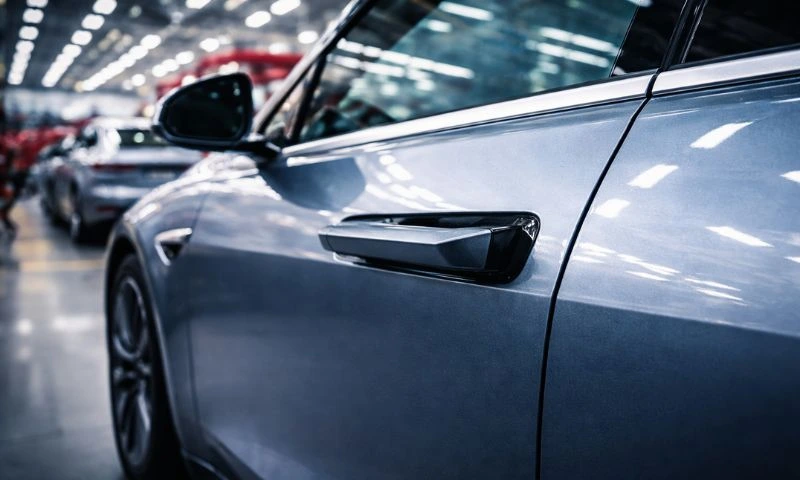
China has announced a groundbreaking ban on hidden or retractable door handles on all new passenger vehicles, with rules set to take effect on January 1, 2027 for new models and January 1, 2029 for already approved ones. The decision makes China the first major automotive market in the world to outlaw this popular design feature, largely found on electric vehicles (EVs) and hybrid models.
The regulation comes from the Ministry of Industry and Information Technology (MIIT) and is aimed at improving vehicle safety after a number of high-profile incidents in China and globally raised concerns about the reliability of electronic door handles. Under the new rules, every vehicle door — except the tailgate — must include a mechanical release function that can be operated manually both from the inside and outside.
Safety Concerns Trigger Change
Hidden door handles, sometimes called flush or retractable handles, became a symbol of futuristic EV design after companies like Tesla introduced them to reduce aerodynamic drag and boost efficiency. The sleek handles are activated electronically, typically by a key fob, touchscreen command, or light physical contact. However, safety authorities have raised issues that in power loss or crash situations these handles can fail to operate.
One often-cited case involved a Xiaomi SU7 Ultra electric sedan in Chengdu, China, where rescuers were reportedly unable to open the doors after a fatal collision because the electronic handles were unresponsive, delaying rescue efforts. Similar safety investigations are underway in the United States, where the National Highway Traffic Safety Administration (NHTSA) has opened probes into Tesla’s electronic door releases after complaints about difficulty opening them during emergencies.
Chinese safety data also show that fully flush handles are far more likely to fail during side-impact tests compared with traditional mechanical handles, a factor that influenced regulators. In addition, automated handles can be less effective in harsh weather or when the vehicle’s battery power drops.
Global Automotive Impact
As the world’s largest automotive market, China’s standards carry significant weight. Automakers selling in the region may need to redesign vehicles, adding mechanical components or backup systems to satisfy the new rules. Some manufacturers have already begun shifting toward semi-hidden handles or integrating redundant mechanical releases into their designs.
Industry analysts say that while the ban directly affects vehicles sold in China, it could influence global safety norms, as many international automakers aim for unified designs across markets. With electric vehicles growing in popularity worldwide, China’s move may spark similar safety reviews in other regions.