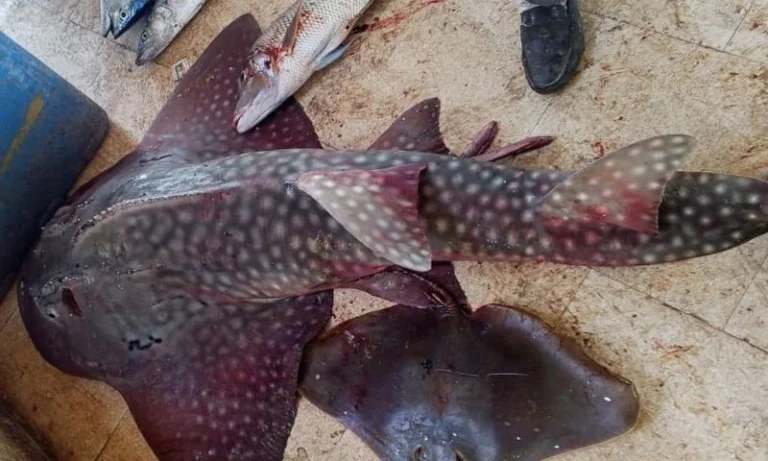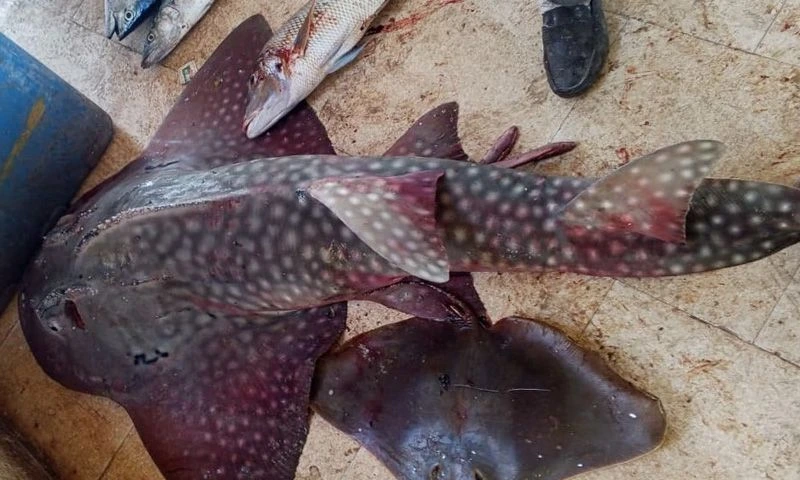
A rare and critically endangered bowhead guitarfish was recently caught in the East Bay of Gwadar, drawing urgent attention to the fragile state of marine biodiversity along Pakistan’s coast. The World Wide Fund for Nature-Pakistan (WWF-Pakistan) confirmed the capture of this exceptionally rare species, locally known as “Koh Baradari” or “Bhuth-khair”. The incident underscores ongoing threats to vulnerable marine life and emphasizes the need for stronger conservation measures.
The guitarfish was caught at a depth of around 30 metres and measured approximately 140 centimetres in length, weighing over 65 kilograms, according to WWF-Pakistan’s statement. This species is listed as Critically Endangered on the International Union for Conservation of Nature (IUCN) Red List and is included in Appendix II of the Convention on International Trade in Endangered Species of Wild Fauna and Flora (CITES), restricting international trade due to its high risk of extinction.
A Species on the Brink
The bowhead guitarfish (Rhina ancylostomus) is one of the rarest elasmobranchs in the world. Its global population has declined by more than 80% in the past 45 years, mainly due to intense fishing pressure and habitat degradation. Historically found across tropical and warm temperate coastal waters from East Africa and the Red Sea to the Pacific islands, sightings have become increasingly scarce in recent years.
Unlike many fish species, the bowhead guitarfish reproduces slowly. Females give birth to a small number of pups, typically between two and eleven per litter, limiting the species’ ability to recover from population declines quickly. This biological trait, coupled with its vulnerability to fishing nets and targeted capture for its meat and fins, accelerates its risk of extinction in the wild.
Read More: How a Foreign Fish Is Quietly Destroying Pakistan’s Aquatic Life
Threats in Pakistan’s Waters
In Pakistan, bowhead guitarfish were historically caught year-round, especially between January and March and again in May and September, when seasonal movements brought them closer to shore. However, over the last 15 years, reported catches have dropped sharply, signaling a dramatic population collapse.
Fishing communities along the Balochistan coast now see far fewer guitarfish than before. They are often caught accidentally as bycatch in gillnets and trawls and are also targeted because of the value of their fins in certain markets. Despite legal protections under CITES, illegal fishing and weak enforcement persist, further threatening the species’ survival.
Conservation Efforts and Challenges
WWF-Pakistan has been working with local fishing communities since 2013 to promote awareness and encourage the safe release of accidentally entangled guitarfish and other threatened marine species. However, the organisation acknowledges that effective enforcement remains difficult, and educational outreach must expand to reach more stakeholders.
Marine experts stress that increased monitoring, stronger regulations, and active community involvement are essential to protect the remaining bowhead guitarfish population. Without these steps, the species may disappear entirely from Pakistan’s coastal waters. Conservationists also urge the government to strengthen enforcement of fishing regulations and support sustainable fishing practices.
Read More: Pakistan’s $80M Seafood Zone at Korangi Aims to Boost Exports and Jobs
What the Gwadar Catch Tells Us
The rare catch in Gwadar serves as a stark reminder of how close the bowhead guitarfish is to disappearing from its natural range. Its deep historical presence in the Indo-Pacific oceans contrasts sharply with its near absence today, making every sighting significant to scientists and conservationists. The need for urgent action is clear if this unique marine species is to survive for future generation.