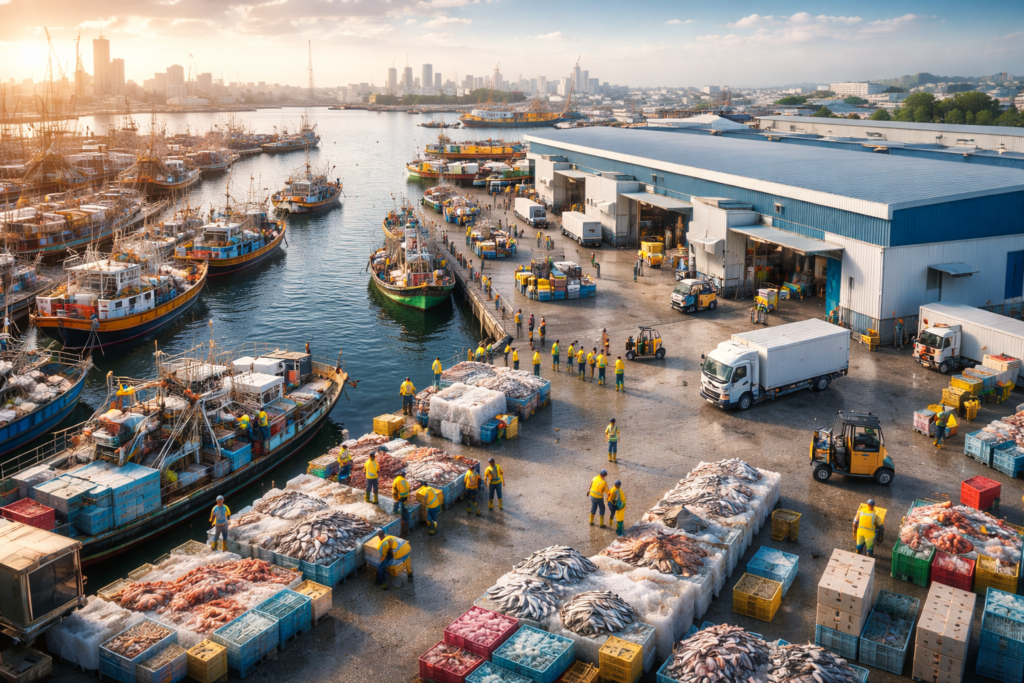
Pakistan is moving forward with a major initiative to transform its seafood sector by establishing a modern seafood processing and export zone at Korangi Fisheries Harbour. The project, estimated to cost between $60 million and $80 million, aims to shift the country’s fishing industry from exporting raw catch to producing high-value processed products for global markets.
Federal Minister for Maritime Affairs Muhammad Junaid Anwar Chaudhry announced the ambitious plan, saying the 100-acre facility would attract private investment and help Pakistan compete in key international destinations such as the Gulf region, East Africa and Asia.
Under the proposed design, the zone would be developed under a public-private partnership (PPP) or build-operate-transfer (BOT) concession model. Private investors would finance, construct, operate and maintain the infrastructure, while the Korangi Fisheries Harbour Authority (KoHFA) would retain regulatory oversight and provide institutional support.
The project’s primary goal is to add value to Pakistan’s marine resources beyond the current raw export model. Industry stakeholders say this will enable local businesses to access premium markets and secure higher export earnings, especially as the global demand for processed seafood grows. Countries like Vietnam, China and Ecuador have successfully developed similar zones, creating a benchmark for Pakistan’s development.
What the Zone Will Include
Facilities planned for the zone are comprehensive and modern. They include:
-
20–25 medium to large seafood processing units capable of handling fish, shrimp and cephalopods.
-
Cold storage and blast freezing complexes with multi-temperature storage ranging from -18 °C to -40 °C, ensuring safe handling from raw catch to finished product.
-
Large-scale packaging and export terminals linked with efficient cold-chain logistics.
-
Ice plants and flake ice stations producing steam-ready ice between 50–100 tons per day to support landing and processing operations.
-
Wastewater treatment facilities to ensure environmentally compliant operations.
-
Dedicated value-added lines for breaded, marinated, filleted and “ready-to-eat” seafood, increasing Pakistan’s ability to serve retail and food service markets abroad.
The initiative would generate revenue through lease rentals, processing fees, cold-chain logistics services, utilities, export revenue sharing and value-added product margins. Planners estimate an internal rate of return of 13–17 percent, based on global benchmarks.
Officials expect the concession period to last 20 years, with possibilities for extensions under certain terms. KoHFA would contribute land, jetty access and regulatory facilitation while the private sector will shoulder investment costs.
A Boost for Pakistan’s Blue Economy
The seafood processing zone aligns with broader national strategies including Pakistan’s National Blue Economy Policy, Vision 2030 and the UN Sustainable Development Goal 14 (Life Below Water). These frameworks aim to sustainably harness marine resources, expand exports and support coastal communities.
Korangi Fisheries Harbour already plays a central role in Pakistan’s fishing industry, with much of the country’s fresh catch passing through its docks. Modernizing this hub could help Pakistan unlock valuable export opportunities and strengthen its position in the global seafood trade