Pakistan’s digital landscape is changing fast. The latest Household Integrated Economic Survey (HIES) 2024-25 reveals a major leap in internet access and usage, showing how millions more Pakistanis are now connected to the world. According to the Pakistan Bureau of Statistics, household internet access jumped from 34 % to 70 %, while individual internet use expanded sharply from 17 % to 57 %, a dramatic rise in just one survey cycle.
This surge is partly due to the spread of mobile phones and smartphones, which are now present in 96 % of households. That number means nearly every home across urban and rural Pakistan has at least one device capable of internet access, lifting digital connectivity to record levels.
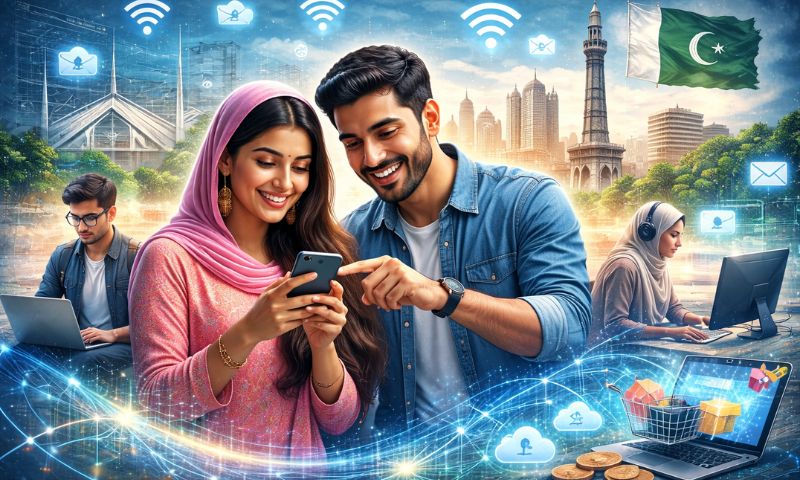
Experts say this expansion matters far beyond just scrolling social media. Increased internet access opens doors to online learning, e-commerce, and remote work, helping people access opportunities they couldn’t before. A fully digital HIES, conducted after the 2023 Digital Population and Housing Census, used modern tech tools to monitor data collection in real time, giving policymakers a clear picture of how connectivity is evolving nationwide.
The survey also highlights positive trends in education and health alongside digital growth. Literacy rates climbed to around 63 %, and child health indicators improved, with infant and neonatal mortality rates showing notable declines. These gains suggest the benefits of internet access are intertwined with broader social progress.
Despite these gains, challenges remain. Pakistan still struggles with some of the slowest internet speeds in the world, with mobile and broadband rankings near the bottom globally. Slow connections and intermittent service continue to frustrate users and limit productivity for students, businesses, and tech workers.
Still, the progress is undeniable. From just a small fraction of the population online in the early 2000s, Pakistan now boasts one of the largest internet-using populations globally, with over 140 million users connected, mostly through mobile broadband.
For many Pakistanis, the internet has become more than a convenience. It’s now central to how they learn, work, shop, and stay informed. With access spreading so rapidly, digital life in Pakistan is increasingly the norm, not the exception.