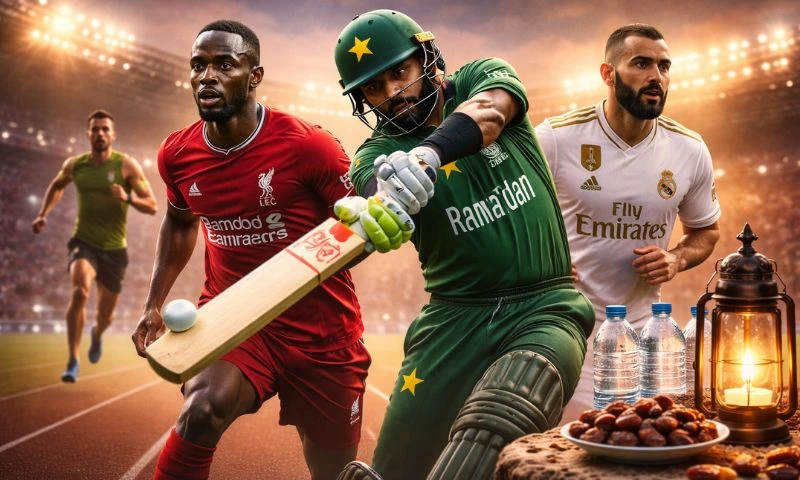
Every year, Ramadan overlaps with major global sporting events, including football leagues, international cricket tours, the IPL, and even ICC tournaments. For Muslim athletes, this means competing without food or water from dawn to sunset while maintaining elite performance standards.
Ramadan shifts around 10 to 11 days earlier each year, meaning it frequently falls during peak cricket and football seasons. In 2019, Ramadan ran from May 6 to June 4 and overlapped with the ICC Cricket World Cup in England. Several Muslim players competed during that period, including Pakistan’s squad members and Afghanistan players.
What Sports Science Says
Research on fasting and performance has grown in recent years. A consensus statement published by the International Olympic Committee found that intermittent fasting, including Ramadan fasting, does not automatically impair performance in well-trained athletes, provided hydration and recovery are managed carefully.
A 2020 review published in Sports Medicine concluded that aerobic performance, strength, and jump performance often remain stable during Ramadan. However, sprint performance and high-intensity repeated efforts can be affected, especially when dehydration combines with reduced sleep.
Aspetar, the Qatar-based sports medicine hospital, advises adjusting training times, reducing load where needed, and maximizing nutrition during non-fasting hours. Their clinical guidance highlights that hydration status is the most critical variable affecting performance.
Read More: The Resilience of Ramadan: How Faith Survives Conflict and Loss
Cricket During Ramadan
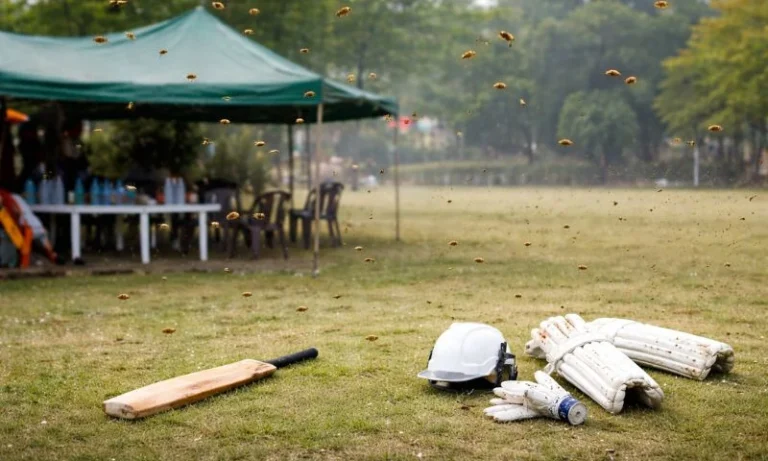
Cricket presents unique challenges. Matches can last up to eight hours in ODIs or multiple days in Test cricket. Fasting players must manage long fielding spells under the sun, high-intensity bowling bursts, and concentration-heavy batting sessions.
During the 2019 Cricket World Cup, Pakistan defeated England at Trent Bridge on June 3, 2019, while Ramadan was ongoing. Several Muslim players competed in that match. Earlier that month, Afghanistan faced Australia during Ramadan as well.
In domestic leagues, Ramadan frequently overlaps with the Indian Premier League. Night matches help fasting players because they can break their fast shortly before or during the game. Some players take fluids immediately after sunset when permitted under match conditions.
Former Pakistan captain Misbah-ul-Haq has spoken in interviews about balancing faith and professional cricket, emphasizing discipline and mental strength as key factors.
Read More: Ramadan 2026: Which Countries Will Have Longest and Shortest Fasting Hours
Football and Global Examples
Football has produced some of the most visible Ramadan athletes. Karim Benzema once said, “Ramadan is part of my life and my religion makes Ramadan an obligation. For me, it’s very important and I feel good when I’m fasting.”
Liverpool forward Sadio Mane admitted the difficulty, saying, “It’s not easy because playing and training and doing Ramadan isn’t easy at all.”
Coaches increasingly adapt. Training sessions may shift to mornings, recovery protocols intensify, and nutrition plans become highly personalized.
Read More: London Marks Ramadan with 30,000 LED Lights and a Message of Peace
Performance Is Planning
Data and athlete testimony show that fasting does not automatically reduce elite output. The key lies in sleep management, smart nutrition at suhoor and iftar, and structured recovery.
In cricket, football, athletics, and combat sports, Ramadan has become another variable to manage rather than an obstacle to avoid. For many athletes, faith and performance move forward together.