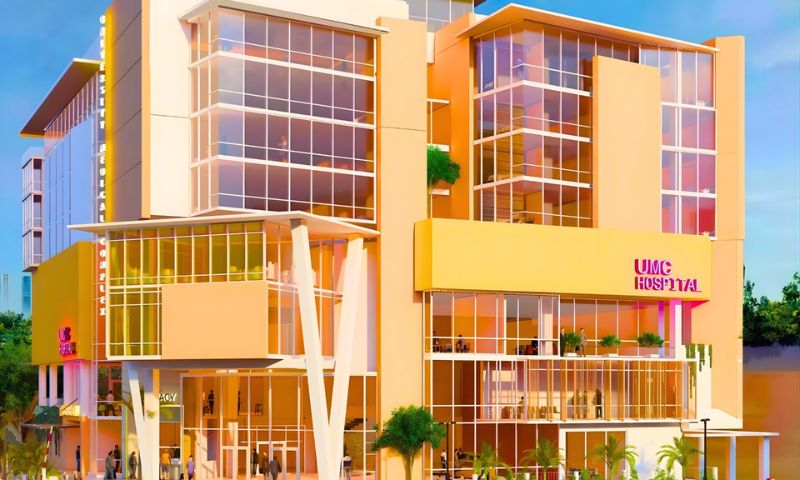
A major addition to Karachi’s strained healthcare system is about to take shape as a UN-accredited international medical relief organisation prepares to break ground on a large-scale tertiary care hospital designed to serve both paying and non-paying patients. On January 4, 2026, Imamia Medics International (IMI) will formally launch construction of its flagship University Medical Complex (UMC), a project its leadership describes as a long-term healthcare lifeline for the city.
Once operational, the University Medical Complex is expected to treat up to one million patients annually, including 200,000 deserving patients who will receive completely free medical care. The facility will rise along University Road in Gulistan-e-Jauhar, adjacent to the University of Karachi, placing it at the heart of one of the city’s most densely populated education and residential corridors.
IMI, led by senior Pakistan-origin doctors mostly based in the United States, has been active in medical relief work across more than 30 countries. According to the organisation, the idea for UMC grew out of decades of on-ground experience running 25 charitable clinics across Pakistan, which currently provide free treatment to around 150,000 patients every year. IMI’s credibility is underpinned by its UN accreditation, first granted over 25 years ago and upgraded to consultative status in 2006.
The January 4 groundbreaking will be followed by a high-profile fundraising event later the same day at a leading Karachi hotel. The programme will include a detailed video presentation outlining the hospital’s scope and projected impact. Veteran showbiz personality Khalid Anum will conduct the fundraising session, with philanthropists, donors, and community leaders expected to pledge support to help fast-track construction.
IMI founder Dr Wajih Rizvi says the complex is designed as a comprehensive, multi-specialty facility, offering emergency and trauma care, women’s and child health services, and advanced treatment for both infectious and non-infectious diseases. Over time, it is also planned as a centre for medical education and research. He points to Karachi’s rapidly growing population and rising healthcare costs, noting that quality treatment is increasingly out of reach for low- and middle-income families.
The project has also drawn endorsements from prominent religious and community figures, including Allama Syed Shahenshah Hussain Naqvi, who has pledged full support. For IMI, January 4 marks more than a ceremonial milestone—it signals the start of an ambitious effort to narrow Karachi’s widening healthcare gap.