Pakistan has launched a new initiative to convert banana waste into textile fiber, a move aimed at promoting sustainable industry practices while creating new economic opportunities. The project has been launched by the Small and Medium Enterprises Development Authority in collaboration with the Food and Agriculture Organization and other partners.
The initiative was introduced during an inception workshop that brought together policymakers, researchers, entrepreneurs and development partners to explore the potential of banana waste as a raw material for Pakistan’s textile and allied industries. Officials said the project is designed to support climate-friendly solutions while strengthening the country’s bio-economy.
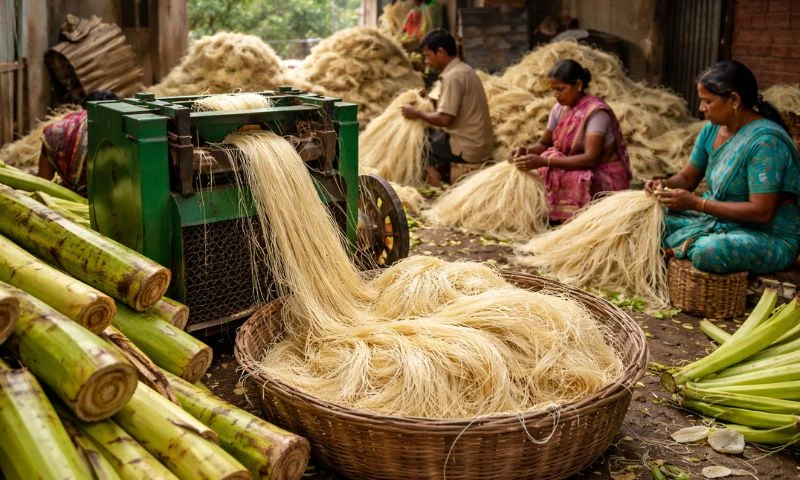
The project will run from 2026 to 2031 and aims to promote sustainable production by converting banana plant waste into valuable textile fiber and other products such as handicrafts, bags and packaging materials.
Addressing Agricultural Waste and Environmental Challenges
Experts say Pakistan produces a significant amount of banana waste each year because banana plants are discarded after harvesting fruit. Large quantities of this agricultural residue are often burned or left to decompose, contributing to environmental pollution.
Studies show that bananas are cultivated on more than 40,000 hectares in Pakistan and a large portion of plant residue goes unused. Officials believe this waste can be processed to extract strong natural fibers that can be used in textiles and other products.
Assistant FAO Programme Officer Amina Bajwa said the initiative could help address environmental challenges while generating economic value. She noted that Pakistan ranks among the countries most vulnerable to climate change and faces issues such as agricultural emissions and environmental degradation.
She said converting banana waste into high-value products offers a practical solution that can reduce pollution while creating new sources of income for farmers and small businesses.
Sindh Plays Key Role in Banana Economy
Sindh province is expected to play a central role in the project because it is the main banana-producing region of Pakistan. Dr Julius, FAO Programme Coordinator and Provincial Head for Sindh, described the province as the “epicenter of Pakistan’s banana economy.”
He highlighted concerns about post-harvest losses and noted that nearly 16 percent of bananas are wasted during production and supply processes. He stressed that research and farmer participation will be essential for the success of the initiative.
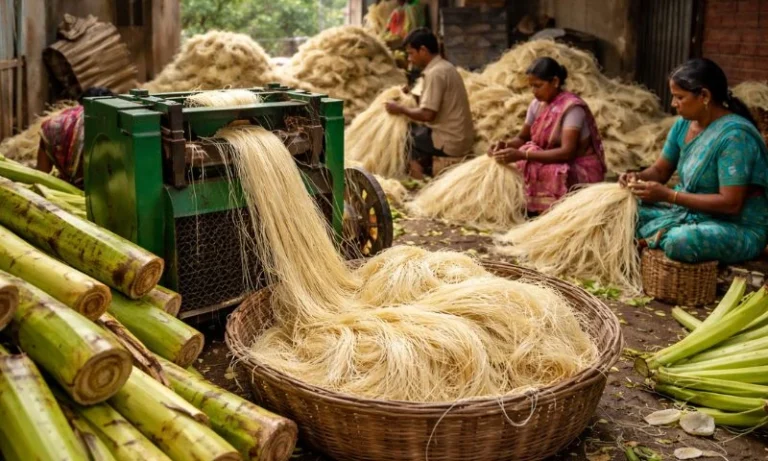
Agriculture experts say banana fiber is a strong natural material extracted from the plant’s stem, which is usually discarded after harvest. The fiber is biodegradable and can be used to produce fabrics, ropes, mats and other textile products.
Women and SMEs Expected to Benefit
Officials say the project will also have a strong social impact. Around 40,000 women are expected to be engaged in various activities linked to the initiative, including fiber extraction, handicraft production and small business development.
The program will focus on pilot projects, technology transfer, training, capacity building, certification support and market linkages to help build a sustainable value chain.
Entrepreneurs have already begun experimenting with banana fiber products. During the workshop, a seller of banana fiber goods shared her experience and said the initiative had helped her earn a livelihood while promoting sustainable products.
Officials believe the project could strengthen Pakistan’s textile sector, the country’s largest export industry, while also reducing agricultural waste and promoting environmentally friendly manufacturing practices.