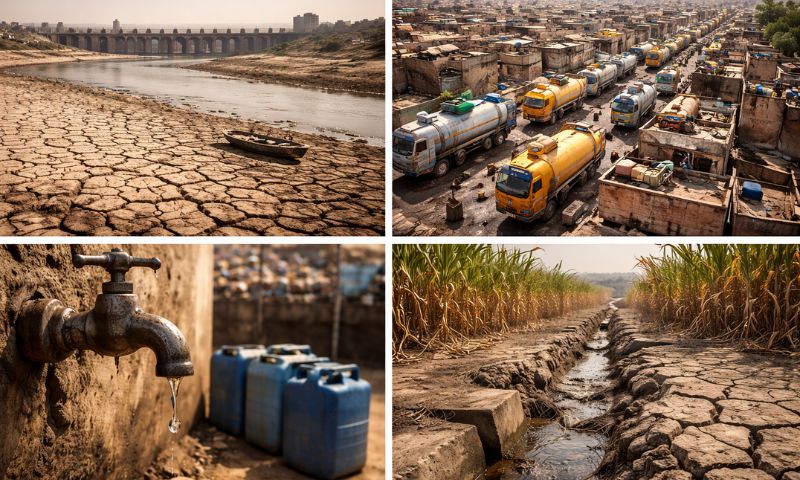
Fresh water scarcity is no longer a distant warning. A new United Nations University report says the world is already entering “water bankruptcy,” with decades of overuse, pollution, and climate change draining rivers, aquifers, and glaciers. Nearly 75% of the global population lives in water-insecure or critically insecure countries, and 4 billion people face severe water scarcity for at least one month each year.
UNU lead author Kaveh Madani warns: “Many regions are living beyond their hydrological means, and many critical water systems are already bankrupt.”
UNICEF estimates that half of the world’s population could be living in areas facing water scarcity by 2025. At least 700 million people could be forced to move because of intense water scarcity by 2030.
Pakistan’s Water Decline: More Than Numbers
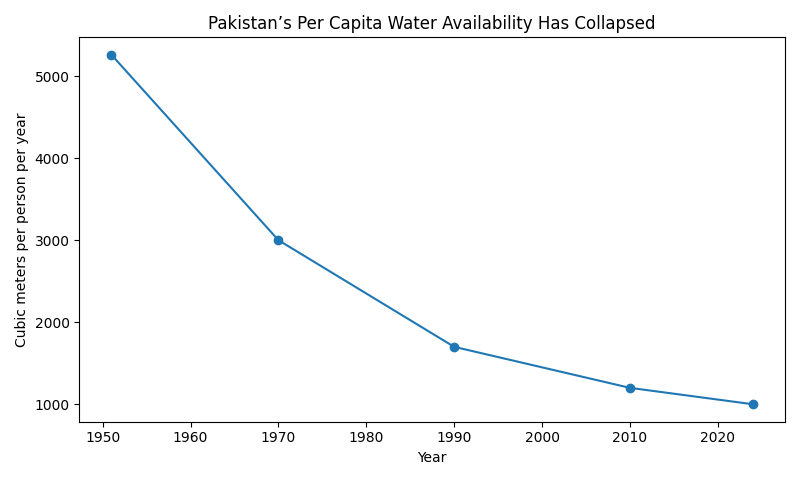
Pakistan once had abundant water resources. But over generations, that supply has plunged dramatically. In the 1950s, annual per-person water availability was about 5,000 cubic meters. By the early 2000s, it had dropped below 1,500 m³, and today it sits near 930–1,017 m³ per person annually — far below the threshold of 1,700 m³ that defines “water stressed,” and under the 1,000 m³ mark for “water scarce.”
Some forecasts suggest Pakistani water availability could fall as low as 660 m³ per person by 2025 and even lower by 2050 if current trends continue.
To put that in perspective: an Olympic swimming pool holds roughly 2,500 m³ of water — meaning the annual water available to each Pakistani could soon be less than half that volume.
A Nation Running Dry at the Tap and Field
Water scarcity in Pakistan affects cities, farms, and everyday routines:
1. Per capita availability has plunged
From ~5,000 m³/person/year in the 1950s
To under ~1,000 m³ today
Forecasts as low as ~660 m³ by 2025 and lower by 2050
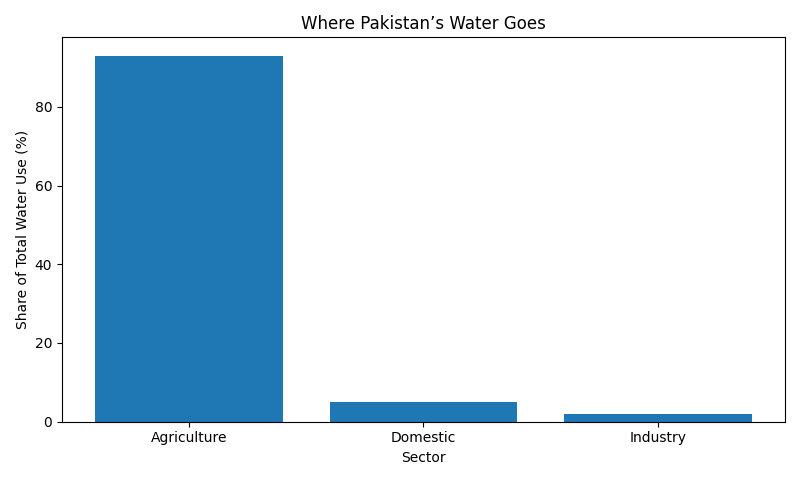
2. Agriculture dominates water use
About 93% of Pakistan’s water goes to farming, with only 5% for households and 2% for industry. Domestic and industrial shares may rise to 15% by 2025, increasing pressure on farmland water.
3. Urban scarcity will grow
Urban water demand is expected to more than double by 2050, with the number of urban residents facing scarcity rising from about 39.9 million in 2016 to 97.5 million in 2050 if supply does not keep up.
4. Safe drinking water is limited
Only 47% of Pakistanis have access to safe drinking water, up from 39% in 2022 but still far below the global target. Unsafe water contributes to an estimated 53,000 child deaths every year and chronic health issues like stunting.
Why Pakistan’s Water Situation Is Worse Than It Sounds
A few facts help explain why numbers matter:
Population explosion
Since 1947, Pakistan’s population has grown more than fourfold. Higher demand contributes directly to lower per-person water shares.
Single river dependence
About 95% of renewable water supply comes from the Indus Basin. That makes the country especially vulnerable to seasonal rainfall changes, glacier melt shifts, and upstream variability.
Low storage capacity
Pakistan’s water reservoirs store only about 30 days’ supply, far below the 1,000-day capacity recommended for similar climates, making the country fragile during droughts or dry winters.
Groundwater depletion
Cities and farms increasingly rely on groundwater as surface supplies falter. Over-extraction has lowered water tables hundreds of feet in some areas.
The Human Side: Life With Less Water
Water scarcity is not just a statistic. In Pakistan, it changes everyday life:
Households fetch or pay more for water, increasing living costs.
Businesses adjust operations to match supply timing.
Families face health risks from contaminated water.
Crop failures and irrigation limits push food prices up.
An estimated 80% of Pakistan’s population faces acute water shortages at least one month each year.
Solutions Pakistan Can Adopt Now
Pakistan doesn’t need one big fix. It needs multiple actions:
Smarter agriculture
With agriculture consuming most water, improving irrigation efficiency (like drip systems) could free water for other uses.
Better storage
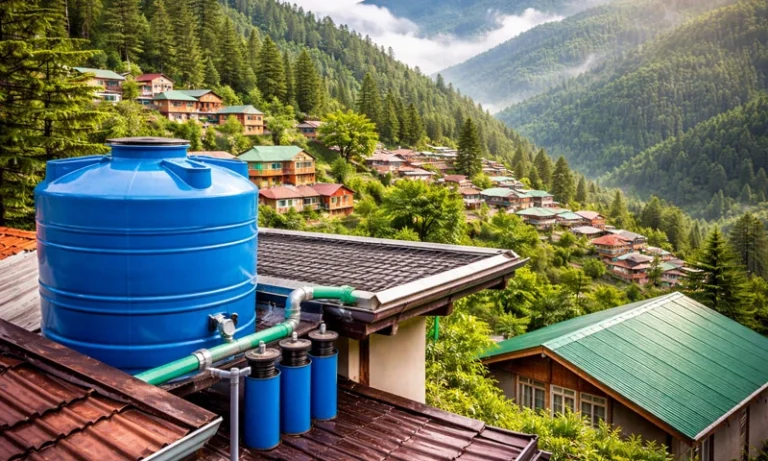
Expanding reservoirs and rainwater capture helps buffer supply when rains fail. (Construction projects like new dams aim to address this).
Fix distribution
Reducing urban leaks and boosting treatment capacity can protect groundwater and reduce waste.
Protect quality
Treating wastewater and preventing industrial pollution ensures water that remains is safe to drink.