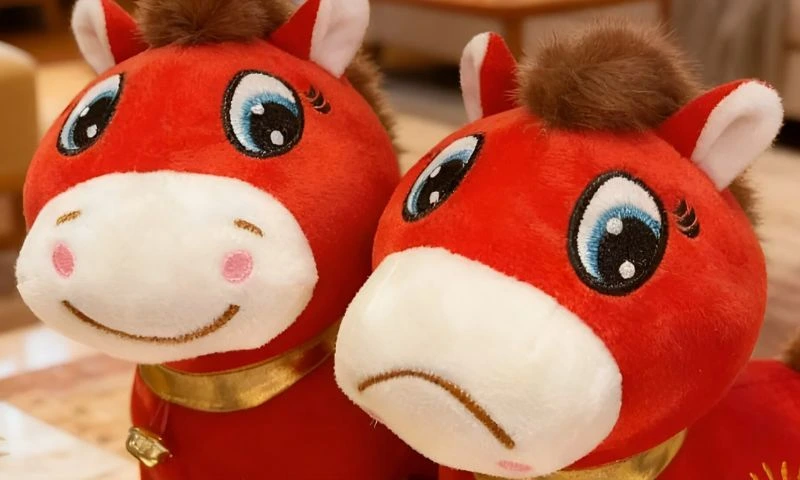
An accidental sewing mistake at a factory in eastern China has turned a simple plush toy into a cultural phenomenon ahead of the 2026 Lunar New Year. Intended to bring festive cheer, the little red horse instead sported a sad expression that resonated deeply with millions online.
The plush was manufactured by a shop called Happy Sister in Yiwu International Trade City, the world’s largest wholesale market for small goods. Designed to be a happy Lunar New Year decoration, it was supposed to have a wide, cheerful smile. But the toy’s mouth was accidentally stitched upside down, giving it a downturned expression that social media users immediately dubbed the “crying horse.”
The misprinted mouth and forlorn gaze transformed the once ordinary decoration into something unexpectedly meaningful. The horse still wears a red body symbolizing good luck and a gold bell around its neck. Yet its new expression perfectly captured a growing sentiment among young Chinese workers dealing with long hours and workplace stress.
The owner of Happy Sister, Zhang Huoqing, told Reuters that a worker had sewn the mouth on upside down by mistake. At first, she offered a refund to the customer who bought it. But when images of the sad toy began spreading online, she saw something unusual unfolding. “People joked that the crying horse is how you look at work, while the smiling one is how you look after work,” Zhang said.
Instead of discarding the flawed plushies, Zhang embraced the unexpected appeal. As photos and short clips of the crying horse gained traction on platforms such as Xiaohongshu and Weibo, demand surged. By mid-January, the factory was receiving more than 15,000 orders each day, prompting the addition of ten extra production lines to keep up.
Young professionals in China, many wrestling with long work hours even after the official end of the notorious 996 culture, found something relatable in the toy’s sad eyes. For them, the crying horse has become more than just a decoration. It’s a humorous symbol of emotional exhaustion — a small acknowledgment of stress that many feel but rarely discuss aloud.
The trend aligns with a broader appreciation for “ugly-cute” designs in Chinese pop culture characters that are imperfect, quirky and emotionally expressive. Toys like Pop Mart’s Labubu and others in the same vein have shown that flaws can become features, especially when they reflect real life.
From mistake to meme, the crying horse stands as a quirky testament to how a simple flaw can capture a collective mood and turn a plush toy into a beloved mascot.