Across Pakistan, mosques start preparing for Taraweeh weeks before Ramadan. Taraweeh is a voluntary night prayer offered after Isha during Ramadan, and many mosques hold it in congregation every night. With attendance rising sharply, mosque committees focus on cleanliness, reciters, sound, and safety.
Deep Cleaning and Space Planning
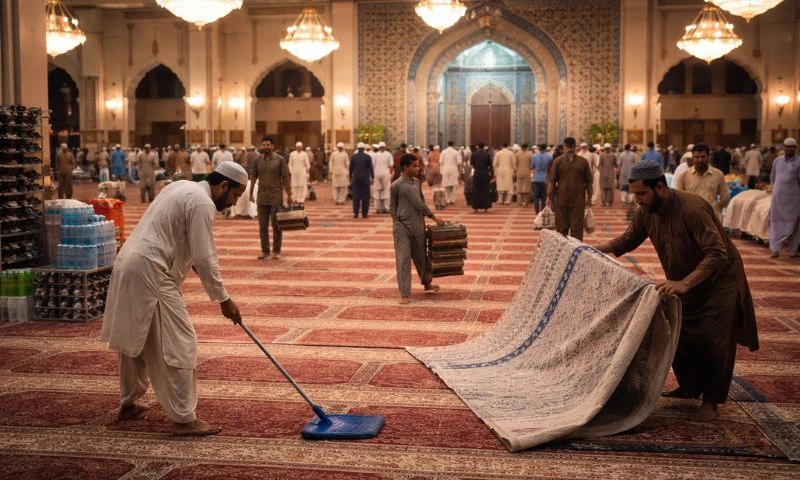
The first step is practical. Volunteers wash courtyards, deep clean prayer halls, and dust fans, lights, and shelves. Many mosques replace or shampoo carpets and repair ablution areas. They also re-mark saff lines, add extra mats, and create clearer entry and exit flows for peak nights, especially the last ten days. In larger city mosques, teams set up separate lines and access points for women, and assign volunteers to guide families.
Read More: How to Lose Weight During Ramadan: Simple Expert Tips That Work
Choosing the Huffaz and Setting the Pace
A major Taraweeh task is selecting the imam or hafiz who will lead long recitations. For flagship mosques, this can involve formal selection. At Islamabad’s Faisal Mosque, the religious affairs ministry selects a group of reciters for Ramadan nights after a competition process. One of the selected qaris, Muhammad Bilal Orakzai, described the year-round effort behind that role: “to recite here, we prepare hard the whole year round,” he said.
Many neighborhood mosques do it locally, but they still plan a schedule, agree on pace, and coordinate backup reciters in case of illness.
Security and Crowd Control
Security planning has become more visible in recent years. Police and district administrations often issue Ramadan security directions, especially for Taraweeh and Friday prayers. In Islamabad, police directed mosque managements to deploy guards during Taraweeh, restrict parking near gates, keep a single entry and exit route, and report suspicious activity. In Punjab, official guidelines have included extra personnel, CCTV and walk-through gates, searchlights, controlled entry routes, and tighter checks during Taraweeh hours.
Read More: Will Ramadan Begin on Feb 19? Pakistan Awaits Official Moon Sighting Announcement
Sound, Lighting and Community Logistics
Mosques also test microphones, upgrade speakers, and reduce feedback so worshippers can follow recitation clearly. Committees arrange water points, manage shoe areas, and coordinate nearby parking with residents. On high-traffic nights, some mosques set volunteer rosters for crowd flow, first aid support, and lost-and-found desks. The goal stays simple: a calm, safe space where worshippers can focus on prayer.