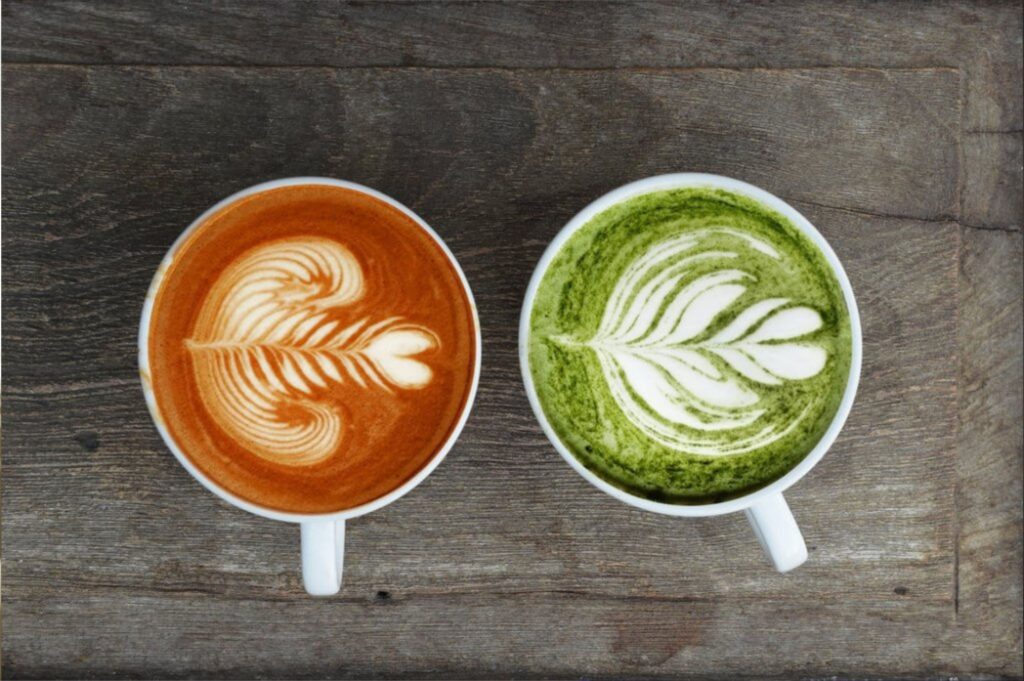
For years, coffee has been the go-to drink for millions looking to kickstart their day, but a growing number of health-minded consumers are turning to matcha which is a finely ground Japanese green tea, as a smoother, more sustained alternative. While both beverages deliver a dose of caffeine, they differ in how that energy feels and how it affects the body, leading many to ask: is matcha better than coffee?
At a basic level, coffee generally contains more caffeine per cup, providing a quick and noticeable energy spike that can sharpen alertness and even help suppress appetite in the short term. Matcha’s caffeine content tends to be lower per serving but it is absorbed more slowly by the body thanks to the amino acid L-theanine. This duo can create a more steady, calm boost in focus without the jitters or sudden crash many people associate with coffee.
Beyond caffeine, one of matcha’s biggest strengths lies in its high antioxidant content. Because the whole tea leaf is consumed as a powdered drink, matcha delivers significantly more catechins and polyphenols than steeped teas and potentially more than coffee, depending on preparation. These are natural compounds linked to reduced oxidative stress and inflammation. Antioxidants like EGCG have been studied for their role in heart health, metabolic support, and even cognitive benefits.
People who switch from coffee to matcha often describe the energy as longer-lasting and gentler, with fewer midday slumps. Some research also suggests matcha can support focus under stress and aid attentional performance better than caffeine alone. Furthermore, matcha’s lower acidity makes it less likely to irritate the stomach which is a plus for those with sensitive digestion. Its L-theanine content may even help with relaxation and stress reduction.
That said, matcha isn’t a magic solution. For coffee lovers, its distinct earthy flavor and milder kick can feel less satisfying, and quality varies widely across products. Some people also find the ritual of preparing matcha, whisking powdered tea with water, more time-consuming than brewing coffee.
In the end, whether matcha is better than coffee depends on your goals: if you want quick, intense energy and metabolic boosts, coffee still delivers; if you’re after consistent focus, rich antioxidants, and gentler stimulation, matcha might just win your morning.