Pakistan’s aviation sector has suffered losses estimated at Rs20 billion after widespread flight cancellations triggered by regional tensions and airspace closures across parts of the Middle East. The disruption began on February 28 and has severely affected both domestic and international airline operations.
Authorities say the conflict involving the United States, Iran and Israel has forced several Gulf countries to restrict or close sections of their airspace. As a result, airlines operating to and from Pakistan have faced major operational challenges, including cancelled flights, longer routes and rising operational costs.
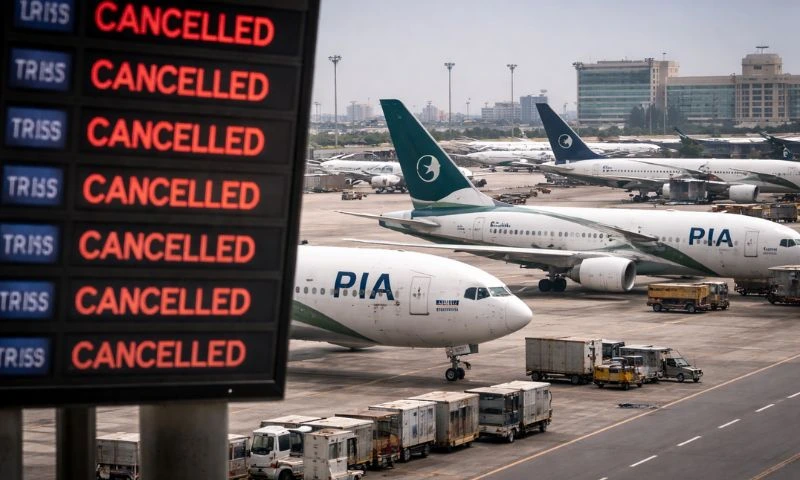
Since the beginning of the crisis, 578 flights operated by Pakistani and foreign airlines have been cancelled, creating significant financial losses for airlines and inconvenience for thousands of passengers.
Industry officials estimate that the aviation sector has already suffered losses worth millions of dollars, highlighting the scale of disruption caused by the regional conflict.
Hundreds of Flights Cancelled Across Major Airports
Pakistan’s major international airports have been heavily affected by the crisis. Airport sources report that 162 flights to Middle Eastern destinations were cancelled in a single day, affecting travellers across the country.
Flights were cancelled from key airports including Karachi, Islamabad, Lahore, Peshawar, Multan, Sialkot and Faisalabad. The routes primarily affected were those connecting Pakistan with Gulf countries such as the United Arab Emirates, Qatar, Bahrain and Kuwait.
Karachi’s Jinnah International Airport alone saw 40 flights cancelled to destinations such as Dubai, Abu Dhabi, Doha, Sharjah, Kuwait and Bahrain. Meanwhile, 38 flights were cancelled from Islamabad to several Gulf destinations including Dubai, Abu Dhabi, Doha and Sharjah.
Lahore airport recorded 28 cancelled flights, while Peshawar reported 24 cancellations on routes to Gulf cities. Multan, Sialkot and Faisalabad airports also experienced disruptions, with several international departures cancelled.
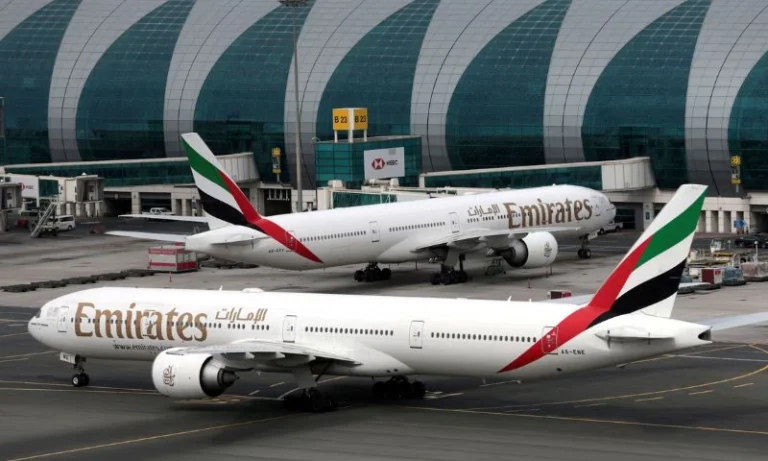
The cancellations affected flights operated by major airlines including Emirates, Etihad Airways, Air Arabia, Pakistan International Airlines, Airblue, Flydubai, Qatar Airways and Fly Jinnah.
Islamabad Airport Among the Worst Affected
Islamabad International Airport has experienced some of the largest disruptions. Officials say nearly 180 flights were cancelled at the airport over five days, highlighting the severity of the situation.
In addition to international routes, several domestic flights connecting cities such as Karachi, Gilgit and Skardu were also affected due to airspace restrictions and operational changes.
Authorities say between 35 and 40 two-way flights are currently being cancelled daily from Islamabad airport alone.
Pakistan International Airlines has also adjusted its operations. Due to restricted airspace, the airline has reduced the use of its Airbus A320 aircraft and instead deployed Boeing 777 aircraft on alternative routes to manage longer flight paths.
Passengers Advised to Check Flight Status
Airlines and airport authorities have urged passengers to remain in contact with airlines before heading to airports. Officials say travellers should confirm the status of their flights through airline helplines due to the rapidly changing regional situation.
Experts say prolonged disruptions could further impact airline revenues and passenger traffic if the regional conflict continues.
Pakistan’s aviation industry, which was already recovering from pandemic-era losses, now faces another major challenge as geopolitical tensions reshape global air travel routes.