The government of Pakistan has issued new safety rules for vehicles traveling on national motorways as part of a broader effort to reduce accidents and save lives on the country’s high-speed road network. After a recent deadly accident on the M-9 Motorway, authorities have moved quickly to enforce stricter checks and prevent unsafe vehicles from entering motorways.
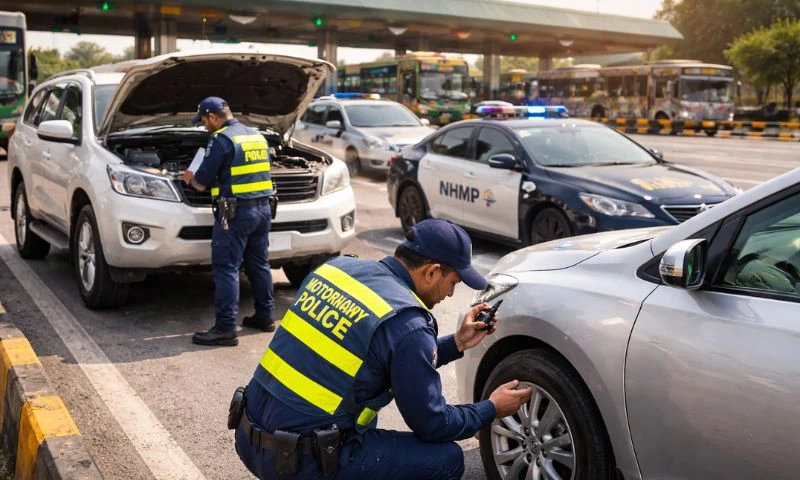
Federal Minister for Communications Abdul Aleem Khan directed the National Highways & Motorway Police (NHMP) to introduce mandatory vehicle fitness inspections at motorway entry points nationwide. The focus is on stopping vehicles with worn-out, weak, or expired tyres as well as other safety issues from accessing the motorway. Officials must inspect tyres, brakes, lights, and other mechanical components before allowing a vehicle to enter.
In a public statement, the minister stressed that “road safety will take priority over convenience” and that there will be zero tolerance for negligence. He expressed deep sorrow for the victims of the recent crash and urged all drivers to maintain their vehicles properly to avoid similar tragedies in the future.
This new enforcement follows growing concern over motorway safety in Pakistan. Motorways like the M-9, which connects Karachi and Hyderabad, see thousands of vehicles each day. High speeds and heavy traffic make tyre blowouts and mechanical failures especially dangerous. According to the National Highways & Motorway Police, rigorous fitness checks can help identify unsafe vehicles before they contribute to road accidents.
The directive applies equally to both commercial and private vehicles. While heavy trucks, buses, and vans have often been subject to stricter regulations in the past, the updated rule ensures that private cars and smaller vehicles must also pass safety inspections before being granted access to motorways.
Road safety experts have welcomed the move, saying proactive checks could significantly reduce accidents linked to mechanical faults. A transport safety analyst noted that “tyre condition, brake performance, and vehicle maintenance are critical for motorway travel, especially at high speeds.” Effective enforcement will likely lead to better driver awareness of vehicle upkeep.
This update arrives amid broader efforts to improve road safety in Pakistan. Previous regulatory steps have targeted emission controls, commercial vehicle bans in urban areas, and fitness requirements for older vehicles. Continued collaboration between government agencies, the NHMP, and motorists will determine how effectively these rules translate into safer travel for all.
For daily commuters and long-distance travelers alike, the new rule means an added layer of security on Pakistan’s motorways. It also places responsibility on drivers and vehicle owners to ensure their cars meet the required safety standards before setting out on high-speed journeys.