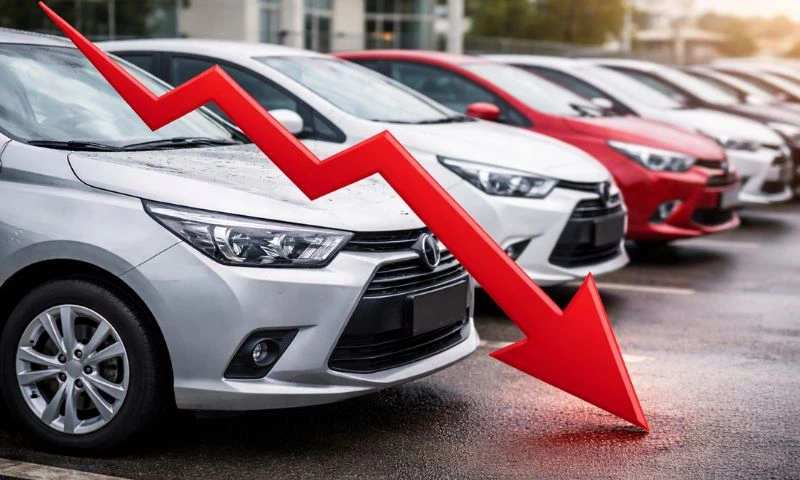
Pakistan’s automobile market experienced a sharp slowdown in February 2026 as car sales declined significantly compared to the previous month. The drop reflects ongoing economic pressures, rising vehicle prices, and cautious consumer spending in the country.
Industry data shows that the auto sector continues to face volatility as manufacturers and buyers navigate inflation, high interest rates, and changing demand patterns.
Car Sales Drop Sharply in February
According to the latest figures released by the Pakistan Automotive Manufacturers Association, car sales in February 2026 fell by about 26 percent compared with January. A total of roughly 12,000 passenger cars were sold during the month, highlighting a noticeable contraction in monthly demand.
Despite the decline on a month to month basis, analysts say the market still shows signs of gradual recovery compared with the extremely low sales levels seen during Pakistan’s economic crisis in previous years. Automakers have been trying to rebuild production levels after the industry suffered from import restrictions and shortages of parts during 2023 and 2024.
Read More: Pakistan Auto Sales Reach 43-Month High in January 2026
Major Car Models Show Mixed Performance
Sales data shows varying trends across different brands and models in Pakistan’s auto market. Pak Suzuki, which dominates the small car segment, continued to see strong demand for entry level vehicles. The Suzuki Alto remained one of the best selling models in the country, reflecting consumer preference for affordable cars with lower fuel consumption.
Toyota Indus Motor Company also maintained steady demand for models such as the Toyota Corolla and Toyota Yaris. Meanwhile, Honda Atlas experienced moderate sales activity for models including the Honda City and Honda Civic. Industry analysts say the market continues to be driven by affordability, with smaller engine vehicles attracting the most buyers.
Economic Factors Affecting the Auto Market
Pakistan’s auto sector has been under pressure due to several economic factors. High interest rates have increased the cost of auto financing, making it harder for many consumers to purchase vehicles through bank loans. At the same time, rising vehicle prices driven by currency depreciation and higher production costs have also affected demand.
According to economists, inflation and rising living expenses have forced many households to postpone major purchases such as cars. The State Bank of Pakistan has maintained relatively tight monetary policy in recent months, which has also contributed to slower consumer financing growth.
Read More: Pakistan Auto Industry Demands End to Rs3 Million Car Loan Cap to Boost Sales
Signs of Long Term Recovery
Despite the monthly decline, industry experts believe Pakistan’s auto market could gradually stabilize as economic conditions improve. Several new models have recently entered the market, including hybrid and electric vehicles introduced by both local and international automakers.
Chinese brands and new entrants are also increasing competition, which may expand consumer choice in the coming years. Automakers remain optimistic that easing inflation and improving macroeconomic stability could eventually boost demand. The Pakistan auto industry remains a significant contributor to the economy, supporting thousands of jobs in manufacturing, dealerships, and supply chains.
While February’s drop in sales highlights ongoing challenges, analysts say the sector still has long term growth potential as Pakistan’s middle class expands and urban mobility needs increase.