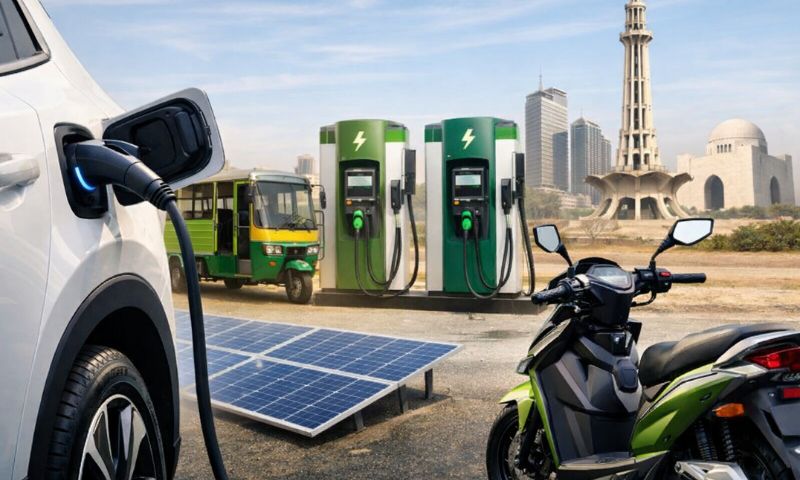
Pakistan has taken a major step toward cleaner transport with the launch of the Pakistan Accelerated Vehicle Electrification (PAVE) scheme, a new initiative designed to boost subsidised electric vehicle (EV) adoption nationwide. The government unveiled the program on January 22, 2026, with the aim of reducing fuel costs, cutting air pollution, and supporting local EV manufacturing.
The PAVE scheme will provide a total subsidy pool of Rs100.36 billion over five years through 2030, making electric bikes, rickshaws, loaders, cars, buses, and trucks more affordable for consumers and businesses. Phase-I of the program targets 41,000 electric vehicles, including 40,000 e-bikes and 1,000 electric rickshaws/loaders.
This initiative is part of Pakistan’s broader New Energy Vehicle Policy 2025–30, which sets an ambitious goal of increasing the share of EVs in new vehicle sales to 30% by 2030. The policy also aims to reduce reliance on imported fossil fuels and expand the country’s EV infrastructure, including charging stations and local manufacturing capacity.
Officials say the PAVE scheme will begin disbursing subsidies right away. Reports indicate that subsidy transfers for electric bikes and rickshaws have already begun for verified applicants, marking the transition from planning to implementation.
Under the program, applicants who buy an electric vehicle pay the full price upfront to the manufacturer, and then receive a subsidy reimbursement directly into their account after verification. In addition, bank lease options will allow buyers to acquire electric two- and three-wheelers on easy monthly installments at subsidised interest rates, making ownership more accessible.
The government has also allocated funds from the federal budget to support EV adoption. Earlier, the state set aside Rs9 billion for EV subsidies under the PAVE scheme for the 2025-26 financial year, aimed at supporting the purchase of roughly 116,000 electric bikes and 3,000 electric rickshaws and loaders.
Experts say the success of the PAVE scheme will depend on how well Pakistan builds EV infrastructure, including charging stations and service networks. Globally, EV adoption has surged where supportive policies and infrastructure are in place, helping countries cut emissions and reduce fuel costs.
Industry observers also note that Pakistan’s urban centers — including Karachi, Lahore, and Islamabad — face high levels of air pollution and fuel dependence. Switching to EVs could ease these challenges while creating economic opportunities in assembly, battery production, and charging station deployment.
Environmental advocates say that as the world moves toward clean mobility, Pakistan’s policy push positions it to benefit from falling EV costs and technological improvements. However, challenges remain, such as expanding the electrical grid to support widespread charging and training technicians for EV maintenance.
With the PAVE scheme now operational, Pakistan aims to make EVs more affordable, accessible, and attractive, helping reduce the nation’s carbon footprint and transforming its transportation landscape over the next decade.