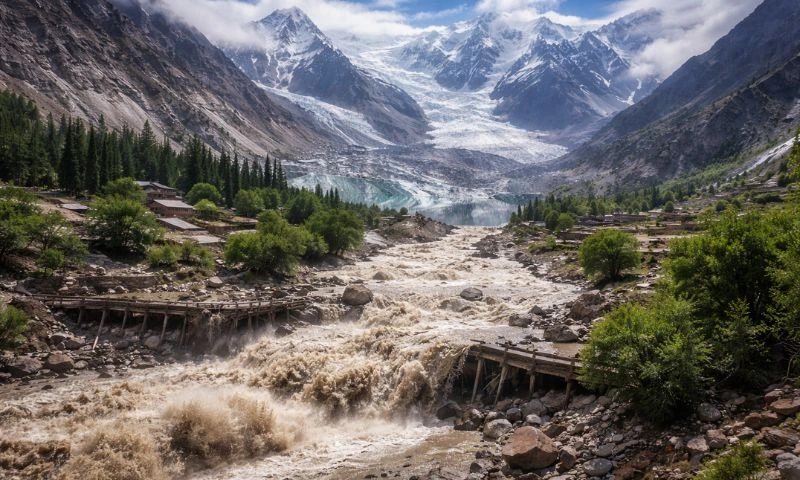
Northern Pakistan is now confronting an unusual winter heat wave that has scientists and officials warning about the rising threat of glacial lake outburst floods. Recent weather data show daytime temperatures recorded as much as 3 to 5°C above normal, creating a dangerous combination of reduced snowfall, accelerated glacier melt, and growing flood risks in the country’s mountainous north.
The Pakistan Meteorological Department (PMD) says that below-normal rainfall and limited snowfall this winter have left the region warmer and drier than usual. The warming has been particularly intense in areas like Gilgit, Bunji, Chilas, and Astore, where higher minimum temperatures are affecting overnight ice refreezing.
Climate Trends Fuel Glacier Melt
According to the PMD, stable atmospheric conditions and prolonged clear skies have allowed heat to build up, reducing the usual cold relief of winter nights. With less overnight cooling, snow and glacier surfaces do not refreeze as they normally would, increasing meltwater runoff into glacial lakes that sit behind natural ice and moraine dams.
“Reduced nighttime cooling further enhances meltwater runoff into glacial lakes,” the PMD said in a statement, adding that rapid melting increases water accumulation in these lakes. The growing water volume raises the likelihood of Glacial Lake Outburst Floods (GLOFs) in downstream valleys, officials warned.
Glacial lake outburst floods can occur suddenly and without warning, triggering flash floods that sweep through river valleys, damaging infrastructure and posing serious risks to mountain communities.
Read More: Heatwaves and Floods Hit Pakistan’s Economy Hard, Officials Reveal
Vulnerable Regions and Glaciers
The areas most at risk include Gilgit, Ghizar, Hunza, Bunji, Chilas, and Astore, where temperature anomalies were especially high in February. Between February 1 and 22, daytime temperatures in Gilgit reached 4.7°C above normal, while nighttime increases hit 3.4°C in Chilas.
Pakistan’s northern highlands, mainly in Gilgit-Baltistan, host some of the world’s major glaciers, including the Batura and Baltoro glaciers, which feed rivers and sustain local ecosystems. These ice masses are vital sources of freshwater but are already responding to warming trends.
Scientific observations have shown that many glaciers in the Hindu Kush Himalaya region are receding as temperatures rise. Melting ice increases water flow into glacial lakes, a phenomenon that may both strengthen water availability in the short term and increase flood risk. In the long run, however, faster glacier loss threatens freshwater security for downstream populations.
Climate Change Links and Long-Term Threats
Climate experts say rising temperatures and altered precipitation patterns across South Asia are tied to broader global warming trends. Research shows that warmer air can hold more moisture and elevate melting rates, especially when snowfall is low. Pakistan is considered one of the countries most vulnerable to the impacts of climate change, facing cycles of drought, heat waves, extreme rainfall, and flood events.
Historical data also tell a cautionary tale. The catastrophic 2010 Pakistan floods, which affected millions and caused massive destruction, were linked to heavy monsoon rains combined with landscape changes intensified by climate variability.
Read More: The Hotspot Effect: How Warming Is Reshaping Everyday Life in South Asia
What Authorities Are Doing
The PMD says it is closely monitoring temperature trends, glacier melt conditions, and hydrometeorological parameters. It plans to issue timely advisories to authorities and local communities to prepare for possible GLOF events. Early warning systems and community awareness campaigns are essential in reducing disaster risk in high-altitude villages and along river valleys.
Adapting to these shifting climate patterns will require both local preparedness and national strategies to strengthen infrastructure, provide early warnings, and support communities at risk.