
Pakistani consumers are rapidly embracing artificial intelligence (AI) and social commerce as part of their online shopping experience, but many remain cautious about allowing AI to make purchases on their behalf, according to Visa’s latest Stay Secure study. The annual survey, conducted by Wakefield Research and released by Visa, highlights the growing role of AI-powered tools in digital commerce while underscoring persistent concerns about trust, fraud and online security. The findings come as Pakistan’s digital economy continues to expand, driven by rising internet penetration, smartphone adoption and increasing use of digital payment platforms. According to the study, 82% of consumers in Pakistan have used AI tools to assist with shopping. The most common uses include comparing prices, checking reviews and finding gift ideas. Around 56% use AI to compare prices, while 53% rely on it to review product ratings. Another 47% use AI tools to generate gift recommendations. Consumers appear largely satisfied with the technology. The survey found that 93% believe emerging technologies, including AI-powered tools, make online shopping faster and easier. AI is also influencing how consumers discover brands. About 55% of respondents said they typically encounter new retailers and products while shopping online. Trust Remains a Key Challenge Despite growing acceptance of AI, consumers remain reluctant to hand over complete purchasing decisions to automated systems. Only 42% said they would trust AI agents to complete checkout on their behalf. The findings suggest that while shoppers welcome AI assistance during the decision-making process, they still prefer maintaining control over financial transactions. At the same time, many consumers see AI as a powerful tool against fraud. The survey found that 65% believe AI has made scams easier to identify, while 87% expect artificial intelligence to play a critical role in protecting consumers from fraud in the future. Visa executives say trust will remain central to the next phase of digital commerce. “In Pakistan, we are seeing strong momentum as consumers embrace digital commerce, with AI and social platforms becoming an increasingly integral part of how people discover and shop,” said Leila Serhan, Senior Vice President and Group Country Manager for North Africa, Levant and Pakistan at Visa. “As digital ecosystems evolve, consumers are looking for experiences that not only offer greater convenience but also deliver confidence and control at every step of the journey,” she added. Social Media Shopping Expands Amid Fraud Concerns The report also highlights the rapid growth of social commerce in Pakistan. According to the findings, 82% of consumers have purchased products directly through social media platforms. However, fraud risks continue to grow alongside online shopping activity. More than half of respondents, 55%, reported experiencing a financial scam during the past 12 months. Among those affected, 44% said the scam occurred through social media platforms. The study also identified growing concerns regarding children’s online safety. Around 77% of respondents said children struggle to recognize scams, while 33% reported that a child in their lives had fallen victim to a scam while gaming or shopping online. Visa said consumers increasingly expect payment providers, online marketplaces and regulators to play a leading role in fraud prevention through real-time alerts, secure payment systems and trusted checkout experiences. “As commerce moves toward more agentic, AI-powered experiences, the study shows that consumers are embracing the convenience AI can bring to shopping but remain cautious when it comes to AI completing purchases on their behalf,” Serhan said.
Experts Warn AI Could Deepen Gender Inequality in Pakistan
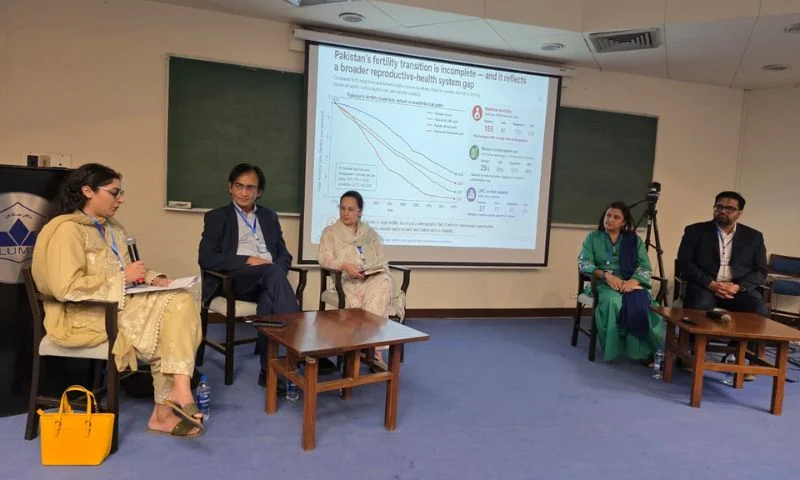
Experts at a gender and economy conference in Lahore warned that artificial intelligence could either unlock major economic opportunities for women or deepen existing inequalities if Pakistan fails to expand digital education and skills training. The discussion took place during a panel on “Health & Gender” moderated by Warda Riaz at LUMS. Panelists included Fyeza Jehan, Usman Ali, Adnan Khan and M. Farhan Majid. Speakers stressed that women’s economic empowerment depends heavily on education, access to information and bargaining power within society. One panelist said affordable learning opportunities and digital skills programmes could help women overcome structural barriers that continue to limit workforce participation and entrepreneurship. “There is a risk that communities with lower skills will be unable to benefit from new technologies,” the panel noted during the discussion. The experts warned that countries failing to invest in digital capacity-building may fall further behind in productivity and global competitiveness. AI Could Transform Women-Led Businesses The panel highlighted how digital tools and AI systems are rapidly reshaping business operations around the world. Referring to survey findings conducted with the Asher Blair Foundation, speakers said women entrepreneurs from nearly 80 countries showed strong interest in adopting generative AI tools. According to the findings, many women business owners wanted to use AI for accounting, payroll management and routine administrative work. Experts said AI could help women-led enterprises reduce time-consuming manual tasks while improving efficiency and productivity. The panel also referenced estimates suggesting Pakistan’s women-focused digital economy could represent a market worth nearly $500 million. That estimate is linked to Pakistan’s female population of around 73 million, highlighting the scale of untapped economic potential. Pakistan has one of the lowest female labor force participation rates in South Asia. The World Bank estimates female participation remains below 25 percent, despite rising smartphone and internet usage. Digital access for women also remains uneven, particularly in rural areas where internet access, digital literacy and educational opportunities remain limited. Digital Divide Could Hurt Long-Term Growth Experts warned that Pakistan’s weak education indicators and low literacy rates could limit the country’s ability to benefit from AI-driven economic transformation. They argued that unequal access to technology may create broader macroeconomic problems in the future. According to the discussion, economies with lower digital adoption could face slower productivity growth and greater dependence on imports. Meanwhile, digitally advanced economies may continue scaling faster through automation and AI integration. The panelists urged policymakers, educational institutions and private companies to invest urgently in women’s digital education and technology-focused training. They said inclusive access to AI skills would play a critical role in ensuring equitable economic growth across Pakistan. Analysts worldwide have increasingly warned that AI may widen social and economic inequality if governments fail to invest in education and workforce adaptation. For Pakistan, experts said the challenge now lies in ensuring women are not excluded from the next phase of technological and economic change.
