


Many founders now ask: “How much AI should already be built into this business?” Yet experts warn that speed alone does not produce better businesses. JPMorganChase Institute research based on small-business banking data shows how quickly adoption has accelerated. Companies launched in 2019 took 77 months to reach a 10 percent AI adoption rate. Businesses launched in 2025 reached the same milestone in about six months. AI now helps new companies draft customer emails, manage accounts and handle routine work before they take their first order. However, founders who automate without structure may simply scale existing weaknesses. Build Accountability Into AI Systems Marko Kling, vice-president of solution architecture at financial automation company Serrala, has advised global enterprises for 17 years. He argues that businesses must treat oversight as a system-design requirement instead of relying only on workplace culture. “Trust erodes quickly when accountability cannot keep pace with automation,” Kling said. Read More: Nvidia Warns Customers of Major AI Server Price Increase Companies should identify who owns the outcome of every automated process before they activate it. They also need clear reviews, data controls and audit trails. Without these safeguards, errors can damage trust among customers, regulators and investors. The principle applies to both new companies building AI into operations and established businesses adding it to older systems. Reward Human Judgment Over Output AI has weakened the advantage that once came from producing more content, campaigns and operational tests. When every company can access similar tools, output alone no longer separates one business from another. “In AI-powered organizations, value is shifting away from volume and toward discernment,” said Kathleen Ulrich, managing director of marketing at Brillio. “It’s no longer about producing more assets or running more tests. The value comes from knowing when to deploy technology, how to adapt strategies in real time, and how to keep a human lens on every decision.” Entrepreneurs can encourage this approach by rewarding employees for sound decisions, not just speed or production. Performance reviews should examine which tasks employees chose not to automate and why. Use AI to Strengthen Customer Relationships The strongest automation removes routine work while giving employees more time for difficult or sensitive customer interactions. Zendesk says its AI agents can autonomously resolve up to 80 percent of customer interactions. That leaves human teams to handle the remaining cases, which often involve emotion, unusual problems or higher risks. Businesses can automate scheduling, follow-ups and routine questions. Employees can then focus on rebuilding trust, solving complicated problems and making customers feel heard. Read More This approach can make service feel more personal because technology handles repetitive work quietly in the background. Founders should therefore measure AI success by more than the number of automated tasks. A more useful measure is how much additional attention employees can give to customers and decisions that matter. As Power concluded, “The entrepreneurs I’d bet on are choosing better, and letting bigger follow.”

Pakistan Joins China-Led Global AI Body as Founding Member
Pakistan became a founding member of the World Artificial Intelligence Cooperation Organization (WAICO) on Thursday, marking a new step in its engagement with global artificial intelligence governance. Deputy Prime Minister and Foreign Minister Ishaq Dar signed the founding agreement on Pakistan’s behalf during WAICO’s inaugural ceremony in Shanghai. Twenty-nine countries signed the agreement establishing the new intergovernmental body, according to Reuters. China says WAICO will promote international cooperation, improve artificial intelligence governance and help countries share the benefits of emerging technologies. Dar Signs WAICO Founding Agreement Dar arrived in Shanghai for a two-day official visit from July 16 to 17. Chinese Foreign Minister Wang Yi invited him to attend the organisation’s launch and related high-level meetings. The Foreign Office confirmed that Dar would sign the agreement as a founding member and represent Pakistan at the organisation’s inaugural events. Ali Dar announced the development on X, writing: “Pakistan becomes a Founding Member of the World Artificial Intelligence Cooperation Organisation.” China first proposed WAICO during the World Artificial Intelligence Conference in Shanghai in July 2025. Beijing presented the organisation as a platform for innovation, inclusive development and coordinated governance. The initiative also seeks to narrow the technological gap between developed and developing countries. Researchers say its development-focused approach could give Global South nations a larger voice in setting international AI priorities. Pakistan to Present AI Governance Position Dar will attend the opening ceremony of the 2026 World Artificial Intelligence Conference on July 17. He will also participate in the High-Level Meeting on Global AI Governance. The conference will run in Shanghai from July 17 to 20 under the theme “Intelligent Partners, Co-create the Future.” Chinese President Xi Jinping will address the opening ceremony and outline Beijing’s position on AI development and governance. Pakistan becomes a Founding Member of the World Artificial Intelligence Cooperation Organisation 🇵🇰 🙌🏻 pic.twitter.com/HLspK2KgzC — Ali Dar (@alimdar82) July 16, 2026 Dar is expected to present Pakistan’s perspective on responsible technological development and stronger international collaboration. Discussions will focus on global AI governance, capacity building and wider access to new technologies. On the sidelines, Dar will hold bilateral talks with Wang Yi. He will also meet senior representatives from participating countries to explore cooperation in artificial intelligence, innovation and digital transformation. Membership Supports Pakistan’s Digital Strategy Pakistan’s founding membership comes as Islamabad expands its national artificial intelligence agenda. The federal cabinet approved the National Artificial Intelligence Policy in July 2025. The policy aims to promote innovation, ethical AI development and economic growth while building a knowledge-based economy. The government has also committed $1 billion to AI development by 2030. Planned investments include sovereign computing infrastructure, research, education and local technology projects. Officials believe WAICO membership can help Pakistan secure technical partnerships, strengthen local expertise and participate in shaping international AI standards. The move could also add a major technology-focused dimension to Pakistan’s strategic partnership with China. The Foreign Office said Dar’s visit reflects Islamabad’s commitment to international cooperation in emerging technologies.
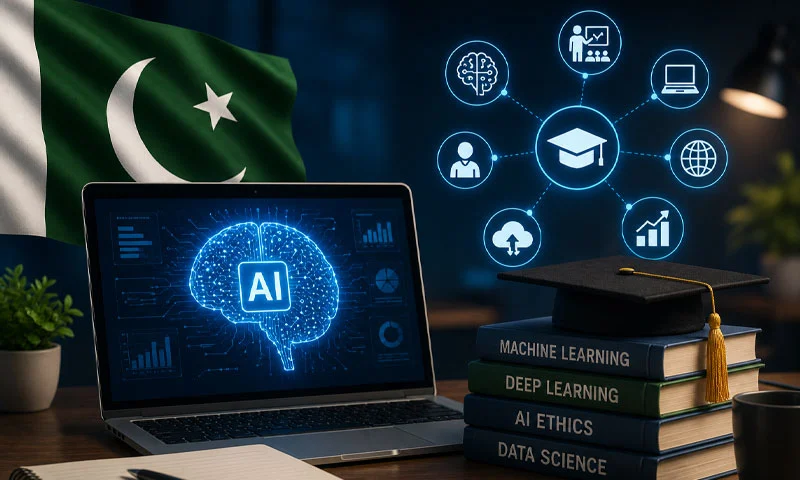
Pakistan Wants One Million AI-Skilled Workers by 2030
Ministry of Information Technology and Telecommunication plans to launch 20,000 online artificial intelligence training programmes across Pakistan under a major national initiative aimed at preparing the workforce for the rapidly evolving digital economy. The courses, spanning six to 12 months, will target fresh graduates, government officials, teachers, freelancers and professionals from multiple sectors through an advanced learning management system. The programmes will operate under the National AI Advancement Initiative, a strategic intervention designed to position Pakistan as a competitive player in the global AI market. Read More: How To Use AI Without Losing Your Thinking Power Officials say the initiative seeks to improve workforce capabilities, encourage innovation in the public and private sectors and strengthen AI governance in key industries including healthcare, agriculture, education and manufacturing. Under the programme, specialised certifications will cover high-demand fields such as machine learning, deep learning and AI ethics. Separate AI literacy programmes will also train civil servants and corporate leaders to support informed policymaking and technology adoption. The ministry has invited training and capacity-building companies through a request for proposal process to develop an advanced learning management system capable of offering multiple AI courses aligned with domestic and international market needs. Pakistan’s IT sector has emerged as one of the country’s fastest-growing export industries in recent years, driven by software services, freelancing and overseas demand for digital solutions. Government officials believe artificial intelligence could significantly accelerate that growth. Experts see opportunity in AI transition Software and AI expert Asim Tausif Khan described artificial intelligence as a “golden opportunity” for Pakistan to improve its global IT standing. “Pakistan’s share in the global IT sector currently stands at less than 1%. However, with the rapid transformation driven by AI and related technologies, the country has the potential to secure a significant global position through trained human resources and upgraded infrastructure,” he said. Khan stressed that Pakistan must rapidly upskill students and professionals, especially those with mathematics and science backgrounds, to meet growing international demand for AI expertise. Read More: Meet The Robot Hand That Acts Like A Human Brain In Real Time He said the Gulf Cooperation Council region could become a major destination for Pakistani AI talent if the country develops skilled human resources at scale. Pakistan’s National AI Policy 2025 aims to upskill one million people by 2030. The policy also targets the creation of 10,000 AI trainers, 20,000 internships annually and 3,000 advanced research scholarships every year. Dr Noman Said, an IT exporter and AI coach, said artificial intelligence has become essential for professionals seeking long-term relevance in global markets. “The adoption of AI is no longer a choice but a necessity to remain relevant, productive and part of a high-demand global workforce,” he said. He urged authorities to introduce AI concepts at the secondary school level to accelerate the development of a future-ready workforce. “Going forward, a tech-savvy and highly skilled nation will make a significant difference across every sector of life, ranging from IT and e-commerce to healthcare and agriculture, safe cities to strong defence,” he remarked. Freelancers warned to adapt Industry experts warn that emerging AI technologies could replace millions of jobs globally each year, increasing pressure on workers to adapt to changing market demands. Ibrahim Amin, chairman of the Pakistan Freelancers Association, said many freelancers risk losing work opportunities unless they upgrade their skills and learn AI tools. Read More: Pakistani Founder’s AI Startup Lands $60 Billion SpaceX Deal He noted that artificial intelligence also offers new opportunities for professionals willing to relearn modern digital skills and invest in training. Amin welcomed the government’s efforts to improve workforce capabilities through large-scale online training initiatives. Analysts say Pakistan’s youthful population could become a major advantage if the country successfully implements its AI strategy and creates sustainable pathways for digital employment and innovation.
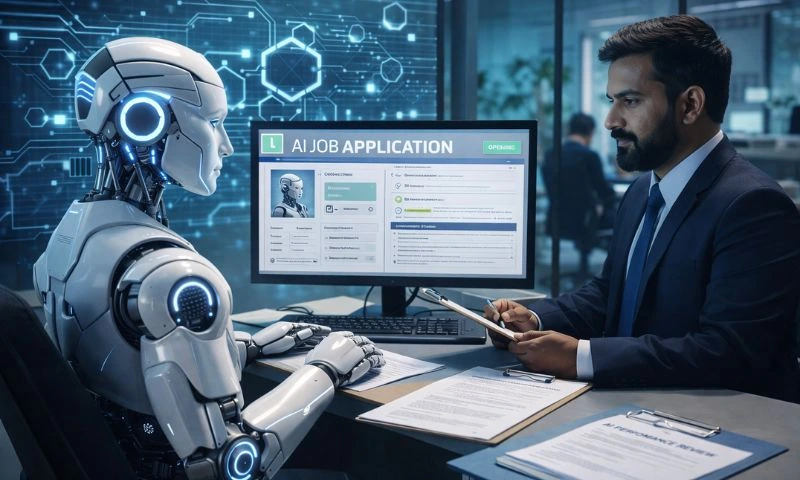
G42 Opens Jobs to AI Agents in World-First Hiring Move
Abu Dhabi-based artificial intelligence leader G42 has launched a pioneering initiative that formally opens jobs to AI agents, software systems capable of autonomous decision-making and task execution within enterprise environments. This marks a bold shift from traditional human-only workforces to blended systems where both humans and AI agents are evaluated against enterprise standards. G42’s Structured Hiring for AI The recruitment process invites AI agents to apply for roles that meet strict enterprise requirements. Agents must undergo technical validation, performance testing and reliability assessments before gaining acceptance. If successful, they enter a defined probation phase during which their sustained value delivery is assessed against pre-set metrics before being deployed more widely across business functions. This process mirrors human hiring with structured reviews and accountability. Human leaders retain final decision-making authority over all AI systems. Group Chief Augmented Human Capital Officer Maymee Kurian said, “The future of work is being shaped by how intelligently we design the relationship between human talent and intelligent systems.” She added that the initiative was not about incremental gains, but “rethinking enterprise workforce design for the AI era.” Kurian emphasised that governance structures ensure AI agents operate within clear performance standards with robust human oversight so responsible scaling can occur. What Sets This Apart This hiring model reframes how AI tools are used. Traditionally, companies deploy AI systems as support tools to assist humans. G42’s framework positions AI agents as contributors accountable for measurable outcomes and tied to value-linked compensation models that reflect performance. This move highlights a future where AI systems could partner with human teams on complex enterprise tasks, from automation to insight generation. The Broader AI Ecosystem at G42 G42’s AI workforce initiative comes amid other ambitious projects the company is driving. Earlier this year, its leadership announced plans to build a national-scale “agent factory” — infrastructure designed to manage autonomous AI systems and operate within an “intelligence grid” that links compute capacity with governance and real-world deployment across sectors. This factory would automate the creation and orchestration of AI agents, aligning with national objectives around AI governance and scalability. G42’s global strategy also includes partnerships and joint ventures that will extend AI services to other geographies. For example, the company signed a Memorandum of Understanding with Publicis Sapient to accelerate AI adoption across enterprise digital transformation projects in the UAE and Global South, further reinforcing its commitment to practical AI integration. Workforce Transformation and the Future Industry analysts say G42’s move could inspire other organisations to rethink workforce design, blending human expertise with agent-driven execution. By giving AI agents clear pathways through qualification and probation, companies may test new standards for productivity measurement and accountability that blend computing performance with human context. This could reshape enterprise hiring norms as AI matures into strategic partners rather than auxiliary tools.
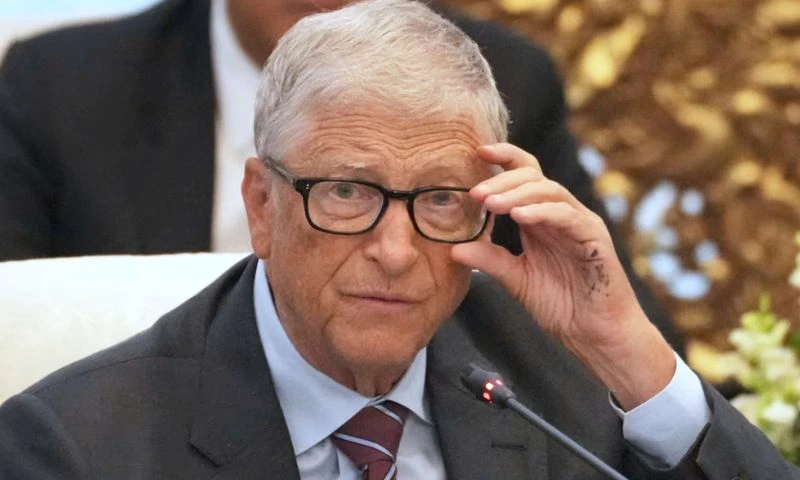
Bill Gates Cancels India AI Summit Keynote Amid Epstein Controversy
Indian tech diplomacy took an unexpected turn on Thursday, February 19, 2026, when Bill Gates abruptly cancelled his keynote address at the India AI Impact Summit in New Delhi. The Microsoft co-founder’s withdrawal came just hours before his scheduled speech, amid heightened scrutiny over his past associations with the late Jeffrey Epstein, the convicted sex offender whose recently released files have triggered global controversy. Summit Aims and High-Profile Attendance The India AI Impact Summit 2026 is one of the most ambitious global technology events held in the Global South, designed to position India at the forefront of artificial intelligence governance, research and investment. The summit brought together world leaders, CEOs and innovators under one roof, with Prime Minister Narendra Modi, French President Emmanuel Macron, Google CEO Sundar Pichai, and OpenAI CEO Sam Altman all addressing delegates. India’s government and summit organisers had counted on Gates’s participation to reinforce the event’s global appeal and underscore technological cooperation between nations. However, his last-minute withdrawal shifted attention away from the core discussions on AI investment and development. Read More: Pakistan Bets Big on AI: $1 Billion Plan That Could Change the Economy Reason for Cancellation The Gates Foundation released a statement saying the decision was made “to ensure the focus remains on the AI Summit’s key priorities.” It confirmed that Gates would not deliver his keynote address and that Ankur Vora, the foundation’s President for Africa and India, would speak in his place. The statement also reiterated the organisation’s ongoing commitments to public health and development projects in India. Gates has previously commented on the controversy tied to Epstein. He said he regretted “every minute I spent with him” and acknowledged that meeting Epstein was a mistake. The reopened scrutiny stems from recently released documents from the U.S. Department of Justice, which included references to communications involving Gates and Epstein’s network. Read More: What Are the Epstein Files, Why They Matter, and Why They Are Deepening Trouble for Powerful Figures Summit and Event Chaos Gates’s absence was not the only issue at the summit. Reuters reporting indicates that the event has been plagued by organisational challenges, including traffic disruptions, closed exhibition halls, and confusion over logistics in Delhi. Indian university exhibits sparked controversy when one institution was asked to vacate its stall for misrepresenting a Chinese-made robot as its own innovation. Adding to the challenges, another major keynote speaker, Nvidia CEO Jensen Huang, also cancelled his appearance, leaving gaps in the high-profile agenda and fuelling frustration among attendees. Reactions and Broader Impact Media and opposition voices in India weighed in as the summit unfolded. Some critics said the state’s handling of the summit raised questions about logistical planning and management. Despite these issues, the summit hosts reported that India secured over $200 billion in AI investment pledges, including from major Indian tech firms and international partners. Analysts say Gates’s withdrawal highlights the sensitivity around public figures and reputational risks, especially in high-visibility forums. Even though he remains involved through the Gates Foundation’s representation, the controversy shows how peripheral matters can overshadow key global discussions on technology policy and innovation. Read More: Inside the Epstein Files: Key Disclosures, Unanswered Questions, and Global Impact What’s Next for India AI Summit The summit continues through February 20, 2026, with discussions on AI governance, ethics and investment. Indian leaders are using the event to position the country as a technology hub while navigating diplomatic and organisational hurdles. The India AI Impact Summit remains a landmark event for global AI cooperation despite the turbulence.
