
As Apple Inc. marks its 50th anniversary, the tech giant is confronting what many analysts describe as its most critical challenge yet: proving it can lead in the rapidly evolving field of artificial intelligence. Founded in 1976 by Steve Jobs and Steve Wozniak, Apple revolutionised personal computing, music, and mobile technology with products like the Mac, iPod, and iPhone. Today, the company is valued at over $3.6 trillion and maintains a global influence that few corporations can match. A Legacy of Innovation Under Pressure Over five decades, Apple has built a reputation for delivering culture-shaping innovations that redefine industries. From the rise of smartphones to wearable technology like the Apple Watch, the company has cultivated a loyal global following. However, the emergence of generative AI tools has created a new competitive landscape. Rivals such as Google and Microsoft have moved aggressively into AI-powered services, raising questions about whether Apple can maintain its innovation edge. Industry observers note that Apple’s traditional strategy has focused on refining and integrating technologies rather than being first to market. This approach is now being tested as AI evolves at an unprecedented pace. Apple’s AI Push Gains Momentum Apple has already entered the AI space with its in-house system known as Apple Intelligence, which integrates features such as writing assistance, image editing, and notification summaries across its devices. The company is also reportedly investing heavily in on-device AI processing, aiming to differentiate itself through privacy-focused innovation. Unlike competitors that rely heavily on cloud-based systems, Apple’s strategy emphasises keeping user data secure by processing information directly on devices. Executives believe that AI will enhance existing products rather than replace them. The iPhone, for example, is expected to remain central to Apple’s ecosystem even as AI capabilities expand. Challenges in a Fast-Moving AI Race Despite these efforts, Apple faces mounting pressure. Analysts argue that the company was relatively slow to respond to the generative AI boom sparked by tools like ChatGPT, forcing it to accelerate its development plans. The competition is fierce, with tech giants racing to dominate AI infrastructure, software, and consumer applications. At the same time, Apple is dealing with broader challenges, including regulatory scrutiny, shifting global supply chains, and slowing hardware growth. Some experts believe that Apple’s success in AI will depend on its ability to deliver a seamless user experience rather than simply matching competitors feature for feature. A Defining Moment for the Next 50 Years As Apple enters its sixth decade, the stakes are high. The company must demonstrate that it can once again reshape the tech landscape, this time through artificial intelligence. The transition from hardware-driven innovation to AI-powered ecosystems could define Apple’s future. If successful, it may reinforce its dominance for decades to come. If not, it risks falling behind in one of the most transformative technological shifts in modern history. For a company built on redefining industries, the AI era represents both its greatest opportunity and its toughest test yet.
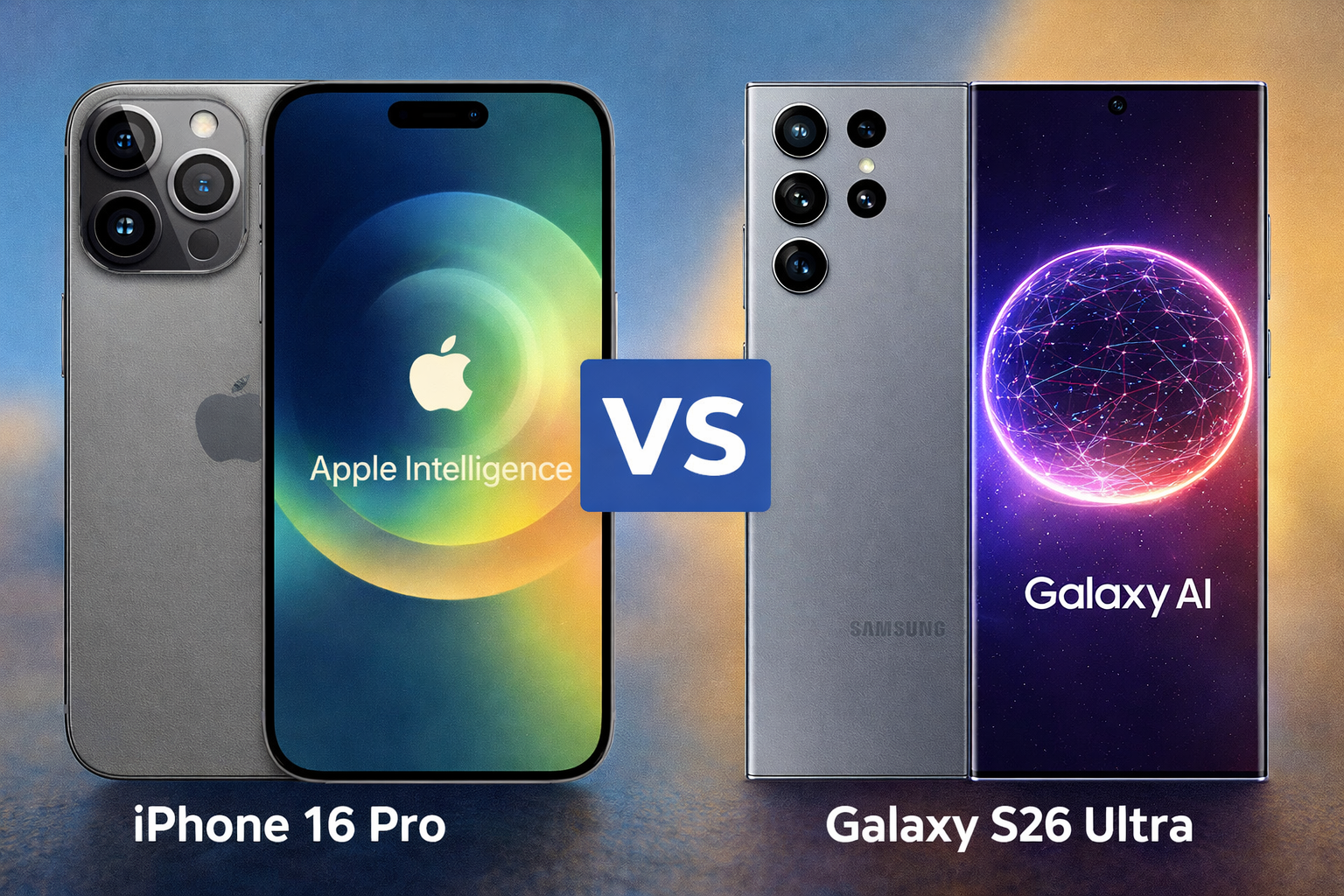
iPhone 16 Pro vs Galaxy S26 Ultra: Real AI or Just a New Coat of Paint?
The iPhone 16 Pro and the (soon-to-launch) Samsung Galaxy S26 Ultra are chasing the same dream: a phone that feels less like a gadget and more like a smart partner. But they’re taking very different roads—especially on AI, cameras, and satellite features. Apple’s pitch is “Apple Intelligence,” built into the iPhone 16 Pro’s A18-class platform and tied tightly to iOS. The biggest advantage is how smoothly it sits inside everyday tasks: writing help, smarter Siri moments, and optional ChatGPT support when you want deeper answers. Apple keeps this experience “ask-first,” so the phone doesn’t feel like it’s constantly showing off. That restraint may look boring, but it often feels more usable. Samsung’s Galaxy S26 Ultra is shaping up to be the “AI power user” option. Samsung has pushed Galaxy AI hard across its recent Ultra phones, with features like cross-app actions and a privacy model that lets users control on-device vs cloud processing. Leaks also suggest Samsung is testing a major Bixby upgrade with Perplexity-style answers, which could make the assistant feel less behind. If that lands well, it’s a real step forward—not just a new label. Now the cameras, where the debate gets spicy. The iPhone 16 Pro leans into “camera realism” through Apple’s computational pipeline and a triple-camera setup led by a 48MP main camera, plus a 48MP ultra-wide and a 5x telephoto. Apple also added “Camera Control,” which targets faster, more deliberate shooting. It’s the phone for people who want consistent skin tones, reliable video, and fewer surprise edits. Samsung’s Ultra identity, meanwhile, is built on high-res hardware and aggressive AI processing. Recent Ultra models center on a 200MP main camera and Samsung’s ProVisual engine, aiming for punchier detail and stronger zoom-style flexibility. If the S26 Ultra sticks close to that formula—as rumors suggest—the real question becomes: will Samsung refine the “Ultra look” toward natural results, or double down on the dramatic style people either love or hate? Satellite tech is another divider. Apple already offers Emergency SOS via satellite on iPhone 14 and newer models, and it has expanded satellite options beyond emergencies in supported regions. For the S26 line, reports point to improved satellite functionality coming, but it’s still not official. So who’s innovating? Apple is polishing the experience until it disappears. Samsung is stacking features until the phone feels like a toolbox. In 2026, buyers may pick less on specs and more on which philosophy fits their life.
