

The federal government has finalised the list of public and optional holidays for 2026, issuing formal guidance to ministries, departments, banks, and private organisations through a notification released by the Cabinet Division. The annual schedule lays out national observances, Islamic religious holidays, and occasions for minority communities, allowing institutions to plan operations well in advance for the coming year. National Public Holidays Several nationally significant days will be observed as public holidays across Pakistan in 2026. These include Kashmir Day on February 5, Pakistan Day on March 23, and Independence Day on August 14. Government offices and most public-sector institutions will remain closed on these occasions. Religious Holidays for Muslims The notification also provides tentative dates for major Islamic festivals, clearly stating that final observance will depend on moon sighting announcements: Eidul Fitr: March 21 to 23 Eidul Azha: May 27 to 29 Ashura (9th and 10th Muharram): June 24 and 25 Eid Miladun Nabi: August 25 Designated Bank Holidays Three days in 2026 have been designated as bank holidays: January 1, February 18 (for Zakat deduction), and July 1. While banking services for the public will be suspended on these dates, bank staff will continue to report for duty as required. Rules for Optional Holidays Under the revised framework, government employees face limits on optional leave. Muslim employees may avail one optional holiday during the year, while non-Muslim employees are allowed up to three. Granting of optional leave will be subject to approval by the relevant head of office, with the condition that essential government work is not disrupted. Export Sector Given Special Exemption Exporters and export-oriented manufacturing units have been exempted from mandatory observance of public holidays. However, the exemption is conditional on employers compensating workers with overtime pay in addition to their regular wages. Officials said the provision aims to protect export momentum while ensuring labour rights remain intact.

New Look for Pakistan’s Currency: What’s Changing in Rs100 to Rs5,000 Notes? – Copy
The federal government has initiated a major overhaul of Pakistan’s paper currency, formally approving the redesign of several high-value banknotes as part of a broader effort to modernize the country’s monetary system. The decision was finalized during a federal cabinet meeting held in Islamabad, presided over by Prime Minister Shehbaz Sharif, where the finance ministry presented a detailed briefing on the scope and objectives of the proposed changes. According to officials familiar with the discussions, the State Bank of Pakistan has already begun work on the new banknote designs, aligning them with contemporary global standards. International specialists have also been brought on board to ensure the notes incorporate advanced security and design features used by leading economies. The redesigned series will cover Rs100, Rs500, Rs1,000, and Rs5,000 denominations, representing the most significant visual update to Pakistan’s currency in years. The emphasis, officials said, is not just aesthetic but also functional. Enhanced security elements, including modern security threads and upgraded anti-counterfeiting features, will be embedded into the new notes. These measures are intended to curb the circulation of fake currency and reinforce public trust in Pakistan’s financial system. Beyond security, the new designs aim to project a stronger national identity. The cabinet was informed that the banknotes will highlight Pakistan’s geographical and regional diversity, alongside notable historical and cultural landmarks from across the country. The proposed designs will also carry symbolic messaging. Social themes such as women’s contribution to national progress and the growing impact of climate change are expected to be reflected, signaling a shift toward more inclusive and forward-looking currency imagery. Before the redesigned notes are issued to the public, the federal cabinet has set up a dedicated committee to review the proposals in detail and oversee the final stages of the process.
New Look for Pakistan’s Currency: What’s Changing in Rs100 to Rs5,000 Notes?
The federal government has initiated a major overhaul of Pakistan’s paper currency, formally approving the redesign of several high-value banknotes as part of a broader effort to modernize the country’s monetary system. The decision was finalized during a federal cabinet meeting held in Islamabad, presided over by Prime Minister Shehbaz Sharif, where the finance ministry presented a detailed briefing on the scope and objectives of the proposed changes. According to officials familiar with the discussions, the State Bank of Pakistan has already begun work on the new banknote designs, aligning them with contemporary global standards. International specialists have also been brought on board to ensure the notes incorporate advanced security and design features used by leading economies. The redesigned series will cover Rs100, Rs500, Rs1,000, and Rs5,000 denominations, representing the most significant visual update to Pakistan’s currency in years. The emphasis, officials said, is not just aesthetic but also functional. Enhanced security elements, including modern security threads and upgraded anti-counterfeiting features, will be embedded into the new notes. These measures are intended to curb the circulation of fake currency and reinforce public trust in Pakistan’s financial system. Beyond security, the new designs aim to project a stronger national identity. The cabinet was informed that the banknotes will highlight Pakistan’s geographical and regional diversity, alongside notable historical and cultural landmarks from across the country. The proposed designs will also carry symbolic messaging. Social themes such as women’s contribution to national progress and the growing impact of climate change are expected to be reflected, signaling a shift toward more inclusive and forward-looking currency imagery. Before the redesigned notes are issued to the public, the federal cabinet has set up a dedicated committee to review the proposals in detail and oversee the final stages of the process.
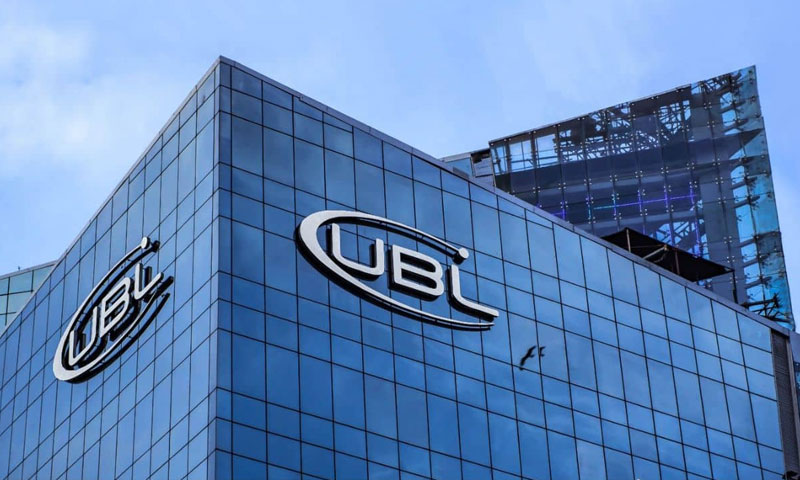
UBL Overtakes OGDC to Become Pakistan’s Most Valuable Listed Company
United Bank Limited (UBL) has climbed to the top of Pakistan’s stock market, becoming the largest listed company by market capitalisation after its valuation reached Rs1.28 trillion (USD 4.6 billion) on Tuesday. The surge allowed UBL to overtake Oil & Gas Development Company (OGDC), which now ranks second with a market capitalisation of Rs1.26 trillion (USD 4.53 billion), marking a rare shift at the top of the Pakistan Stock Exchange. Market analysts say UBL’s rise reflects strong investor confidence and the broader resilience of the banking sector, particularly as macroeconomic conditions improve. Share price rallies sharply UBL’s stock has delivered an exceptional run over the past month. Its share price jumped 37 percent, rising from Rs375.57 on December 8, 2025, to Rs514.49 by Tuesday. Analysts attribute the rally to the bank’s strong earnings performance and its effective positioning amid changing interest rate dynamics. “The improvement in profitability is largely driven by how well the bank has utilised the interest rate environment,” said Samiullah Tariq, Head of Research at Pak-Kuwait Investment Company Limited. Interest rate tailwinds Pakistan’s benchmark interest rate has declined significantly, falling from a peak of 22 percent in April 2024 to 10.5 percent in December 2025 — a reduction of 1,150 basis points. The easing cycle has helped banks manage spreads more efficiently while supporting credit growth and profitability. Strong financial performance and dividends According to its latest financial results, UBL reported a profit after tax of Rs34.7 billion for 9MCY25, marking a 36 percent increase year-on-year. Earnings per share rose to Rs13.86 during the period. The bank also announced another interim cash dividend of Rs8 per share, taking its total dividend payout for the year to Rs27.5 per share — one of the highest distributions in Pakistan’s banking sector. UBL operates as a subsidiary of Bestway Holdings Limited, which is wholly owned by Bestway Group Limited. Market leadership shifts, but sectors remain dominant While OGDC has slipped to second place, analysts note that the shift does not weaken its standing as a market heavyweight. Instead, the development highlights how Pakistan’s equity market continues to be dominated by the financial and energy sectors, with leadership rotating based on earnings momentum and investor sentiment. For now, UBL’s ascent underscores the renewed appeal of banking stocks as economic stability gradually returns.
Good News for Small Businesses in Pakistan: PM Orders Easier Loans for SMEs
Prime Minister Shehbaz Sharif on Monday directed relevant institutions to fast-track measures that make bank financing more accessible for small and medium-sized enterprises (SMEs), signaling renewed government focus on strengthening one of Pakistan’s most important economic sectors. The directive was issued during a high-level meeting convened to review the business plan of the Small and Medium Enterprises Development Authority (SMEDA), which aims to accelerate SME growth and improve their contribution to the national economy. Emphasising the importance of the sector, the prime minister described SMEs as the backbone of Pakistan’s economy, noting that their expansion could play a decisive role in boosting exports, employment, and industrial productivity. “Small and medium-sized businesses hold enormous potential,” the prime minister said, adding that stronger SMEs could significantly enhance Pakistan’s export base and overall economic resilience. Three-year roadmap for SME expansion During the meeting, officials presented a comprehensive three-year roadmap designed to address long-standing challenges faced by SMEs, particularly access to finance, skills development, and competitiveness in international markets. The plan outlines targeted strategies to improve credit availability, promote innovation, and integrate SMEs into global value chains. The prime minister appreciated the roadmap, describing it as practical, realistic, and aligned with market needs. He also commended Haroon Akhtar, Special Assistant to the Prime Minister on Industries, along with the newly appointed SMEDA Board of Directors, for developing a focused and results-oriented plan. Improving access to finance and global competitiveness A key focus of the discussion was improving SME access to loans through banks and financial institutions. The prime minister urged closer coordination between government bodies and the banking sector to remove procedural hurdles and encourage lending to small businesses. The meeting also reviewed ongoing initiatives aimed at enhancing the global competitiveness of Pakistani SMEs, including partnerships with international organisations and capacity-building programmes tailored to export-oriented businesses. Officials highlighted recent training workshops held in six cities, which were designed to strengthen SME management skills and prepare entrepreneurs for global market demands. Special initiatives to increase women’s participation in the SME sector were also shared, reflecting the government’s broader inclusion agenda. Broad institutional support The meeting brought together key stakeholders, including Federal Minister for Information Ataullah Tarar, Jameel Ahmed, Governor of the State Bank of Pakistan, chief secretaries of all four provinces, as well as representatives from Azad Jammu and Kashmir and Gilgit-Baltistan. Newly appointed members of the SMEDA Board and officials from relevant institutions also participated, underlining broad-based institutional backing for SME-led growth. The renewed push reflects the government’s intent to empower SMEs as engines of growth, exports, and job creation, offering fresh optimism for entrepreneurs across Pakistan.
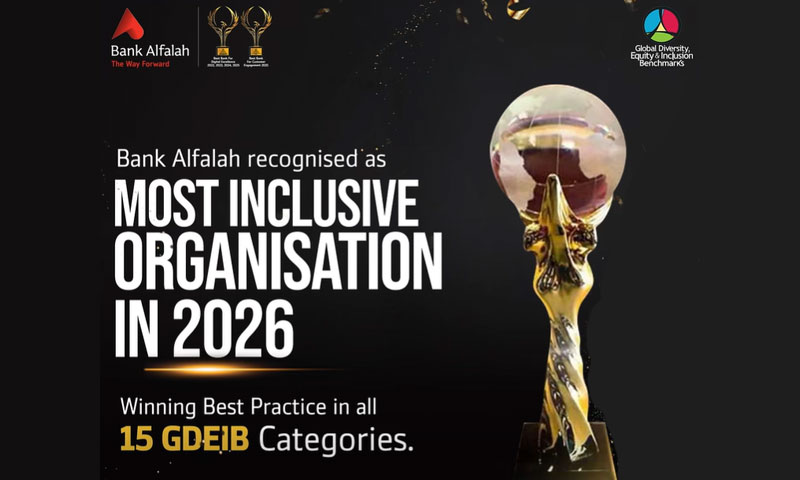
Bank Alfalah Named Among World’s Most Inclusive Companies for 2026
Bank Alfalah has been recognised as one of the “Most Inclusive Companies in 2026” at the Global Diversity, Equity and Inclusion Benchmarks (GDEIB) Awards, following a comprehensive and evidence-based evaluation conducted by an independent international jury. The recognition came after a rigorous disclosure process in which 44 multinational and national organisations submitted detailed documentation assessing their policies, workplace culture, and people practices. Bank Alfalah emerged as the top overall performer, earning the title of Most Inclusive Company in 2026. In addition to the overall honour, the Bank secured wins across 15 GDEIB benchmark categories, reflecting its holistic approach to embedding diversity, equity, and inclusion across business operations. These categories include vision and strategy, leadership accountability, recruitment and retention, learning and development, compensation structures, flexible work practices, DEI communications, responsible sourcing, community engagement, sustainability integration, and inclusive product and service development. The GDEIB Awards are anchored in the Global Diversity, Equity and Inclusion Benchmarks, an internationally recognised framework that enables organisations to measure, strengthen, and sustain inclusive practices through structured and measurable standards. Beyond workplace inclusion, Bank Alfalah’s recognition also reflects its broader role in social impact and corporate responsibility. Positioning itself as a “Caring Bank,” the institution has consistently combined national relief efforts with long-term community development initiatives. Following Pakistan’s devastating floods in 2022, Bank Alfalah contributed USD 10 million towards relief and rehabilitation efforts. In response to the floods in 2025, the Bank pledged an additional USD 5 million, bringing its total commitment to USD 15 million. These funds are directed towards infrastructure rehabilitation, climate-smart agriculture, and sustainable recovery initiatives aimed at strengthening affected communities. The Bank also collaborates with more than 30 partner non-governmental organisations, supporting projects in education, women’s empowerment, healthcare, environmental protection, and social inclusion. These initiatives are aligned with the 17 United Nations Sustainable Development Goals, reinforcing Bank Alfalah’s commitment to long-term, measurable impact. According to the Bank, the global recognition underscores its ongoing efforts to foster a workplace culture built on opportunity, representation, and belonging, while integrating DEI principles into governance frameworks and everyday decision-making. As Pakistan’s corporate sector increasingly aligns with global standards, Bank Alfalah’s achievement positions it as a regional leader in inclusive growth, responsible banking, and sustainable development.
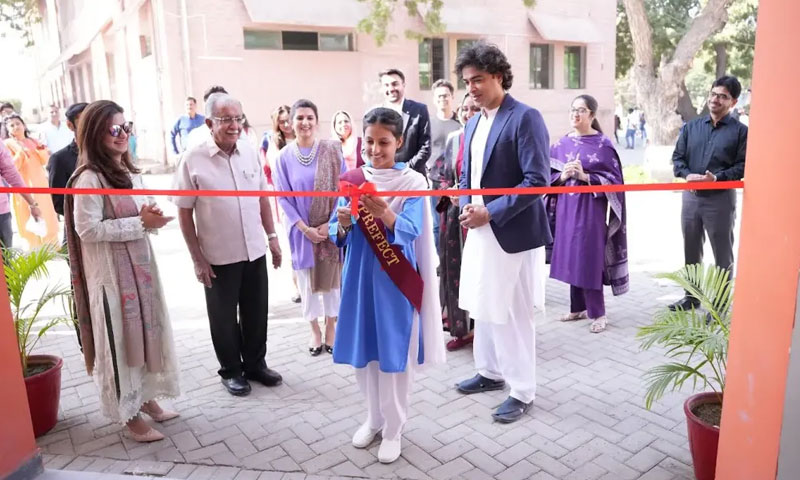
Mobilink Bank, Zindagi Trust Bring Sustainable Power to Public School Digital Learning
Pakistan’s leading digital microfinance institution, Mobilink Bank, has taken another step toward inclusive and sustainable education by solarizing the Digital Arts Lab at Khatoon-e-Pakistan Government Girls Secondary School in Karachi. The initiative, implemented under the bank’s Corporate Social Responsibility (CSR) program, aims to ensure uninterrupted access to digital and creative learning for girls by addressing one of the most persistent challenges facing public schools: unreliable electricity. The Digital Arts Lab is operated by Zindagi Trust, an organization known for transforming public education spaces into modern, future-ready learning environments. With the installation of a solar energy system, the lab can now function without disruption, allowing students to consistently engage with digital tools, creative software, and technology-based learning activities. The project directly benefits around 320 students from grades 6 to 8 and is designed to support all future cohorts enrolled in the lab. By securing a clean and dependable energy source, the initiative removes infrastructure barriers that often limit the effectiveness of digital education in government schools. Haaris Mahmood Chaudhary, President and CEO of Mobilink Bank, said that access to sustainable energy is essential for meaningful learning in today’s technology-driven world. He noted that the partnership with Zindagi Trust reflects the bank’s commitment to empowering young girls with the skills they need to learn, create, and thrive, while also contributing to long-term environmental sustainability. Zindagi Trust highlighted that lasting education reform requires more than updated curricula—it also depends on enabling infrastructure. By integrating renewable energy into a technology-focused learning space, the Trust reinforced its mission to ensure that students in public schools are not left behind as education rapidly digitizes. Beyond its immediate impact, the solarization project is a long-term investment in the school’s learning environment. It strengthens educational continuity for current students and secures lasting benefits for generations to come at Khatoon-e-Pakistan Government Girls Secondary School. The initiative underscores a shared vision between Mobilink Bank and Zindagi Trust to bridge critical gaps in education through scalable, sustainable, and socially responsible solutions—particularly those that advance girls’ education, digital inclusion, and environmental responsibility.
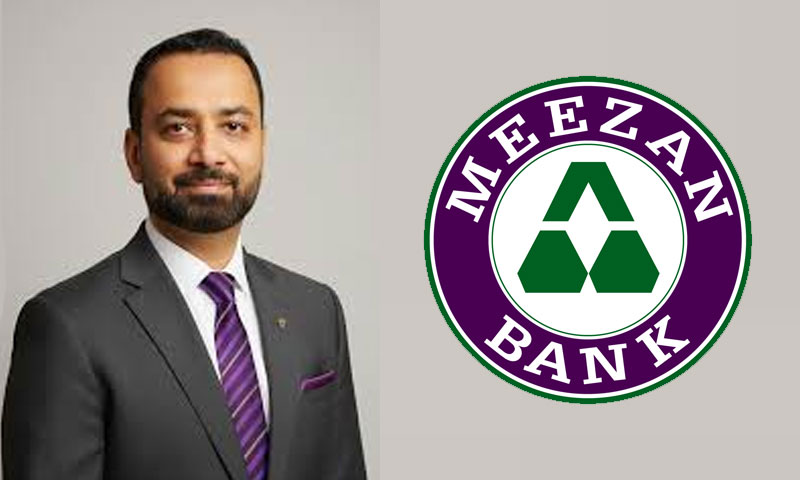
Meezan Bank Names Dr Syed Amir Ali President, CEO as Irfan Siddiqui Steps Aside
In a major leadership transition, Meezan Bank Limited, Pakistan’s largest Islamic financial institution, has announced the appointment of Dr Syed Amir Ali as its new president and Chief Executive Officer, effective 30 December 2025. The development was disclosed through an official notice submitted to the Pakistan Stock Exchange on Tuesday. Dr Amir Ali succeeds Irfan Siddiqui, the founding president and CEO of the bank, who has led Meezan Bank since its inception. While stepping down from the executive role, Siddiqui will continue his association with the institution as a member of the bank’s board of directors, ensuring continuity at the governance level. In its statement, the board of directors paid tribute to Siddiqui’s pivotal role in shaping Meezan Bank into one of Pakistan’s most successful corporate entities. The board acknowledged his visionary leadership, tireless efforts, and foundational contribution to the growth of Islamic banking in the country, noting that his work helped position Meezan Bank as a trendsetter in the global Islamic finance industry. Dr Amir Ali brings with him more than two decades of experience across finance, treasury, investment, and corporate banking. He has worked with a mix of leading domestic and international organisations, including A.F. Ferguson & Co, Shell, BankIslami Pakistan Limited, and Meezan Bank itself. His academic and professional credentials span multiple disciplines. Dr Amir Ali is a Chartered Financial Analyst from the CFA Institute (USA), a Chartered Certified Accountant from the Association of Chartered Certified Accountants (UK), and a Chartered Accountant from the Institute of Chartered Accountants of Pakistan. He also holds an MBA from Hamdard University, Karachi, and a law degree from the University of Karachi. Dr Amir Ali originally joined Meezan Bank in 2006, where he played a key role in building the corporate and investment banking group. After serving at BankIslami from 2018, he rejoined Meezan Bank in 2023, paving the way for his elevation to the bank’s top executive position. The leadership change marks the beginning of a new chapter for Meezan Bank, as it builds on a strong legacy while preparing for its next phase of growth.
