

A father of four in the United Kingdom has turned an unusual idea into a profitable side business by offering professional dog waste removal services — earning an estimated more than $32,000 annually from the venture. Kyle Newby, a 39-year-old builder from Derbyshire, launched his dog waste removal service, Pet Poo Pick, earlier this year after noticing the popularity of similar businesses in the United States. Speaking to South West News Service, Newby said he was inspired after seeing dog waste pickup services frequently advertised on social media. Believing the concept had untapped potential in the UK, he decided to test the market locally by posting a simple advertisement on Facebook. “The response was overwhelming,” Newby said. “We were genuinely surprised at how quickly customers signed up.” The business now serves around 35 regular clients, with Newby visiting approximately 15 properties midweek and another 20 on weekends. Customers pay an initial fee of around $40 for the first visit, followed by weekly charges of about $20, depending on frequency and property size. Based on current demand, Newby estimates he earns roughly $2,600 to $2,700 per week, working approximately 12 hours spread across several days. He says the hourly earnings often exceed what he makes during long shifts in construction work. Each job typically takes 10 to 15 minutes per garden, during which dog waste is collected using professional scoopers and sealed bags. Afterward, the area is disinfected to ensure hygiene standards are maintained. Newby also travels significant distances to responsibly dispose of the waste. While some critics have dismissed the service as unnecessary, Newby says a large portion of his clients rely on Pet Poo Pick due to age, injury, or mobility limitations. “Many of my customers simply can’t bend down or move easily,” he explained. “We’re not replacing responsibility — we’re helping people who physically can’t do it themselves.” One such customer, Peter Fisk, said he began using the service after breaking his leg. “With my condition, I’ll need help for months,” Fisk said. “The job is done properly every time. It’s a great service.” In addition to waste removal, Newby has expanded offerings to include basic lawn care for customers who need extra assistance. Although the venture currently operates as a side business, Newby says he hopes to grow it into a full-time operation, citing steady demand and strong customer retention.

25% Tariff Shock: Trump Moves to Punish Nations Doing Business With Iran
US President Donald Trump has dramatically escalated pressure on Iran, announcing a sweeping new tariff policy aimed not only at Tehran but also at countries that continue to trade with it. In a social media post on Monday, Trump said the United States would impose a 25 percent tariff on any country doing business with Iran while also maintaining commercial ties with the US. He said the measure would take effect immediately, describing it as “final and conclusive,” though he did not clarify which countries would be targeted first. The announcement comes as Iran faces its most serious wave of unrest in years. Protests, initially sparked by economic grievances, have spread nationwide and evolved into a broader challenge to the ruling system that has governed the country since the 1979 Islamic Revolution. According to economic data platform Trading Economics, Iran’s largest trading partners include China, Turkiye, the United Arab Emirates, and Iraq — all nations with varying degrees of trade exposure to the United States. Iranian authorities have responded to the unrest with force and a near-total internet blackout, measures that rights groups say are intended to obscure the true scale of casualties. The Norway-based NGO Iran Human Rights warned that the communications shutdown has made independent verification of deaths and injuries nearly impossible. “The international community has a duty to protect civilian protesters against mass killing by the Islamic republic,” said IHR director Mahmood Amiry-Moghaddam. Despite the crackdown, protests have persisted for more than two weeks, defying heavy security deployments. Iranian officials have blamed foreign powers for inflaming the unrest and have organised mass pro-government rallies in response. On Monday, Iran’s supreme leader Ayatollah Ali Khamenei, who has ruled since 1989, claimed the demonstrations had failed. Speaking on state television, he said large counter-rallies across the country sent a “warning” to the United States and showed that foreign-backed plans had been thwarted. At a rally in Tehran’s Enghelab Square, parliament speaker Mohammad Bagher Ghalibaf accused the US and Israel of waging a “four-front war” against Iran, citing economic, psychological, military and internal security pressures. He warned that any direct attack would provoke a severe response. Meanwhile, Washington signalled that military options remain on the table. The White House said Trump was “unafraid” to use force if necessary, while still prioritising diplomacy. The US State Department also issued a fresh warning to Americans in Iran, urging dual nationals to leave the country using Iranian passports and cautioning that US citizens face a high risk of detention. China swiftly rejected Trump’s tariff threat. A spokesperson for the Chinese embassy in Washington said Beijing opposed “unilateral sanctions and long-arm jurisdiction,” warning that tariff wars benefit no one and vowing to protect China’s interests. Europe, meanwhile, has taken a harder political stance. The European Union said it was considering additional sanctions over Iran’s handling of protests, while the European Parliament banned Iranian diplomats from its premises. French President Emmanuel Macron condemned what he called indiscriminate state violence against protesters. Russia, a key ally of Tehran, criticised what it described as foreign interference in Iran’s internal affairs, signalling deepening geopolitical divisions as the crisis unfolds. With protests ongoing, diplomacy fragile, and economic pressure intensifying, Iran now finds itself facing mounting isolation — and the growing risk of a broader international confrontation.
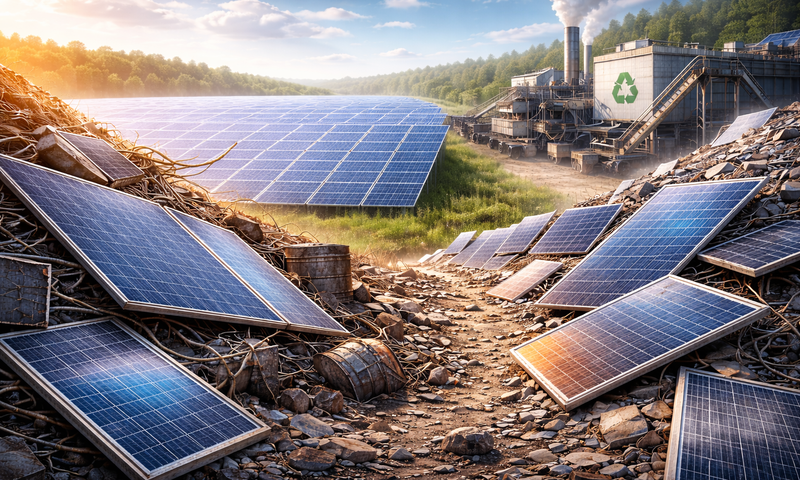
Solar Boom Today, Waste Crisis Tomorrow? The Hidden Challenge of Solar Panels
The global shift toward solar energy is accelerating at an unprecedented pace — and Pakistan is no exception. Rising electricity prices, frequent power outages, and falling solar panel costs have pushed households, businesses and industries across the country to embrace rooftop and utility-scale solar power. For millions, solar energy has delivered cheaper, uninterrupted electricity and relief from the national grid. However, experts warn that behind this clean-energy success story lies a slow-building environmental challenge: solar panels do not last forever. Solar panels are not lifetime assets Most solar panels have an operational lifespan of 25 to 30 years. After that, their efficiency drops sharply, making them uneconomical to use. While today’s installations are still relatively new, the first wave of large-scale solar panels installed globally is already approaching retirement. International energy and environmental agencies caution that once these panels reach end-of-life, they become complex electronic waste — bulky, difficult to recycle, and potentially hazardous if dumped improperly. According to global energy assessments, millions of tonnes of solar panel waste are expected to accumulate worldwide over the next two decades. Countries that adopted solar early, including parts of Europe, the United States and East Asia, are already beginning to face disposal and recycling challenges. Why solar panel waste is difficult to manage Solar panels are made from glass, aluminium frames, silicon cells, plastics, and trace amounts of toxic materials such as lead and cadmium. While much of the material is recyclable, the process is neither simple nor cheap. Unlike conventional scrap, solar panels require specialised facilities to safely separate and process their components. Without proper recycling systems, panels risk ending up in landfills, where broken glass and toxic substances can contaminate soil and groundwater. Environmental analysts warn that if unmanaged, today’s green solution could become tomorrow’s e-waste crisis. Pakistan’s growing risk Pakistan’s solar market has expanded rapidly in recent years, with imported panels flooding the market and rooftop systems multiplying across urban and rural areas. Yet, there is currently no comprehensive national policy to handle solar panel waste once these systems reach the end of their life. Experts say Pakistan risks repeating the mistakes seen with plastic waste and electronic scrap, where lack of planning led to environmental and health hazards. Given the scale of current installations, the country could face thousands of tonnes of retired panels in the coming decades. The global response: recycling and regulation Some countries have already started addressing the issue. In parts of the European Union, solar panels are legally classified as electronic waste, making manufacturers responsible for collection and recycling. Dedicated recycling plants can now recover up to 90 percent of panel materials, including glass and aluminium, and reuse silicon for new panels. Researchers are also developing next-generation panels that are easier to recycle and use fewer toxic components. Others are exploring circular economy models, where old panels are refurbished, repurposed, or broken down into raw materials for reuse. In Germany, one of Europe’s largest solar markets, solar panels have been covered under the WEEE framework since 2014. Panel producers must register with a national waste authority and participate in approved recycling schemes. Germany now operates specialised facilities that can recover: Glass and aluminium frames Silicon from solar cells Other reusable materials Recycling rates for solar panels in Germany can exceed 85–90 percent by weight, according to industry and regulatory data. What can be done in Pakistan Energy and environmental experts argue that Pakistan still has time to act — but only if planning begins now. Key recommendations include: Introducing solar waste regulations alongside renewable energy policies Encouraging producer responsibility, making importers and manufacturers part of recycling solutions Investing in local solar recycling facilities Promoting research into panel reuse and second-life applications Raising public awareness that solar panels are not permanent assets A choice before the crisis Solar energy remains a vital tool in reducing carbon emissions and easing Pakistan’s energy crisis. But specialists stress that sustainability does not end at installation. Without foresight, the panels powering homes today could become an environmental burden tomorrow. With proper policy, technology, and regulation, however, solar waste can be transformed into a managed resource rather than a looming crisis.

Good News for Small Businesses in Pakistan: PM Orders Easier Loans for SMEs
Prime Minister Shehbaz Sharif on Monday directed relevant institutions to fast-track measures that make bank financing more accessible for small and medium-sized enterprises (SMEs), signaling renewed government focus on strengthening one of Pakistan’s most important economic sectors. The directive was issued during a high-level meeting convened to review the business plan of the Small and Medium Enterprises Development Authority (SMEDA), which aims to accelerate SME growth and improve their contribution to the national economy. Emphasising the importance of the sector, the prime minister described SMEs as the backbone of Pakistan’s economy, noting that their expansion could play a decisive role in boosting exports, employment, and industrial productivity. “Small and medium-sized businesses hold enormous potential,” the prime minister said, adding that stronger SMEs could significantly enhance Pakistan’s export base and overall economic resilience. Three-year roadmap for SME expansion During the meeting, officials presented a comprehensive three-year roadmap designed to address long-standing challenges faced by SMEs, particularly access to finance, skills development, and competitiveness in international markets. The plan outlines targeted strategies to improve credit availability, promote innovation, and integrate SMEs into global value chains. The prime minister appreciated the roadmap, describing it as practical, realistic, and aligned with market needs. He also commended Haroon Akhtar, Special Assistant to the Prime Minister on Industries, along with the newly appointed SMEDA Board of Directors, for developing a focused and results-oriented plan. Improving access to finance and global competitiveness A key focus of the discussion was improving SME access to loans through banks and financial institutions. The prime minister urged closer coordination between government bodies and the banking sector to remove procedural hurdles and encourage lending to small businesses. The meeting also reviewed ongoing initiatives aimed at enhancing the global competitiveness of Pakistani SMEs, including partnerships with international organisations and capacity-building programmes tailored to export-oriented businesses. Officials highlighted recent training workshops held in six cities, which were designed to strengthen SME management skills and prepare entrepreneurs for global market demands. Special initiatives to increase women’s participation in the SME sector were also shared, reflecting the government’s broader inclusion agenda. Broad institutional support The meeting brought together key stakeholders, including Federal Minister for Information Ataullah Tarar, Jameel Ahmed, Governor of the State Bank of Pakistan, chief secretaries of all four provinces, as well as representatives from Azad Jammu and Kashmir and Gilgit-Baltistan. Newly appointed members of the SMEDA Board and officials from relevant institutions also participated, underlining broad-based institutional backing for SME-led growth. The renewed push reflects the government’s intent to empower SMEs as engines of growth, exports, and job creation, offering fresh optimism for entrepreneurs across Pakistan.
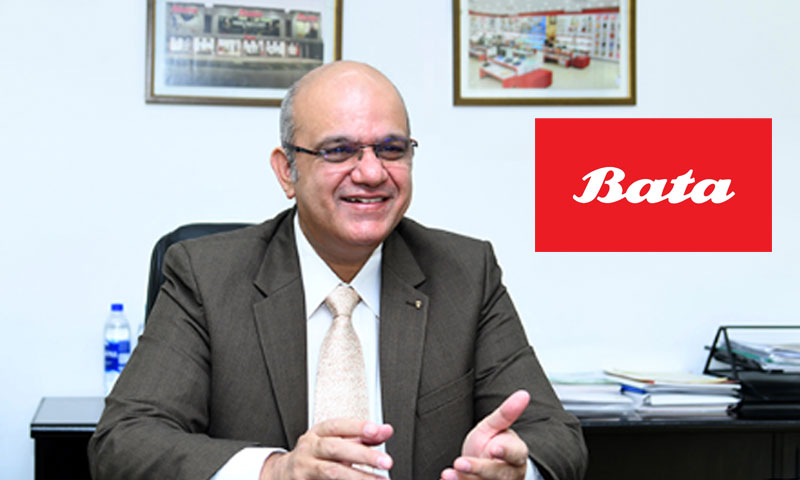
Bata Pakistan CEO Muhammad Imran Malik Resigns, Board Vacancy to Be Filled Soon
Bata Pakistan Limited has announced a leadership change, confirming that Muhammad Imran Malik has stepped down as Chief Executive Officer and resigned from the company’s Board of Directors, effective December 31, 2025. The development was disclosed through a formal notice submitted to the Pakistan Stock Exchange on Thursday. In its filing, the company stated that the vacancy created by Malik’s resignation will be addressed by the Board of Directors at an appropriate time. Bata Pakistan has a long-standing presence in the country’s consumer and manufacturing landscape. The company was incorporated in 1951 and transitioned into a publicly listed entity in 1979. Over the decades, it has built a strong footprint in Pakistan’s footwear market. The company’s core business includes the manufacturing, distribution, and retail sale of footwear, as well as related accessories and hosiery products. Bata Pakistan operates as part of a global corporate structure, with Bafin B.V. of the Netherlands as its parent company, while the ultimate holding entity is Compass Limited. As of December 31, 2023, Bata Pakistan managed a nationwide retail network of 444 outlets. Its production facilities have a combined annual capacity of approximately 18.4 million pairs of footwear, supporting both domestic demand and the company’s extensive retail operations. The company has not yet announced a successor or provided details on interim management arrangements.
