

Honda Atlas Cars (Pakistan) Limited (HCAR) reported a strong financial turnaround in the first nine months of Market Year 2026 (9MFY26), driven by robust sales of its Honda HR-V Hybrid and renewed interest in the Honda City sedan. The company’s profit after tax jumped 117% to PKR 2.22 billion, compared with PKR 1.02 billion in the same period last year, according to a recent industry report. Earnings per share (EPS) also showed significant improvement, more than doubling to PKR 15.59 in 9MFY26, up from PKR 7.19 in 9MFY25, signaling renewed investor confidence and stronger bottom-line performance. This rebound comes as Honda Atlas leverages its updated product lineup to capture demand in Pakistan’s recovering automotive market. The Honda HR-V e:HEV hybrid SUV, launched in August 2025, has been a key contributor to sales volumes, appealing to buyers seeking fuel-efficient crossover options in a segment that was traditionally limited to petrol variants. In addition, the Honda City 1.5L Aspire S CVT, introduced in September 2025, helped invigorate interest in the compact sedan segment, long a strong category for Honda across Pakistan’s major urban centres. Despite the strong top-line momentum and surging sales, Honda Atlas faces some ongoing cost and margin challenges. A stronger Pakistani rupee against the Japanese yen aided gross margins, which remained stable at 7.9%, but marketing and distribution expenses went up three-fold due to aggressive nationwide promotions. Finance costs also surged by 157%, as the company increased borrowings to PKR 14.3 billion to support operations and growth initiatives. Heavy taxation remains a hurdle for the auto industry, with Honda Atlas recording an effective tax rate of 43.1% during the period. Nonetheless, the company’s ability to expand earnings while navigating these headwinds has been notable. Pakistan’s broader automotive sector is showing signs of recovery, supported by lower interest rates, easier financing and rising consumer demand. Car sales in the market recently surged 76% to over 17,800 units, and the sector’s profit projection climbed to roughly PKR 6.6 billion in Q2 FY26, highlighting industry-wide growth. Analysts say sustained demand for SUVs, hybrids and reliable compact cars — combined with supportive policy measures — are key to continued momentum. Honda Atlas, a joint venture between Honda Motor Co. and Atlas Group with decades of presence in Pakistan, is positioned to benefit from this uptrend as it expands its hybrid offerings alongside traditional models. As the company heads into the final quarter of FY26, the focus will be on maintaining profitable growth while managing cost pressures and capitalising on evolving consumer preferences in an increasingly competitive auto market.
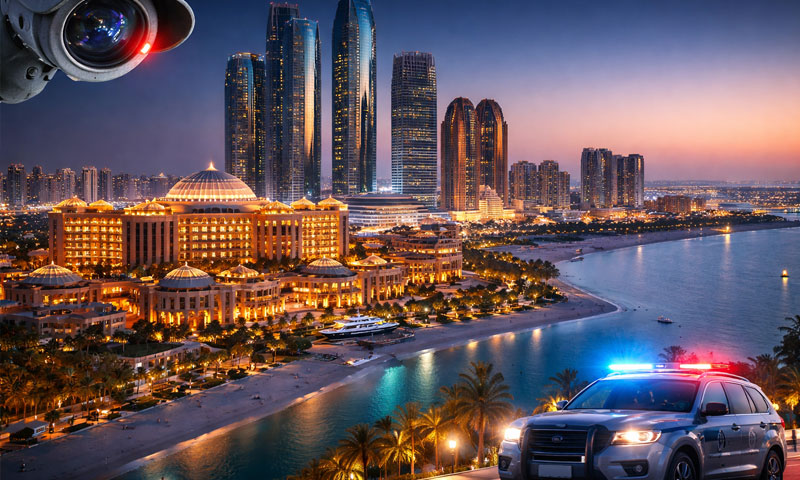
World’s Safest Cities Revealed: Abu Dhabi Leads, UAE Takes 5 of Top 6
Cities around the world are increasingly being judged not just by opportunity and infrastructure, but by how safe people feel living in them. According to the Numbeo Global Safety Index 2026, Abu Dhabi has once again emerged as the safest city in the world, reinforcing its position as a global benchmark for public safety. Abu Dhabi secured a Safety Index score of 88.9, topping the rankings for the 10th consecutive year. The city’s consistent performance reflects heavy investment in digital surveillance systems, artificial intelligence, predictive policing, and smart city technologies that allow authorities to identify and mitigate risks before they escalate. Why Abu Dhabi Leads the World Experts attribute Abu Dhabi’s top ranking to its integrated use of AI-driven monitoring, real-time data analysis, and advanced emergency response systems, alongside strict law enforcement and high public trust in institutions. Residents report feeling safe both during the day and at night—two key parameters used in the index. The rankings also highlight a broader regional trend: the United Arab Emirates continues to dominate global safety charts, with five of its cities appearing in the top six. Top 10 Safest Cities in the World (2026) According to Numbeo’s latest assessment, the 10 safest cities globally in 2026 are: Rank City Country Safety Index 1 Abu Dhabi UAE 88.9 2 Ras Al Khaimah UAE 85.3 3 Doha Qatar 84.5 4 Sharjah UAE 84.5 5 Ajman UAE 84.4 6 Dubai UAE 83.9 7 Taipei Taiwan 83.3 8 Muscat Oman 81.3 9 Tampere Finland 79.6 10 Trondheim Norway 79.0 Source: Numbeo Global Safety Index 2026 How the Rankings Were Compiled The study was conducted by Numbeo, which evaluated around 400 cities across 150 countries. Rankings were based on user-contributed data measuring perceived safety, crime levels, and security during both daytime and nighttime. The findings further strengthen the UAE’s reputation as a global leader in public safety. Multiple international studies have also ranked the country among the safest in the world, particularly when it comes to nighttime security. The Bigger Picture While cities from Europe and Asia also feature prominently, the dominance of Gulf cities underscores how technology-driven governance, urban planning, and law enforcement coordination are shaping the future of urban safety. As global cities continue to expand, the 2026 rankings offer a clear message: smart security systems and proactive governance matter as much as size and wealth.
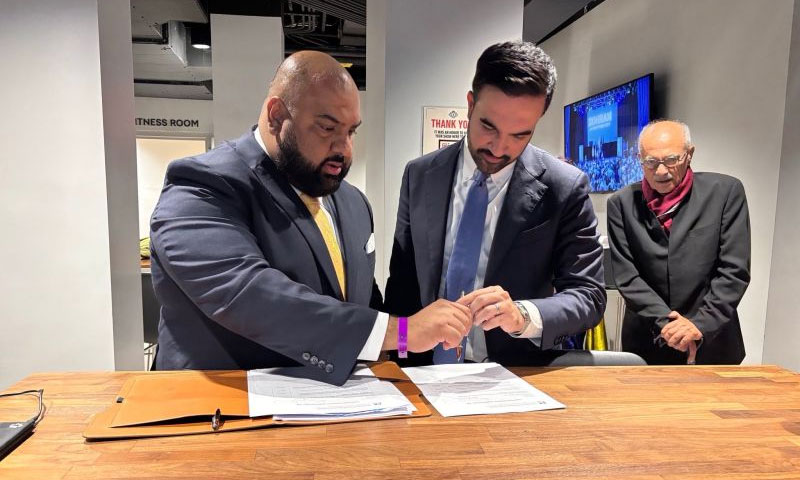
Zohran Mamdani Names Pakistani-American Lawyer Ali Najmi to Key Judiciary Role in NYC
New York City Mayor Zohran Mamdani has named Pakistani-American attorney Ali Najmi as the new chair of the Mayor’s Advisory Committee on the Judiciary, placing a longtime confidant at the center of the city’s judicial selection process. In his new role, Najmi will oversee the committee responsible for reviewing, evaluating, and recommending candidates for judgeships in New York City’s Family and Criminal Courts, along with interim appointments to the Civil Court. The committee plays a critical role in shaping the city’s judiciary by vetting candidates before they are formally appointed. Announcing the appointment, Mayor Mamdani emphasized his administration’s commitment to reforming the judicial selection process. He said the goal is to bring greater transparency, fairness, and public trust to how judges are chosen, while ensuring the judiciary reflects the diversity of the city it serves and applies the rule of law equally. Mamdani praised Najmi’s decades-long legal career, describing him as uniquely qualified to lead the effort. He credited Najmi’s courtroom experience, integrity, and persistence as key strengths that will guide the committee’s work. The appointment also highlights the deep personal and professional bond between the two men. Both residents of Queens, Mamdani and Najmi first crossed paths in 2015, when Mamdani volunteered on Najmi’s City Council campaign in eastern Queens. Though the campaign was unsuccessful, it marked the beginning of a close relationship that has endured for years. Since then, Najmi has served as Mamdani’s legal advisor, election attorney, and mentor, supporting him through both his State Assembly run and his successful mayoral campaign. The pair have often spoken publicly about their close relationship, frequently referring to each other as brothers. Najmi brings extensive experience in election and ballot-access law. Over the past 15 years, he has represented a wide range of insurgent and anti-establishment Democratic candidates, carving out a reputation as a leading legal strategist in progressive political circles. As recently as June, he represented at least 18 candidates during the Democratic primary season. With Najmi at the helm of the Advisory Committee on the Judiciary, Mamdani’s administration appears poised to leave a distinct imprint on New York City’s courts—one shaped by reform, inclusion, and a renewed focus on judicial accountability.
