
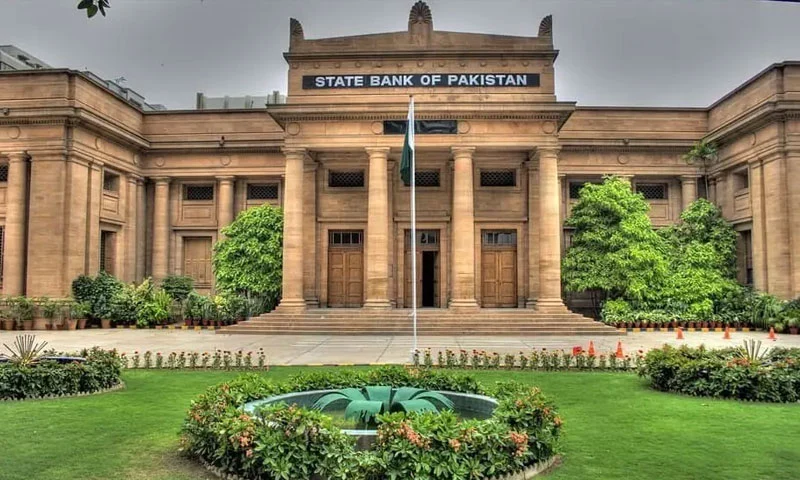
The State Bank of Pakistan (SBP) on Monday left its benchmark policy rate unchanged at 11.5 percent, citing easing global oil prices after the recent US-Iran peace agreement while warning that inflation is likely to remain in double digits in the coming months. “The Monetary Policy Committee (MPC) decided to keep the policy rate unchanged at 11.5% in its meeting today,” the central bank said in its latest monetary policy statement. The decision comes after the SBP lowered rates significantly over the past year as inflation eased from historic highs. However, recent geopolitical tensions in the Middle East and higher domestic energy costs have pushed inflation upward again. According to the MPC, global oil prices declined after the US-Iran agreement, although they remain above levels seen before the conflict began earlier this year. The committee noted that the impact of the Middle East conflict had started to appear in key economic indicators. Headline inflation rose to 10.9 percent in April and 11.7 percent in May, while core inflation increased to 8.2 percent and 8.7 percent during the same period. “Moreover, economic activity is showing some signs of moderation, reflecting the impact of elevated prices, austerity measures and prevalent economic uncertainty,” the SBP said. The central bank added that pressures on Pakistan’s external account remained moderate and the broader macroeconomic outlook was largely unchanged from its previous assessment. Inflation Risks Remain Despite Economic Stability The MPC said the current monetary policy stance remained appropriate to guide inflation toward its medium-term target range of 5 to 7 percent. The committee highlighted several positive developments since its last meeting. Pakistan Bureau of Statistics estimates showed the economy expanded by 3.7 percent during fiscal year 2025-26, compared with 3.2 percent a year earlier. Growth was driven mainly by services and industrial activity, while agriculture also contributed to overall expansion. The MPC also pointed to improved consumer and business confidence and stronger external sector indicators. The Monetary Policy Committee decided to keep the policy rate unchanged at 11.5 percent in its meeting held on June 15, 2026.For details: https://t.co/QmtBOmlMuF pic.twitter.com/QJaQwcOxo8— SBP (@StateBank_Pak) June 15, 2026 SBP foreign exchange reserves reached $17.2 billion by June 5 after successful reviews under the International Monetary Fund’s Extended Fund Facility and Resilience and Sustainability Facility programmes. The government has estimated a primary budget surplus of 2.5 percent of GDP for FY26 and is targeting a surplus of 2 percent for FY27. The central bank credited proactive macroeconomic management and fiscal consolidation for helping preserve economic stability during a period of regional uncertainty. Growth Outlook Positive but Challenges Persist Despite encouraging indicators, the MPC warned that several risks could affect inflation and growth in the months ahead. The committee projected inflation would remain in double digits for the next few months before gradually easing. “This outlook is subject to multiple risks, including geopolitical developments, the extent of pass-through of global prices to domestic fuel prices, magnitude of adjustments in power and gas tariffs, potential fiscal slippages, and uncertain food prices amidst weather-related challenges,” the statement said. The MPC also cautioned that spillover effects from regional tensions and weaker agricultural prospects could weigh on economic activity. At the same time, it stressed the importance of accelerating structural reforms to improve productivity, strengthen economic resilience and support sustainable long-term growth. Analysts said the decision signals the SBP’s preference for maintaining stability while monitoring inflation trends and the economic impact of developments in global energy markets.
Pakistan Nears $41 Billion Remittance Milestone After Historic May
Pakistan received a record $4.251 billion in workers’ remittances during May 2026, marking the highest monthly inflow in the country’s history and providing a major boost to foreign exchange reserves and economic stability. Data released by the State Bank of Pakistan (SBP) on Wednesday showed remittances rose 20.2% compared to April and increased 15.4% from the same month last year. The strong performance pushed total remittance inflows for the first 11 months of fiscal year 2025-26 to $38.1 billion, up 9.2% from $34.9 billion recorded during the corresponding period a year earlier. The latest figures reinforce the growing importance of overseas Pakistanis in supporting the country’s external account at a time when policymakers continue efforts to strengthen economic recovery and maintain financial stability. Topline Securities attributed the surge primarily to seasonal Eid-related transfers. “The strong growth was primarily driven by Eid-related seasonal inflows, as remittances typically increase during festive periods,” the brokerage house said in a research note. The firm added that total remittances for FY26 are likely to exceed $41 billion, setting another historic milestone. Overseas Pakistanis Drive Historic Surge Pakistan’s average monthly remittance inflow during the first 11 months of FY26 reached $3.5 billion, compared with $3.2 billion during the previous fiscal year. Waqas Ghani, Head of Research at JS Global, said the improvement reflected deeper structural changes rather than temporary factors alone. “This improvement continues to reflect structural factors like higher emigration volumes, sustained shift from hawala to formal banking channels, and relatively stable FX spreads in the interbank market.” He added that regional geopolitical developments may have accelerated remittance flows in recent months. Remittances remain one of Pakistan’s largest sources of foreign exchange and play a critical role in supporting household incomes, domestic consumption and balance-of-payments stability. The government and the central bank have also encouraged overseas Pakistanis to use formal banking channels through various incentive schemes and digital transfer mechanisms. Saudi Arabia and UAE Lead Inflows Saudi Arabia remained the largest source of remittances during May. Pakistanis living in the kingdom sent $1.025 billion, compared with $914 million in the same month last year and $842 million in April. The United Arab Emirates followed closely with remittances reaching $1.007 billion. The amount increased 33% year-on-year and jumped 37% from the previous month. The United Kingdom remained another major contributor, with overseas Pakistanis sending $645 million in May. Remittances from the United States reached $350 million, reflecting a 10% monthly increase from April. Meanwhile, inflows from European Union countries rose to $466 million, up 8% from the previous month. Adviser to the Finance Minister Khurram Schehzad described the achievement as a major vote of confidence in Pakistan’s economy. “This is a resounding testament to the unwavering confidence of overseas Pakistanis, which is further strengthening the country’s economy and external stability,” he wrote on X. “With the last month of the fiscal year, remittances are all set to surpass $41 billion for the first time in history!”
Experts Warn AI Could Deepen Gender Inequality in Pakistan
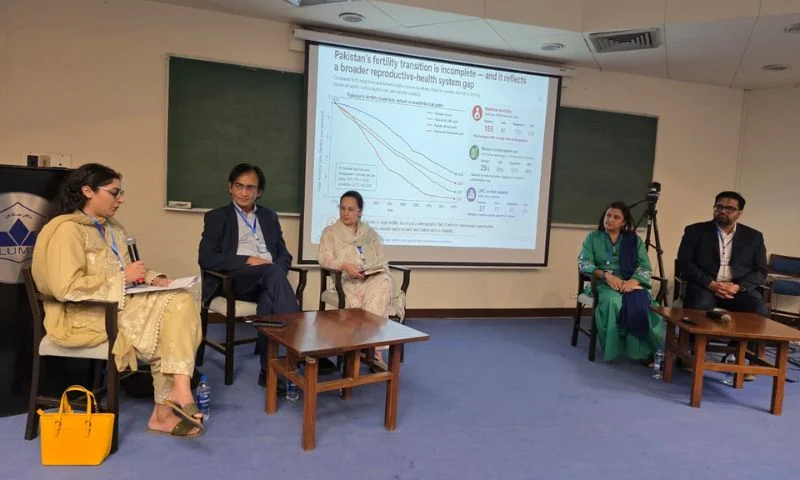
Experts at a gender and economy conference in Lahore warned that artificial intelligence could either unlock major economic opportunities for women or deepen existing inequalities if Pakistan fails to expand digital education and skills training. The discussion took place during a panel on “Health & Gender” moderated by Warda Riaz at LUMS. Panelists included Fyeza Jehan, Usman Ali, Adnan Khan and M. Farhan Majid. Speakers stressed that women’s economic empowerment depends heavily on education, access to information and bargaining power within society. One panelist said affordable learning opportunities and digital skills programmes could help women overcome structural barriers that continue to limit workforce participation and entrepreneurship. “There is a risk that communities with lower skills will be unable to benefit from new technologies,” the panel noted during the discussion. The experts warned that countries failing to invest in digital capacity-building may fall further behind in productivity and global competitiveness. AI Could Transform Women-Led Businesses The panel highlighted how digital tools and AI systems are rapidly reshaping business operations around the world. Referring to survey findings conducted with the Asher Blair Foundation, speakers said women entrepreneurs from nearly 80 countries showed strong interest in adopting generative AI tools. According to the findings, many women business owners wanted to use AI for accounting, payroll management and routine administrative work. Experts said AI could help women-led enterprises reduce time-consuming manual tasks while improving efficiency and productivity. The panel also referenced estimates suggesting Pakistan’s women-focused digital economy could represent a market worth nearly $500 million. That estimate is linked to Pakistan’s female population of around 73 million, highlighting the scale of untapped economic potential. Pakistan has one of the lowest female labor force participation rates in South Asia. The World Bank estimates female participation remains below 25 percent, despite rising smartphone and internet usage. Digital access for women also remains uneven, particularly in rural areas where internet access, digital literacy and educational opportunities remain limited. Digital Divide Could Hurt Long-Term Growth Experts warned that Pakistan’s weak education indicators and low literacy rates could limit the country’s ability to benefit from AI-driven economic transformation. They argued that unequal access to technology may create broader macroeconomic problems in the future. According to the discussion, economies with lower digital adoption could face slower productivity growth and greater dependence on imports. Meanwhile, digitally advanced economies may continue scaling faster through automation and AI integration. The panelists urged policymakers, educational institutions and private companies to invest urgently in women’s digital education and technology-focused training. They said inclusive access to AI skills would play a critical role in ensuring equitable economic growth across Pakistan. Analysts worldwide have increasingly warned that AI may widen social and economic inequality if governments fail to invest in education and workforce adaptation. For Pakistan, experts said the challenge now lies in ensuring women are not excluded from the next phase of technological and economic change.
