
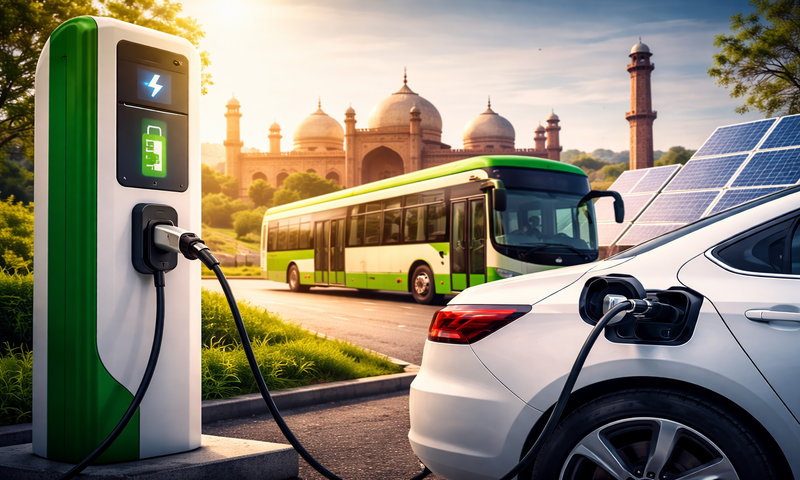
In a major policy shift aimed at tackling rising air pollution, the Punjab government has decided to completely ban the purchase of petrol and diesel vehicles for government departments, allowing only electric or hybrid vehicles for future procurement. The decision marks one of the province’s most significant steps toward promoting environmentally friendly transport and reducing emissions. Vehicles assigned to field duties have been exempted from the ban due to operational requirements, officials confirmed. The provincial administration has also indicated that a new Electric Vehicle (EV) Policy for Punjab is expected to be announced soon, which will outline incentives, infrastructure development, and regulatory reforms to accelerate the transition toward clean mobility. Electric Charging Now Mandatory for New Petrol Pumps In another major move, the government has made the installation of electric vehicle charging units mandatory for all new petrol pumps seeking operational approval. According to the Chief Secretary, no new petrol pump will be allowed to operate without installing an electric charging facility, linking traditional fuel infrastructure directly with the province’s clean energy goals. Officials said that 170 new petrol pumps across 31 cities have already received No Objection Certificates (NOCs) through the provincial e-Biz portal, all subject to the condition that EV charging units must be installed. City-wise approvals include: Faisalabad: 29 petrol pumps Lahore: 14 Bahawalpur: 10 Khanewal & Bahawalnagar: 9 each Rawalpindi & Jhang: 8 each Toba Tek Singh, Mianwali, Kasur & Chiniot: 7 each Authorities stressed that the expansion of fuel stations must now go hand in hand with electric charging infrastructure to prepare for a cleaner transport ecosystem. Pollution a Growing Threat to Punjab The policy shift comes amid mounting concern over worsening air quality in Punjab. According to the World Health Organization, air pollution is one of the leading environmental health risks globally, contributing to millions of premature deaths each year. Pakistan, particularly urban centers in Punjab, regularly ranks among the regions with the highest levels of particulate pollution. Independent assessments by global development institutions have repeatedly warned that deteriorating air quality in Pakistan is not only a public health crisis but also an economic threat, increasing healthcare costs, reducing worker productivity, and shortening life expectancy. Punjab’s major cities, including Lahore and Faisalabad, frequently experience severe smog episodes during winter months, largely driven by vehicle emissions, industrial activity, and fossil fuel consumption. Green Energy as a Policy Priority Senior officials emphasized that promoting green energy and electric mobility has become a top provincial priority. The upcoming EV policy is expected to address both public and private sector adoption, while mandatory charging stations aim to reduce range anxiety and encourage wider use of electric vehicles. With these measures, Punjab positions itself as one of the first provinces in Pakistan to take concrete regulatory action linking transport reform with environmental protection.

New Taxes on Imported EVs? Govt’s Plan Explained
The Senate Standing Committee on Industries and Production was told on Monday that the government is considering imposing additional taxes on imported electric vehicles (EVs) as part of efforts to reduce the transport sector’s ballooning $9 billion import bill, while keeping locally manufactured EVs largely tax-free. The meeting, chaired by Senator Khalida Ateeb, was attended by Senators Danesh Kumar and Syed Masroor Ahsan, along with officials from the Ministry of Industries and Production and the Federal Board of Revenue (FBR). According to a statement issued by the Senate Secretariat, officials informed the committee that taxes on imported EVs are under active consideration, whereas taxes on locally produced electric vehicles would remain minimal or zero to encourage domestic manufacturing. Officials also told the panel that additional duties have already been imposed on the import of EV parts that are now being manufactured locally, a move aimed at supporting the development of a homegrown electric vehicle supply chain. During the briefing, the Ministry of Industries and Production advised provincial governments to facilitate EV adoption by waiving registration fees, introducing uniform number plates across the country, and charging lower tolls for electric vehicles. The committee was also briefed on the existing policy framework for setting up EV manufacturing units, with a particular focus on two-wheelers and three-wheelers. According to officials, licenses have so far been issued for 77 electric two-wheeler manufacturers and 17 three-wheeler manufacturers across the country. The government has set an ambitious target of shifting 30 percent of all vehicles to electric by 2030 as part of its broader energy and climate goals. To support this transition, officials said that around 2.2 million vehicles would be provided to the public through government subsidies by 2030. Pakistan currently has about 20 million vehicles and more than 20 million motorcycles. This year alone, the government plans to facilitate the provision of 116,000 electric motorcycles and 3,170 electric rickshaws. The committee was informed that a carbon levy is expected to generate Rs120 billion over the next five years, and this amount will be used to subsidize electric vehicles. Officials also noted that work is underway to introduce a one-window operation in coordination with the Board of Investment to streamline approvals, adding that licenses of manufacturers failing to export have already been cancelled. The discussion also covered the New Energy Vehicles (NEV) Policy 2025–30, which aims to reduce vehicular emissions, improve air quality, make productive use of surplus electricity generation, and lower Pakistan’s reliance on imported oil. The policy targets converting 30 percent of new vehicle sales to NEVs by 2030, with ambitions of reaching 50 percent by 2040 and achieving a net-zero transport fleet by 2060. However, officials acknowledged that high upfront costs remain a major hurdle to EV adoption, underlining the need for pricing measures that bring electric vehicles closer to the cost of conventional internal combustion engine vehicles.
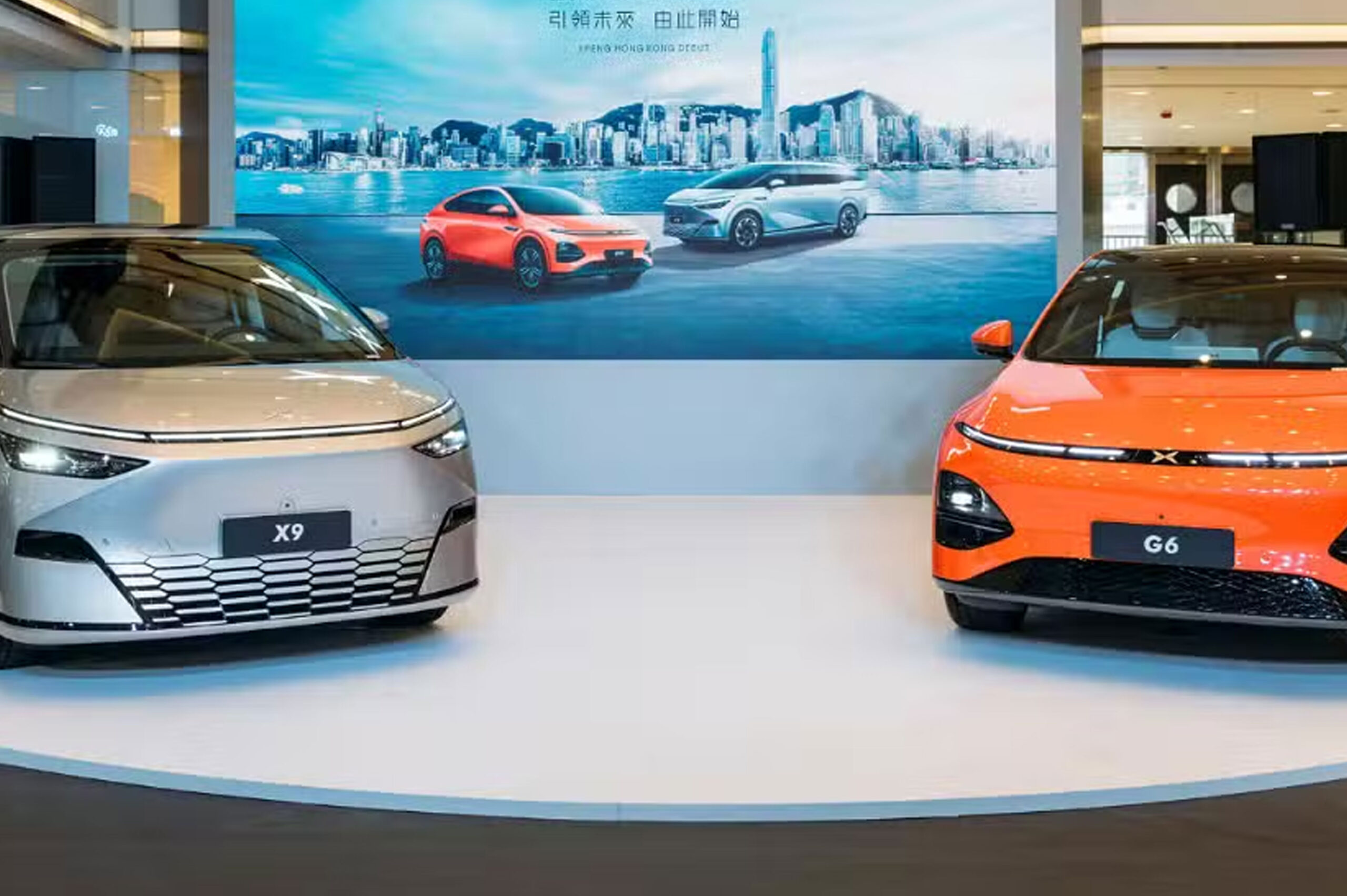
XPENG Enters Pakistan: Official Prices Revealed for G6 SUV and X9 Electric MPV
Pakistan’s electric vehicle landscape continues to expand as Tesla Industries, the group behind brands like GuGo GiGi and the recently introduced AION UT and AION V, has officially launched XPENG in the local market. The Chinese EV manufacturer has entered Pakistan with two all-electric models: the XPENG G6 SUV and the XPENG X9 MPV. The official prices were announced during the PakWheels New Wheels Expo, marking XPENG’s first formal step into the country’s rapidly growing EV segment. The XPENG G6 will be offered in three variants to cater to different performance and range preferences. The rear-wheel-drive Standard Range version has been priced at Rs. 14.5 million, while the Rear-Wheel-Drive Long Range variant comes in at Rs. 15.5 million. For buyers seeking higher performance, the All-Wheel-Drive Performance variant is priced at Rs. 18.5 million. All prices are ex-factory. To make ownership more flexible, Tesla Industries has introduced two booking and delivery plans for the G6. Customers opting for a faster 45-day delivery will need to pay 40 percent of the vehicle’s price upfront, whereas those choosing a 90-day delivery option can secure their booking with a 20 percent payment. Alongside the G6, the company has also introduced the XPENG X9, a fully electric premium MPV aimed at buyers looking for space, comfort, and long-range capability. The X9 will be available in a single top-spec variant, the Long Range 2WD Pro+, with an ex-factory price of Rs. 28.5 million. The booking structure for the XPENG X9 mirrors that of the G6, with 40 percent required for 45-day delivery and 20 percent for 90-day delivery. Tesla Industries has noted that the announced prices are introductory and may be revised in the future, depending on market conditions and demand. With this launch, XPENG becomes one of the latest global EV brands to enter Pakistan, further intensifying competition and offering consumers more premium electric mobility options than ever before.
