
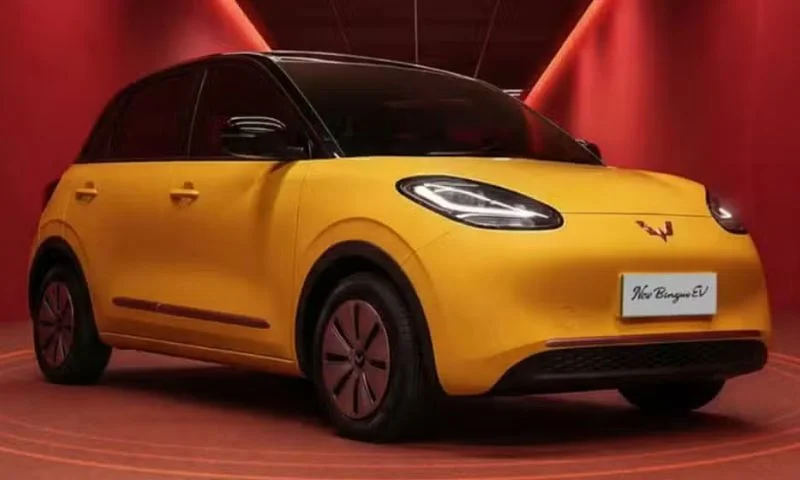
MG Motors Pakistan has reduced the price of its compact electric hatchback, the MG Binguo EV, by Rs300,000 as competition intensifies in Pakistan’s growing electric vehicle market. The company announced the price cut during an event on Sunday where it also unveiled the new MG4 EV Urban for Pakistani consumers. Following the reduction, the MG Binguo EV now costs Rs5,699,000 compared to its previous price of Rs5,999,000. Model Previous Price New Price Reduction MG Binguo EV Rs5,999,000 Rs5,699,000 Rs300,000 The move comes as Pakistan’s small electric hatchback segment becomes increasingly competitive with the arrival of more affordable Chinese and hybrid-electric vehicles. Industry analysts say automakers are now targeting urban consumers looking for lower fuel expenses and reduced maintenance costs amid persistently high petrol prices. MG officials did not announce any changes to the vehicle’s specifications or battery package alongside the revised pricing. Competition Grows in Pakistan’s EV Segment Pakistan’s electric vehicle market remains relatively small compared to regional markets, but interest in compact EVs has increased steadily over the past two years. Consumers continue facing high fuel prices, while automakers push hybrid and electric models as cost-saving alternatives for city driving. The MG Binguo EV competes mainly in the compact urban hatchback category, where affordability and driving range heavily influence buying decisions. Industry observers say recent launches by Chinese brands have increased pressure on manufacturers to revise pricing strategies. The government has also promoted electric mobility under Pakistan’s National Electric Vehicle Policy, which aims to reduce fuel imports and encourage cleaner transportation. However, experts say Pakistan still lacks widespread EV charging infrastructure, especially outside major urban centres. High commercial electricity tariffs and limited charging stations continue slowing the adoption of fully electric vehicles across the country. As a result, hybrid and plug-in hybrid vehicles currently dominate Pakistan’s electrified vehicle market. MG Expands Electric Vehicle Lineup Alongside the Binguo EV price reduction, MG Motors Pakistan introduced the MG4 EV Urban during the same event. The company has increasingly focused on expanding its electric and hybrid portfolio in Pakistan as competition in the automotive sector intensifies. Chinese automakers continue gaining market share in Pakistan by introducing feature-rich vehicles at comparatively lower prices. Analysts say aggressive pricing and expanded financing options may become more common as EV manufacturers compete for urban middle-class buyers. Pakistan’s automotive sector has also shown growing interest in smaller EVs because compact hatchbacks remain more practical for congested city traffic and shorter commuting distances. Industry experts believe future EV growth in Pakistan will largely depend on charging infrastructure improvements, government incentives and electricity pricing stability. Despite current challenges, automakers continue positioning electric vehicles as a long-term alternative to conventional petrol-powered cars in Pakistan’s evolving automobile market.
Chinese EV Maker Patents Voice-Controlled Toilet Hidden Under Car Seat
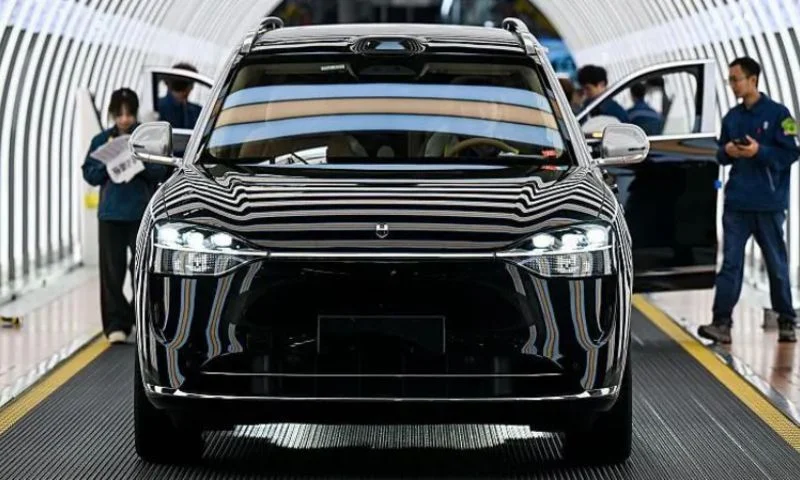
Chinese electric vehicle maker Seres has been granted a patent for what it describes as an “in-vehicle toilet”, a fold-out lavatory hidden beneath a passenger seat and activated either manually or by voice command, in a sign of how fiercely carmakers are competing to stand out in China’s crowded EV market. Public reporting on the patent says the command phrase is “start up toilet function”, and the design is intended for long-distance travel, camping and extended stays inside the vehicle. The patent, identified as CN224104011U, was filed on April 22, 2025, and approved on April 10, 2026, according to reports citing Chinese patent records. The unit slides out from under the seat on rails when needed, then retracts to preserve cabin space when not in use. The filing says the design is meant to “optimize the utility of the car’s interior”, framing the feature as a practical answer to emergencies during long journeys or while stuck on the road. Reports on the patent say the toilet would include a fan and exhaust pipe to direct odours out of the cabin, along with a waste tank that would need to be emptied manually. A rotating heating element is also described as drying solid waste and evaporating urine, suggesting Seres is trying to solve not just the space problem but also hygiene and smell, the two biggest obstacles to bringing such a feature into a passenger car. Seres has not announced plans to put the patented system into a production vehicle, and a patent grant does not guarantee commercial launch. Still, the filing has drawn attention because it comes at a time when Chinese EV brands are under pressure to differentiate on technology, comfort and novelty as competition intensifies. Reuters has previously reported that Seres founder Zhang Xinghai described competition in China’s EV market as extremely intense on both price and technology. Read More: Electric Rides & Hybrid Power: Pakistan’s 2026 Car Lineup Preview The company is no fringe player. Seres is Huawei’s EV partner and the manufacturer behind Aito vehicles, a relationship that has helped it build scale in China’s smart vehicle segment. Reuters reported earlier this year that Aito sold more than 420,000 units in 2025, accounting for the bulk of Seres’ 472,269 EV sales, while the company has also been expanding internationally, including into the Middle East. Seres’ latest annual report says the group sharply increased research spending in 2025, underlining its push for new technologies and premium features. Read More: “Not a Fair Fight”: Ford CEO Warns Chinese EVs Could Crush US Auto Industry In-car toilets remain rare in mainstream passenger vehicles, but they are not entirely without precedent. Reports accompanying the Seres patent noted a much older example: a custom 1954 Rolls-Royce Silver Wraith limousine fitted with a concealed toilet under a seat. For now, though, Seres’ invention remains a patent, intriguing enough to spark conversation, but still far from proving whether motorists actually want a bathroom built into the daily commute
