

Copper prices around the world have been rising rapidly, driven by strong demand, concerns over future supply deficits, and growing investment interest in the metal as a critical component of electrification and clean energy infrastructure. Analysts now warn that copper could become much more expensive in the coming decade as production struggles to keep pace with demand. Benchmark copper futures hit multi-year highs on global exchanges in early 2026 as traders reacted to a weaker U.S. dollar and expectations of long-term demand growth tied to electric vehicles (EVs), renewable energy systems, and power grid expansion. Speculative buying and tighter market balances have also lifted price forecasts. Why Copper Demand Is Exploding Copper plays a central role in technologies fundamental to the energy transition. It is essential in electric motors, EV batteries and charging infrastructure, solar panels, wind turbines and modern power grids. Analysts at S&P Global project that global copper demand could rise about 50% by 2040, and deficits could widen without major new mining projects. According to the United States Geological Survey (USGS), copper’s end-use is heavily concentrated in: Building construction (about 42%) Electrical and electronic products (23%) Transportation equipment (18%) Other industrial and consumer products China remains by far the largest single consumer, accounting for a majority share of refined copper use globally, while major economies in Asia continue to absorb additional copper for infrastructure and industrial growth. Where the Largest Copper Reserves Are Chile and Peru dominate copper production and reserves globally, with Chile alone contributing around one-third of global production. Other major mining countries include the United States, the Democratic Republic of Congo and Australia. Pakistan’s Role: Reko Diq and Domestic Copper Reserves Pakistan is not just a consumer — it also holds some of the world’s largest undeveloped copper reserves. The Reko Diq project in the Chagai District of Balochistan is a globally significant copper-gold deposit, with estimated resources of approximately 5.9 billion tonnes of ore grading around 0.41% copper and large associated gold quantities. Once fully operational, Reko Diq is expected to produce 200,000 to 250,000 tons of copper annually in its initial phase, with potential expansion to produce up to 400,000 tons per year. The mine life is projected to span more than 40 years, with a total economic output exceeding $60 billion based on feasibility studies. Reko Diq is being developed jointly by Barrick Gold (50%), the Government of Pakistan (25%), and the Government of Balochistan (25%). Production is slated to begin as early as 2028, supported by international financing from institutions like the Asian Development Bank and the International Finance Corporation to help with infrastructure and sustainability efforts. If completed, Reko Diq will place Pakistan among the world’s key copper suppliers, attracting global industrial attention as nations seek to diversify sources of critical minerals. It could rank among the largest copper mines globally once fully operational. Challenges and Broader Impacts Despite its promise, the Reko Diq project faces challenges including historical legal disputes, infrastructure constraints, and environmental concerns, particularly regarding water usage in arid regions. Environmental advocates and local rights groups have called for strict oversight to ensure sustainable development that benefits local communities. For Pakistan, Reko Diq represents not just an economic opportunity but a chance to transform its mining sector and reduce reliance on imports for industrial metals. In a world rapidly shifting toward electrification and green technologies, copper’s strategic importance — and the value of reserves like Reko Diq — can hardly be overstated.
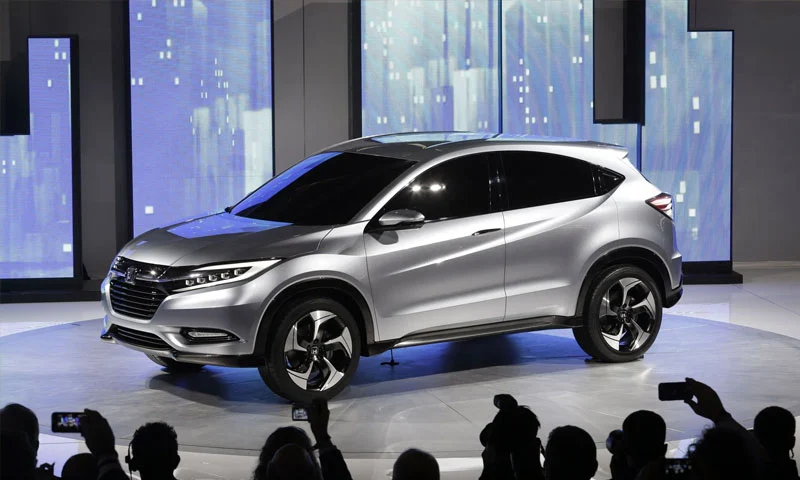
Honda Atlas Bounces Back Strongly as Profits More Than Double in FY26
Honda Atlas Cars (Pakistan) Limited (HCAR) reported a strong financial turnaround in the first nine months of Market Year 2026 (9MFY26), driven by robust sales of its Honda HR-V Hybrid and renewed interest in the Honda City sedan. The company’s profit after tax jumped 117% to PKR 2.22 billion, compared with PKR 1.02 billion in the same period last year, according to a recent industry report. Earnings per share (EPS) also showed significant improvement, more than doubling to PKR 15.59 in 9MFY26, up from PKR 7.19 in 9MFY25, signaling renewed investor confidence and stronger bottom-line performance. This rebound comes as Honda Atlas leverages its updated product lineup to capture demand in Pakistan’s recovering automotive market. The Honda HR-V e:HEV hybrid SUV, launched in August 2025, has been a key contributor to sales volumes, appealing to buyers seeking fuel-efficient crossover options in a segment that was traditionally limited to petrol variants. In addition, the Honda City 1.5L Aspire S CVT, introduced in September 2025, helped invigorate interest in the compact sedan segment, long a strong category for Honda across Pakistan’s major urban centres. Despite the strong top-line momentum and surging sales, Honda Atlas faces some ongoing cost and margin challenges. A stronger Pakistani rupee against the Japanese yen aided gross margins, which remained stable at 7.9%, but marketing and distribution expenses went up three-fold due to aggressive nationwide promotions. Finance costs also surged by 157%, as the company increased borrowings to PKR 14.3 billion to support operations and growth initiatives. Heavy taxation remains a hurdle for the auto industry, with Honda Atlas recording an effective tax rate of 43.1% during the period. Nonetheless, the company’s ability to expand earnings while navigating these headwinds has been notable. Pakistan’s broader automotive sector is showing signs of recovery, supported by lower interest rates, easier financing and rising consumer demand. Car sales in the market recently surged 76% to over 17,800 units, and the sector’s profit projection climbed to roughly PKR 6.6 billion in Q2 FY26, highlighting industry-wide growth. Analysts say sustained demand for SUVs, hybrids and reliable compact cars — combined with supportive policy measures — are key to continued momentum. Honda Atlas, a joint venture between Honda Motor Co. and Atlas Group with decades of presence in Pakistan, is positioned to benefit from this uptrend as it expands its hybrid offerings alongside traditional models. As the company heads into the final quarter of FY26, the focus will be on maintaining profitable growth while managing cost pressures and capitalising on evolving consumer preferences in an increasingly competitive auto market.
