
The world’s biggest technology companies are intensifying efforts to create computers that can complete complex tasks with little human input, betting that a new generation of AI agents will transform how people interact with their devices. For years, digital assistants such as Siri, Alexa and Google Assistant promised to simplify everyday computing. In practice, most users relied on them for basic tasks such as setting alarms, playing music or checking the weather. Now companies including Nvidia, Microsoft and Google believe advances in generative AI can finally unlock a more capable generation of digital assistants that understand instructions, make decisions and carry out multi-step tasks independently. “The goal eventually is to figure out, ‘Hey, how do I just tell the computer essentially what I want it to do, and then have it do it?’” said Bob O’Donnell, founder and chief analyst at technology research firm Technalysis. The shift comes as AI adoption accelerates worldwide following the launch of OpenAI’s ChatGPT in late 2022. Since then, technology firms have invested billions of dollars in AI infrastructure, software and hardware designed to support increasingly autonomous systems. New Hardware Powers the AI Push Nvidia, Microsoft and Google unveiled several new AI-focused products in recent days as competition intensifies. Nvidia introduced the RTX Spark chip for Windows laptops on June 1. The company says the processor can run powerful AI agents directly on a device without relying on cloud computing. Dell, HP and Lenovo plan to launch laptops powered by the chip later this year. At the same time, Microsoft is redesigning parts of Windows and expanding AI capabilities across its software ecosystem. The company recently announced Scout, a new Microsoft 365 agent built using OpenClaw technology. Microsoft says Scout can work across files stored on a user’s computer, cloud services and workplace applications such as Outlook and Teams. The agent could monitor emails, track conversations and help organise work with minimal supervision. Google is also developing new AI features that can suggest actions based on what appears on a user’s screen. Future versions of Google’s software could propose scheduling meetings or managing tasks when users hover over relevant information. Promise Meets Practical Challenges Supporters argue that AI agents could fundamentally change how people use computers. Nvidia CEO Jensen Huang recently demonstrated how AI agents could move between design applications to assist with planning a house. Meanwhile, developers increasingly use OpenClaw to conduct research and complete complex workflows while communicating with the system through messaging apps. “Things are quite different now because more people have now become quite used to using like Chat GPT or Gemini or Anthropic,” said David Naranjo, associate director at Counterpoint Research. Despite the excitement, analysts caution that widespread adoption may still take years. High hardware costs remain a challenge. Many consumers also question whether AI systems can reliably handle important tasks without making costly mistakes. “There’s a whole host of issues that need to be resolved before this becomes mass market,” said Jitesh Ubrani, research manager at International Data Corporation. “But are we on the right track? Yes.” Analysts say businesses will likely adopt AI agents faster than consumers because local AI processing offers greater security and lower long-term operating costs. The success of the technology may ultimately depend on whether users trust computers to make decisions on their behalf.
Experts Warn AI Could Deepen Gender Inequality in Pakistan
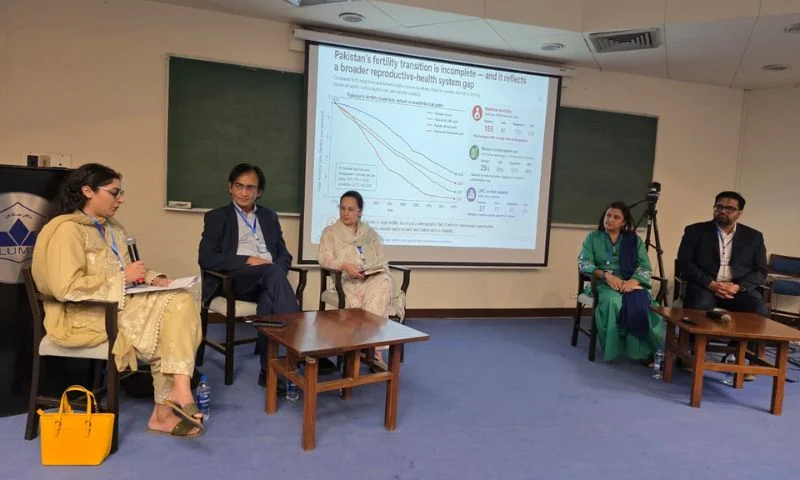
Experts at a gender and economy conference in Lahore warned that artificial intelligence could either unlock major economic opportunities for women or deepen existing inequalities if Pakistan fails to expand digital education and skills training. The discussion took place during a panel on “Health & Gender” moderated by Warda Riaz at LUMS. Panelists included Fyeza Jehan, Usman Ali, Adnan Khan and M. Farhan Majid. Speakers stressed that women’s economic empowerment depends heavily on education, access to information and bargaining power within society. One panelist said affordable learning opportunities and digital skills programmes could help women overcome structural barriers that continue to limit workforce participation and entrepreneurship. “There is a risk that communities with lower skills will be unable to benefit from new technologies,” the panel noted during the discussion. The experts warned that countries failing to invest in digital capacity-building may fall further behind in productivity and global competitiveness. AI Could Transform Women-Led Businesses The panel highlighted how digital tools and AI systems are rapidly reshaping business operations around the world. Referring to survey findings conducted with the Asher Blair Foundation, speakers said women entrepreneurs from nearly 80 countries showed strong interest in adopting generative AI tools. According to the findings, many women business owners wanted to use AI for accounting, payroll management and routine administrative work. Experts said AI could help women-led enterprises reduce time-consuming manual tasks while improving efficiency and productivity. The panel also referenced estimates suggesting Pakistan’s women-focused digital economy could represent a market worth nearly $500 million. That estimate is linked to Pakistan’s female population of around 73 million, highlighting the scale of untapped economic potential. Pakistan has one of the lowest female labor force participation rates in South Asia. The World Bank estimates female participation remains below 25 percent, despite rising smartphone and internet usage. Digital access for women also remains uneven, particularly in rural areas where internet access, digital literacy and educational opportunities remain limited. Digital Divide Could Hurt Long-Term Growth Experts warned that Pakistan’s weak education indicators and low literacy rates could limit the country’s ability to benefit from AI-driven economic transformation. They argued that unequal access to technology may create broader macroeconomic problems in the future. According to the discussion, economies with lower digital adoption could face slower productivity growth and greater dependence on imports. Meanwhile, digitally advanced economies may continue scaling faster through automation and AI integration. The panelists urged policymakers, educational institutions and private companies to invest urgently in women’s digital education and technology-focused training. They said inclusive access to AI skills would play a critical role in ensuring equitable economic growth across Pakistan. Analysts worldwide have increasingly warned that AI may widen social and economic inequality if governments fail to invest in education and workforce adaptation. For Pakistan, experts said the challenge now lies in ensuring women are not excluded from the next phase of technological and economic change.
