

A 14-year-old student has created a teen AI crossed eyes device that could change how doctors treat strabismus, commonly known as crossed eyes. Notably, the invention has already drawn attention from medical experts and technology communities. The young innovator designed a wearable system that uses artificial intelligence to improve eye alignment. In particular, the device gives real-time feedback and helps train the eyes to work together. As a result, it offers a possible alternative to surgery and long-term patch therapy. Strabismus affects millions of people worldwide, especially children. If left untreated, it can lead to serious vision problems. AI innovation targeting strabismus treatment The device tracks eye movement and detects misalignment. Then, it sends visual signals that guide the eyes into correct positioning. Over time, this training helps improve coordination between the eyes and the brain. “I wanted to find a way to help people correct their vision without going through invasive procedures,” the teenager said. Meanwhile, experts say AI is playing a growing role in eye care. Doctors already use it to detect diseases such as glaucoma and diabetic retinopathy. Now, innovators are also using it to support treatment. The teen AI crossed eyes device highlights how technology can make treatment simpler and more accessible. In addition, it reflects a shift toward smarter healthcare solutions. Growing interest from medical community Researchers and doctors have shown strong interest in the invention. For instance, many believe wearable AI tools could support early treatment and improve outcomes. Studies show that strabismus affects around 4 percent of the global population. In many cases, the condition reduces depth perception and can lead to lazy eye if not treated early. Therefore, experts stress that early treatment remains critical. At the same time, they note that the device needs clinical testing before doctors can use it widely. The invention shows how young minds can solve real-world problems. More importantly, it highlights the growing role of innovation in healthcare. Looking ahead, the teen AI crossed eyes device could become part of future vision therapy tools and help reduce reliance on invasive treatments.
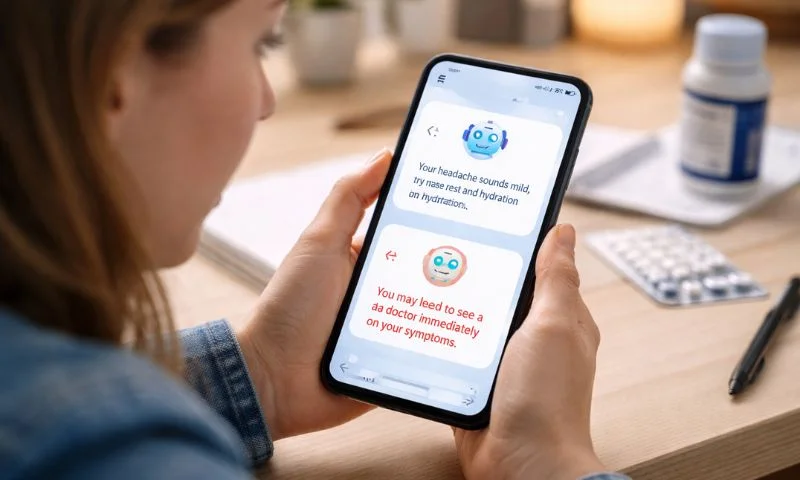
Same Question, Different Answer: AI Chatbots Raise Medical Concerns
Artificial intelligence chatbots can produce sharply different medical advice depending on how a question is phrased, raising concerns about their reliability in healthcare settings, according to a recent BBC report. The findings highlight how even slight variations in wording can significantly change the response generated by large language models, which are increasingly being used by the public for health-related queries. Experts say the issue stems from how these systems process probability rather than understanding context in a human sense. One example cited shows that similar medical questions, rephrased in different ways, can lead to advice ranging from reassurance to urgent warnings. The BBC report notes that this inconsistency can be particularly risky in situations where users rely on chatbots for guidance on symptoms or treatment decisions. Small changes, big differences Researchers say the phenomenon is linked to “prompt sensitivity”, where AI systems respond differently based on subtle changes in language, tone or emphasis. Because chatbots generate answers by predicting likely responses from training data, they may interpret the same situation differently depending on how it is described. This can lead to inconsistent recommendations, especially in complex fields such as medicine. “GenAI doesn’t fail loudly. It fails convincingly,” one expert noted, highlighting the risk that users may trust responses that appear authoritative but are not always reliable. The issue becomes more serious when dealing with high-risk scenarios. A minor difference in phrasing could mean the difference between advice to stay home or seek immediate medical attention. Growing reliance raises concerns The use of AI chatbots for health advice has grown rapidly, with millions of users turning to tools for quick answers about symptoms, medications and conditions. While these systems can provide general information, experts stress they are not designed to replace professional medical judgement. Health authorities in multiple countries have repeatedly warned that AI-generated advice should not be treated as a diagnosis. The BBC report builds on earlier studies suggesting that chatbots can sometimes produce inaccurate or incomplete information, particularly when dealing with nuanced or context-dependent medical cases. Calls for safeguards and regulation Specialists are now calling for stronger safeguards, including clearer disclaimers, better training data, and systems that flag uncertainty in responses. There are also growing demands for regulatory frameworks to ensure AI tools used in healthcare meet strict safety standards. Experts say developers must focus not just on improving models, but also on how they are deployed. Context design, human oversight and clear escalation paths are seen as essential to reduce risks. A tool, not a replacement Despite the concerns, researchers acknowledge that AI chatbots can still play a useful role in healthcare by providing basic information, supporting administrative tasks and improving access to knowledge. However, they caution that users must understand the limitations of the technology. The BBC report concludes that while AI tools are becoming more sophisticated, they remain highly dependent on input quality and context. Until these systems can reliably interpret nuance and intent, experts say they should be used carefully and always alongside professional medical advice.
