

Meta Platforms has announced a major update to how it personalises content across Facebook and Instagram, revealing that it will now use data shared by other businesses to tailor not only advertisements but also users’ feeds and interactions with its artificial intelligence tools. The move marks a significant expansion of Meta’s personalisation strategy as the company intensifies efforts to integrate AI across its platforms and compete with rivals in the rapidly evolving artificial intelligence market. In a blog post published on Tuesday, Meta said it already uses off-platform activity, such as purchases made on external websites and interactions with online services, to deliver targeted advertisements. Under the new policy, the company will also use that information to customise content recommendations and AI-generated responses. Meta stressed that it is not collecting additional data as part of the change. “We aren’t collecting any new data as part of this update,” the company said. “This is about using information that businesses already send to us to further improve your experience.” The update means users could see content that reflects their activity beyond Facebook and Instagram. Meta provided an example of a consumer who recently purchased a tent online and may subsequently see camping-related videos in their Reels feed. AI and Content Personalisation Meta spokesperson Emil Vazquez told technology publication The Verge that the company previously relied primarily on activity within its own ecosystem, including likes, follows, comments and viewing behaviour, to personalise content recommendations. The latest change broadens that approach by incorporating data supplied by businesses through Meta’s advertising and tracking infrastructure. The development also follows Meta’s growing use of artificial intelligence across its platforms. Last year, the company began using conversations with its AI assistant to personalise advertising experiences. Industry analysts view the latest update as part of Meta’s wider strategy to make its AI tools more relevant and responsive by leveraging a broader range of user signals. The company has invested billions of dollars in AI infrastructure and recently introduced several AI-powered products aimed at improving user engagement and advertising effectiveness. Privacy Controls Remain Available Alongside the update, Meta has simplified the controls governing access to off-platform information. Users who do not want Meta to use information shared by other businesses for advertising, feed recommendations or AI responses can disable the “Activity from other businesses” setting. According to Vazquez, the rollout will occur globally but several regions will not receive the feature initially. The excluded markets include the European region, the United Kingdom, Brazil, Thailand, South Africa, Turkey, South Korea, Ecuador, Nigeria and Kenya. The announcement is likely to reignite debates surrounding digital privacy, data collection and the growing role of AI in shaping online experiences. While Meta argues the changes will improve relevance and convenience, privacy advocates have long questioned how major technology companies use consumer data across platforms and services. As competition intensifies among technology giants, personalisation powered by artificial intelligence is becoming a key battleground. Meta’s latest move signals that data shared beyond its platforms will play a growing role in that strategy.
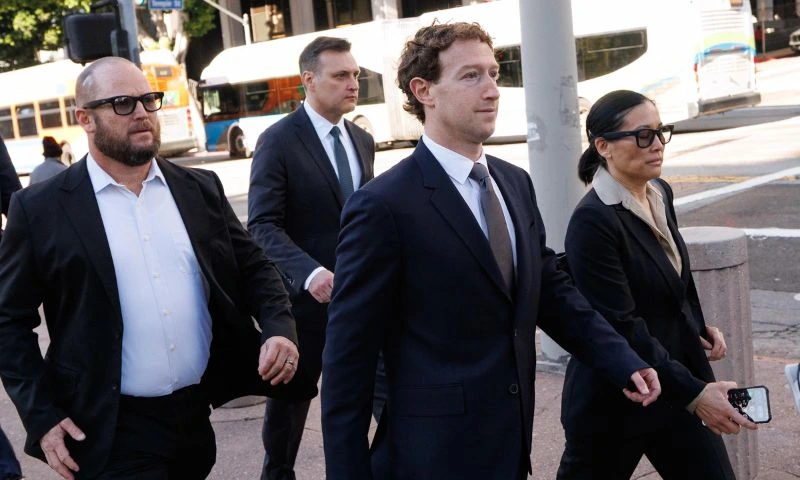
Instagram Under Fire: Zuckerberg Denies Targeting Children in LA Trial
In a major legal showdown in Los Angeles, Meta Platforms CEO Mark Zuckerberg took the stand in a civil lawsuit over claims that Instagram and YouTube harmed a woman’s mental health when she used the apps as a child. The courtroom testimony highlights deep questions about whether social media companies deliberately designed addictive features and targeted young users for profit. The lawsuit was filed by a 20-year-old Californian woman, known as KGM in court filings, who says she began using Instagram and YouTube at a very young age and developed depression and suicidal thoughts linked to her social media use. She argues that the companies sought to “hook kids on their services,” knowing the damage these apps could cause to mental health. Zuckerberg’s Key Defense Zuckerberg repeatedly told jurors that Instagram does not allow users under 13 and that Meta did not intentionally target children. He emphasized that while the platform prohibits under-age sign-ups, enforcing age verification is difficult because users often lie about their birthday. When plaintiff’s lawyer Mark Lanier confronted him with internal Meta documents suggesting youth were a key demographic and that Instagram sought early engagement, Zuckerberg said Lanier was “mischaracterising what I am saying.” He acknowledged Meta had discussed creating a child-friendly version of Instagram but said such a service was never launched. One 2018 internal presentation used in court read, “If we want to win big with teens, we must bring them in as tweens.” Lanier noted this contradicted Zuckerberg’s public claims, yet Zuckerberg maintained Meta’s core intent was not to exploit children. Read More: Plaintiff Lawyer Says Meta, Google Built Platforms to Addict Children Age Verification and Engagement Goals Jurors also saw emails from Meta leadership, including one from former VP Nick Clegg suggesting that Instagram’s age limits were “unenforced (unenforceable?).” Zuckerberg reiterated that accurately verifying ages is complex but insisted Meta works to keep its younger users safe. Another flashpoint was Zuckerberg’s past statements to the US Congress about user engagement goals. Internal email evidence showed earlier plans to grow time spent on Instagram by a double-digit percentage, but Zuckerberg said the goals had evolved and were no longer focused on maximizing usage. “If you are trying to say my testimony was not accurate, I strongly disagree with that,” he said. Read More: Instagram, Facebook & WhatsApp to Get Paid Features: What Meta’s Next Move Means Broader Implications This case is part of a wave of lawsuits against big tech firms, including Snap, TikTok, Google and Meta, alleging social media harms youth mental health and contributes to addictive behavior. Meta’s rivals TikTok and Snap settled with the plaintiff before trial. Legal observers say a verdict against Meta could profoundly affect how social media companies are held accountable for platform design and youth safety, eroding longstanding legal protections shielding tech companies from liability.
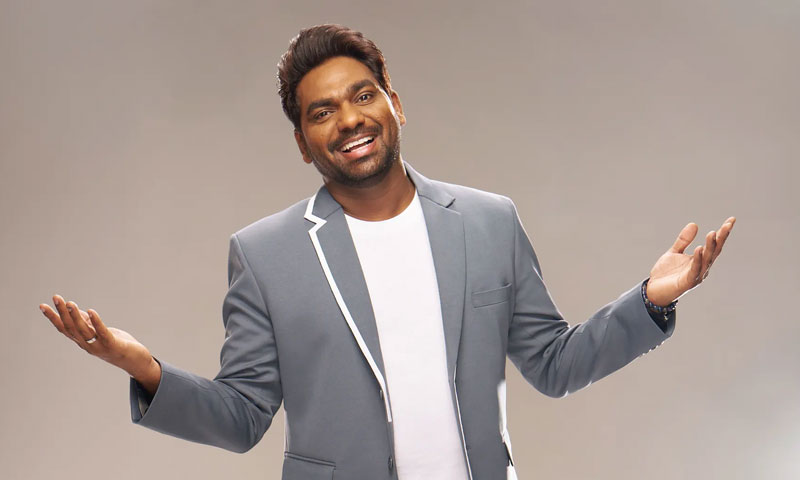
Indian Comedy Star Zakir Khan Confirms Years-Long Pause from Comedy During Papa Yaar Tour
Indian stand-up comedy star Zakir Khan has announced that he will step away from stand-up comedy for several years, citing health concerns and the need for personal recovery after more than a decade of relentless touring. The surprise announcement came on January 18 during Khan’s live performance in Hyderabad as part of his ongoing Papa Yaar tour. Addressing the audience on stage, the comedian revealed that he plans to take an extended hiatus that could last until the end of the decade. “I’m going on a long, long break—till 2028–29 probably… maybe 2030,” Khan said in a clip that has since gone viral on Instagram. “Chaar-paanch saal ka break hai. Health wagairah sambhal lenge. Do-teen cheezein hain, unko theek karna hai.” The announcement sparked widespread reaction among fans, many of whom expressed shock and concern across social media platforms. Khan later confirmed the decision through an Instagram story earlier this week, framing his remaining shows as a celebration rather than a farewell. “Every show is a celebration till 20th June,” he wrote. “Main bahut sheher nahi aa paunga is baar, toh aap thoda takaluf utha kar aa jaiye. Thank you for the love.” This is not the first time Khan has spoken openly about stepping back from the spotlight. Last year, he had briefly paused his performances after revealing that he had been dealing with ongoing health issues. At the time, he admitted that he had continued performing despite feeling unwell for over a year, saying it was “zaruri tha uss waqt.” Over the past decade, Khan has become one of India’s most influential stand-up comedians, known for his storytelling style, poetic humor, and extensive global tours. His demanding schedule has seen him perform across India as well as internationally, often with little downtime between tours. The comedian is currently wrapping up the India leg of his Papa Yaar tour before heading overseas. He is scheduled to perform next in Dubai, followed by shows in Dublin and several cities in the United States, which will mark the conclusion of the tour. While Khan has not shared detailed plans for his break, his remarks suggest a focus on health, personal well-being, and long-postponed priorities—leaving fans hopeful for a refreshed return in the years ahead.

“Never Experienced This Before”: World No. 3 Anders Antonsen Quits India Open Over Delhi’s Air
Denmark’s men’s singles world number three Anders Antonsen has withdrawn from the ongoing India Open, citing what he described as “extreme” air pollution in the Indian capital — a decision that will cost him a $5,000 fine under Badminton World Federation (BWF) regulations. Antonsen announced his withdrawal in a detailed statement on Instagram, where he explained that continuing to compete in the prevailing conditions posed serious health risks. “Many is curious to why I have pulled out of the India Open for the third consecutive year. Due to the extreme pollution in Delhi at the moment I don’t thinks it’s a place to host a badminton tournament. Crossing my fingers that it will be better in the Summer when the World Championships will take place in Delhi. As a result BWF once again has fined me 5000 USD,” Antonsen wrote on his Instagram story. Accepts Fine but Prioritises Health Under BWF tournament rules, players who withdraw after the draw has been made are subject to financial penalties. Antonsen confirmed he would accept a $5,000 fine, stating that the cost was secondary to protecting his long-term well-being. The Danish shuttler, a former World Championship silver medallist and one of the tournament’s top seeds, was widely seen as a strong title contender before his exit. Antonsen also referenced fellow Danish player Mia Blichfeldt, saying she had also been affected by the poor air quality in Delhi. “Mia has also been struggling with the conditions,” he noted, highlighting that the issue was not limited to one athlete but was impacting players more broadly. Renewed Focus on Delhi’s Air Quality The withdrawal has once again drawn international attention to Delhi’s persistent air pollution problem. The city frequently ranks among the world’s most polluted, with hazardous levels of particulate matter caused by traffic emissions, industrial pollution, construction dust, and seasonal factors. Medical experts warn that high pollution levels can severely affect lung function — a critical concern for elite badminton players, whose sport demands intense cardiovascular exertion and rapid recovery. Wider Debate on Athlete Safety Antonsen’s decision has reignited debate over whether international sporting events should proceed in cities facing severe environmental conditions. In recent years, athletes across multiple sports have raised concerns about competing in polluted environments, arguing that air quality should be treated as a core safety issue rather than a secondary concern. As the India Open continues, the withdrawal of one of its biggest stars stands as a stark reminder that environmental conditions can directly influence participation, performance, and the credibility of global sporting events.
