

For more than a decade, the global digital economy has been built around a simple assumption: bigger data centres mean better technology. Vast warehouses packed with servers have powered everything from video streaming and online banking to artificial intelligence. But that model is now facing its most serious challenge yet. The question gaining traction across the tech world is no longer whether data centres will grow — but whether they will remain the centre of AI at all. A Challenge from the Pocket The debate was recently reignited by Aravind Srinivas, chief executive of AI company Perplexity, who argued that the dominance of large data centres could one day be undercut by something far smaller: the smartphone. Speaking on a podcast, Srinivas suggested that as artificial intelligence becomes more efficient and personalised, powerful AI tools could run directly on consumer devices. Instead of constantly sending data back and forth to distant servers, processing could happen locally — on phones, laptops, routers, or even set-top boxes. This would represent a fundamental shift away from the centralised computing model that currently defines AI. Early Signs of a Shift The idea is no longer theoretical. Apple’s latest devices already process some AI tasks directly on-device through Apple Intelligence, using specialised chips to improve speed and privacy. Microsoft has followed a similar path with Copilot+ laptops, which include built-in AI processing capabilities. Yet these remain premium products. Most consumer hardware still lacks the power needed to run advanced AI locally, meaning large data centres remain essential — for now. The Scale of the Data Centre Machine Today’s data centres are enormous operations. Often covering the size of multiple football fields, they house thousands of servers performing everything from cloud storage to AI training. Almost every online service relies on them in some way. Tech giants continue to double down on this infrastructure. Billions of dollars are being invested globally, with around 100 new data centres currently planned or under construction in the UK alone. Their energy consumption is vast, and environmental concerns are growing. Nvidia chief executive Jensen Huang has described these facilities as “AI factories”, arguing that rapid advances in artificial intelligence would not be possible without them. The Case for Smaller, Localised Alternatives Despite the investment surge, a quieter counter-movement is taking shape. Instead of fewer data centres, some experts envision many smaller ones. Consultants and engineers argue that compact “edge” data centres located close to population centres could reduce latency, improve efficiency, and cut energy waste. Some experimental projects already exist — from small data centres heating public swimming pools to household-sized units warming private homes. The idea is simple: if computing generates heat, why waste it? Advocates say future cities could integrate small data centres into public buildings, housing estates, or unused commercial spaces, linking them into networks when large-scale processing is required. Even Space Is Being Considered Others are looking far beyond city limits. Companies are exploring the possibility of placing compact data centres in orbit, where cooling and energy efficiency could be improved. While still experimental, the idea reflects growing discomfort with the ever-expanding footprint of ground-based mega facilities. Is the “Bigger Is Better” Model Cracking? For years, the AI industry believed that scaling was everything — more data, more computing power, better results. But that assumption is now being questioned. As AI models become more specialised, they may require less brute-force computing. Critics argue that not every AI system needs the vast capabilities of today’s large language models. A tool designed for medical diagnosis, for example, does not also need to generate poetry or pop lyrics. If AI becomes smaller, smarter, and more targeted, the pressure to centralise everything inside massive data centres could ease. A Gradual Shift, Not a Collapse Few experts believe large data centres will disappear anytime soon. Demand for cloud services and AI continues to grow. But their role may evolve — from being the sole engine of AI to one component in a far more distributed system. The future may not belong exclusively to either giant data centres or handheld devices, but to a hybrid world where processing happens wherever it makes the most sense. And in that world, the dominance of the mega data centre may no longer be guaranteed.
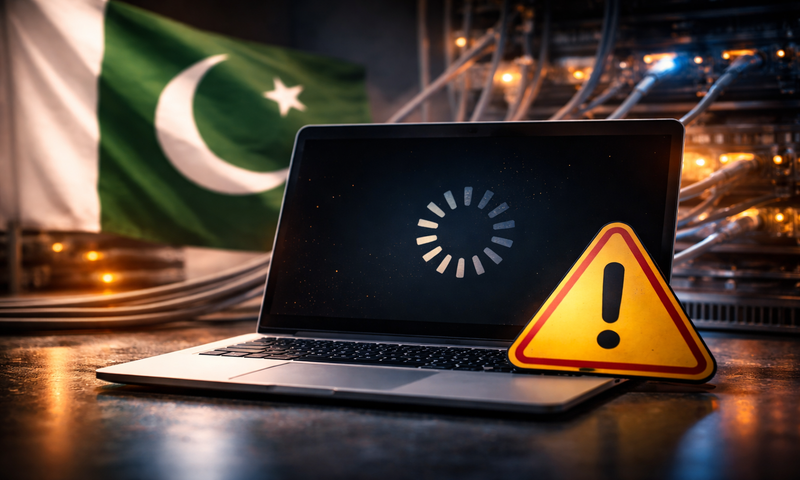
Internet Disruption Likely Across Pakistan on January 15: What We Know So Far
Internet users across Pakistan may experience slow speeds and service disruptions on January 15, as scheduled maintenance work is set to take place on one of the country’s international submarine internet cables. The advisory was issued by major internet service providers, including Nayatel, which informed customers that an unavoidable maintenance activity will begin at around 2:00 PM and could continue for up to eight hours, potentially affecting connectivity nationwide. In a notification shared with subscribers, Nayatel said the work involves one of Pakistan’s submarine cables — critical infrastructure that carries international internet traffic into the country. While the company did not specify which cable is undergoing maintenance or the exact location of the issue, it warned that users may face noticeable internet slowness during the repair window. When to Expect Slow Internet According to the advisory, disruptions are expected during peak usage hours: Date: Thursday, January 15, 2026 Time: Approximately 2:00 PM to 10:00 PM During this period, users may encounter slower browsing speeds, buffering while streaming videos, higher latency in online gaming, and interruptions in video calls or large data transfers. Why Submarine Cable Maintenance Matters Submarine cables form the backbone of Pakistan’s international internet connectivity. Any maintenance or fault at the upstream provider level often requires traffic to be rerouted through alternate links. While this prevents a complete outage, it can lead to congestion, increased latency, and reduced speeds for end users. ISPs typically attempt to manage traffic during such periods, but limitations in available backup capacity mean that some level of disruption is often unavoidable. Recent Context Raises Concerns The planned maintenance comes shortly after a major internet slowdown earlier this month. On January 1, 2026, users across Pakistan reported widespread connectivity issues caused by problems at an upstream internet provider. That disruption lasted for more than 48 hours, impacting businesses, freelancers, and digital services nationwide. If internet speeds are again affected on January 15, it would mark the second instance in two weeks of degraded connectivity — highlighting Pakistan’s heavy reliance on a limited number of international submarine cables. What Users Should Do Internet service providers have advised customers to plan critical online tasks accordingly. While a complete blackout is not expected, users relying on stable connections for work, education, or business operations may want to schedule essential activities outside the affected hours where possible. ISPs say services should gradually stabilize once maintenance work is completed.
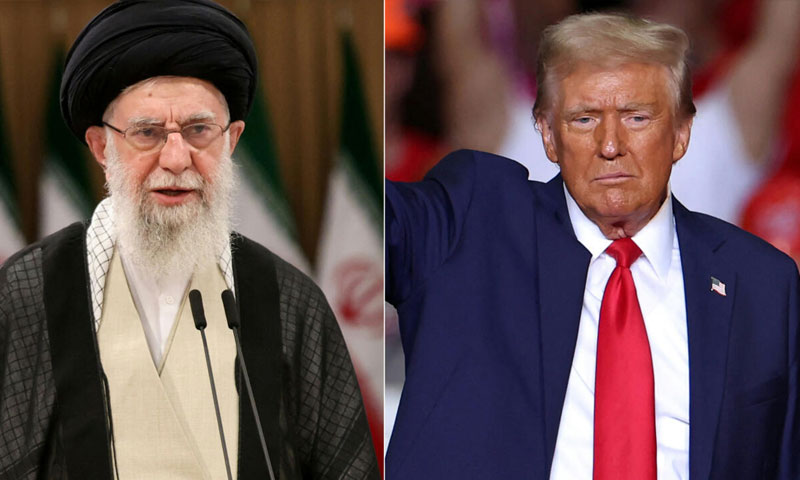
Khamenei Blames Iran Unrest on US Influence, Warns of Tougher Crackdown
Iran’s Supreme Leader Ayatollah Ali Khamenei on Friday signalled a harder line against ongoing anti-government protests, accusing demonstrators of acting in the interests of foreign powers — particularly the United States — as unrest persisted across several Iranian cities under a sweeping communications blackout. In a short address broadcast on state television, the 86-year-old leader said some protesters were “destroying their own streets to please the president of another country,” a clear reference to Donald Trump. Responding to chants of “Death to America” from the audience, Khamenei warned that the Islamic Republic would not tolerate individuals he described as “mercenaries” working on behalf of external forces. Khamenei also lashed out at Trump directly, urging him to focus on domestic challenges in the United States rather than commenting on Iran’s internal affairs. Iranian officials have repeatedly accused Washington, Israel, and their allies of encouraging instability inside the country. Defiant Rhetoric and Historical Warnings Striking a defiant tone, Khamenei dismissed what he described as threats from Trump, drawing comparisons with historical figures he said were removed from power despite their dominance. He named Pharaoh, Nimrod, Reza Khan, and Mohammad Reza Pahlavi as examples of rulers who, he claimed, fell at the height of their authority — adding that Trump would meet a similar fate. The remarks underscored the leadership’s determination to frame the unrest as a foreign-backed plot rather than a domestic uprising. Protests Continue Despite Blackout The true scale of the demonstrations remains difficult to verify due to extensive internet shutdowns and restrictions on international phone services. However, the unrest is widely seen as the most serious challenge to Iran’s leadership in several years. The protests began on December 28 over rising prices, unemployment, and economic hardship. Since then, they have evolved into broader expressions of political anger, with demonstrators openly challenging the ruling system. Exiled Royal Figure Reappears in Public Discourse The protests have also revived debate over the influence of exiled crown prince Reza Pahlavi, who has urged Iranians to sustain demonstrations. Some rallies reportedly featured chants supporting the former shah — a taboo act in the past that once carried severe punishment — highlighting the depth of public frustration. Scenes of Unrest and Official Response Short video clips shared by activists online showed crowds chanting anti-government slogans around bonfires, with debris scattered across streets in Tehran and other cities. State media later acknowledged the unrest but blamed what it called “terrorist elements” linked to the US and Israel for setting fires and inciting violence, reporting casualties without providing details. Despite official warnings and an increased security presence, protesters were reported to have continued marching into Friday morning, defying authorities as international scrutiny of Iran’s response intensified.
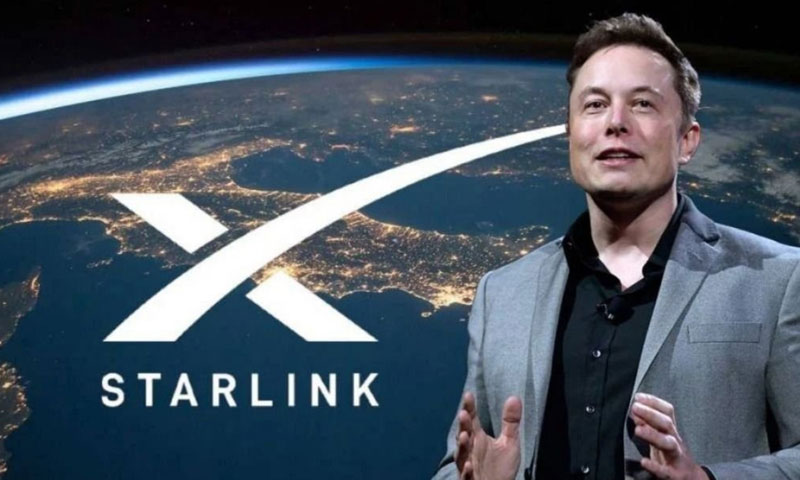
Elon Musk Backs Venezuelans as Starlink Offers Free Internet After Maduro’s Removal
Billionaire entrepreneur Elon Musk has voiced public support for the people of Venezuela as Starlink, operated by SpaceX, announced it would provide free broadband internet access across the country for a limited period amid dramatic political changes. In a post on X on Sunday, Musk wrote, “In support of the people of Venezuela,” while sharing Starlink’s official announcement. The company said it would offer free broadband service through February 3, aiming to maintain connectivity during a period of political uncertainty. In support of the people of Venezuela 🇻🇪 https://t.co/JKxOFWsikP — Elon Musk (@elonmusk) January 4, 2026 The announcement followed a stunning development in Caracas, where the United States confirmed the capture of Venezuelan leader Nicolás Maduro. Footage released by US authorities showed Maduro in handcuffs during a staged perp walk, where he appeared calm and briefly addressed reporters and US Drug Enforcement Administration agents before being taken into custody. The sudden removal of Maduro created an immediate leadership vacuum in Venezuela. Within hours, the country’s Supreme Court issued an emergency ruling assigning interim authority to Vice President Delcy Rodríguez. Reading the decision on state television channel VTV, Supreme Court Justice Tania D’Amelio said Maduro was in a “material and temporary impossibility to exercise his functions.” The court ordered Rodríguez to assume all presidential powers to ensure administrative continuity and what it described as the comprehensive defense of the state. The ruling cited provisions in Venezuela’s constitution that require the vice president to take over executive authority in the event of a president’s temporary or absolute absence. Musk reacted positively to Maduro’s arrest earlier, posting in Spanish: “Venezuela ahora puede tener la prosperidad que merece” (“Venezuela can now have the prosperity it deserves”). His comments quickly gained traction online, especially among Venezuelans who have long struggled with internet restrictions, censorship, and infrastructure breakdowns. Reliable internet access has been a persistent challenge in Venezuela, where outages and state control have limited digital communication. Starlink’s temporary intervention is expected to help citizens stay connected to news, emergency services, and family abroad during the transition period.
