
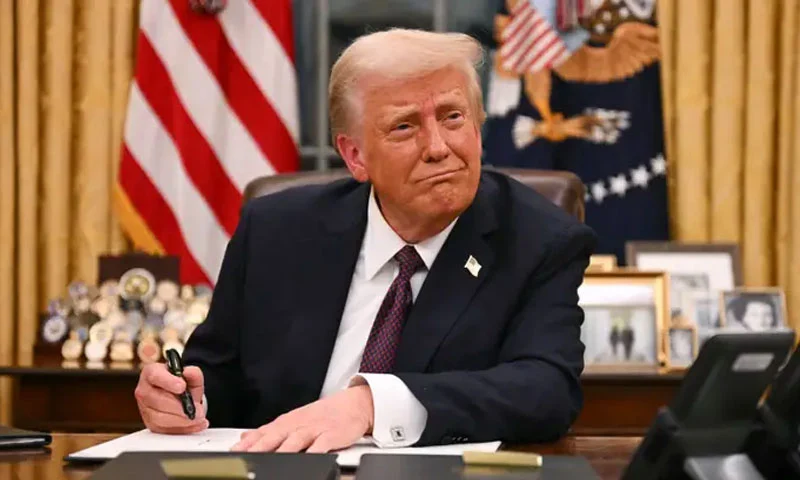
U.S. President Donald Trump said there was “some pretty good news” regarding Iran, but stopped short of providing details on whether a broader peace agreement to end the ongoing conflict was close, underscoring continued uncertainty in high-stakes negotiations. Speaking on Air Force One late on Friday, Trump struck an optimistic tone about developments in the Middle East, even as key issues remain unresolved between Washington and Tehran. “We’ve got some pretty good news on Iran,” he said, without elaborating further on the nature of the progress. Uncertainty Over Peace Deal Despite the upbeat remarks, there was no clarity on the status of a comprehensive deal, with diplomats and officials suggesting that significant gaps remain on core issues, particularly Iran’s nuclear programme and regional security arrangements. The conflict, which began in late February following U.S. and Israeli strikes on Iran, has killed thousands and triggered widespread economic disruption, especially in global energy markets. Trump indicated that negotiations were ongoing and hinted at the possibility of further talks, potentially involving direct engagement between the two sides. However, logistical challenges and political sensitivities have complicated efforts to convene high-level discussions. Pakistan has emerged as a potential venue for talks, with mediation efforts reportedly underway. A preliminary understanding could pave the way for a broader agreement, though officials caution that a final deal remains uncertain. Ceasefire at Risk as Deadlines Loom The fragile ceasefire currently in place may expire soon if a longer-term agreement is not reached. Trump warned that the truce could collapse if negotiations fail to produce results within the expected timeframe. “If we don’t do a deal,” he has previously said, the situation could escalate again, raising the prospect of renewed military action. Meanwhile, tensions around the Strait of Hormuz, a vital artery for global oil shipments, have added urgency to the talks. Iran recently moved to reopen the waterway for commercial shipping under a ceasefire arrangement, but restrictions and security concerns remain in place. Shipping companies and energy traders continue to monitor developments closely, with many awaiting clearer assurances before fully resuming operations. Even temporary disruptions in the strait have had outsized effects on oil prices and global supply chains. Diplomatic Signals but No Breakthrough Yet While Trump has expressed confidence that progress is being made, Iranian officials have disputed some U.S. claims regarding potential concessions, particularly on nuclear material and sanctions. The lack of alignment highlights the complexity of negotiations, with both sides seeking to secure strategic gains while avoiding further escalation. Markets have reacted cautiously to the mixed signals, with oil prices easing slightly on hopes of de-escalation but remaining sensitive to any signs of renewed conflict. For now, Trump’s remarks suggest momentum in diplomacy, but the absence of concrete details points to a process still far from resolution.

US President Donald Trump Warns of ‘Big Wave’ of Strikes on Iran and Won’t Rule Out Ground Troops
US President Donald Trump warned on Monday that a “big wave” of military strikes against Iran could be imminent, and he did not rule out sending American troops on the ground if needed. His comments came as joint United States-Israel operations continue against Iranian military targets. Trump made his remarks while underlining that the current air campaign is still developing and might soon intensify. He also emphasized that the US remains open to all options, including ground force deployment. Trump’s Direct Warnings to Iran In the interview referenced, Trump said the United States could escalate its military campaign if Iran retaliates more forcefully. His warning followed several days of joint US-Israeli strikes targeting what American officials described as Iranian military infrastructure. Posting on Truth Social, Trump added a stark message to Tehran: the US would strike with “a force that has never been seen before!” if Iran launched significant retaliation. pic.twitter.com/uAxTGrJisv— Donald J. Trump (@realDonaldTrump) March 2, 2026 Ground Troops Not Ruled Out Trump’s comments echoed Pentagon signals that while no American ground troops are currently in Iran, their future deployment is not off the table. US Secretary of Defense Pete Hegseth refused to rule out troop deployment, saying the Pentagon is prepared to consider all options to achieve US objectives. “We’re not going to go into the exercise of what we will or will not do,” Hegseth said. General Dan Caine, Chairman of the Joint Chiefs of Staff, also noted that US operations are ongoing and could extend if deemed necessary by military leadership. Ongoing Military Operations The conflict escalated late last week when the United States and Israel began extensive airstrikes against Iran, described by officials as part of a broader strategy to degrade Tehran’s military and strategic capabilities. This offensive followed months of heightened diplomatic tension and proxy engagements across the region. The campaign, dubbed Operation Epic Fury by some outlets, has struck Iranian military sites and leadership infrastructure. Iranian sources report that these attacks have resulted in significant casualties and damage to critical facilities. Regional Spillover and Retaliation Iran has retaliated against the US and its allies with missile and drone strikes across the Middle East, targeting American positions and partner nations. Multiple fronts, including Lebanon, Bahrain, Kuwait, and the Gulf states, have seen heightened activity in recent days. Officials in Tehran have expressed defiance, with some Iranian leaders vowing continued resistance against what they call foreign aggression. Global Concerns and Market Impact The conflict’s expansion has rattled global markets, particularly energy prices, as shipping lanes like the Strait of Hormuz remain volatile due to military movements and rising tensions. Financial analysts warn that prolonged conflict could further disrupt trade and energy stability. US Lawmakers Raise Strategic Questions Back in Washington, lawmakers from both political parties expressed concern about the lack of a clear long-term plan following Trump’s announcements and initial strikes. Some legislators cautioned that open-ended operations without defined goals could embroil the United States in a prolonged conflict. Democrats and Republicans alike noted the risk of escalation if diplomatic avenues remain underdeveloped, stressing the need for careful oversight.
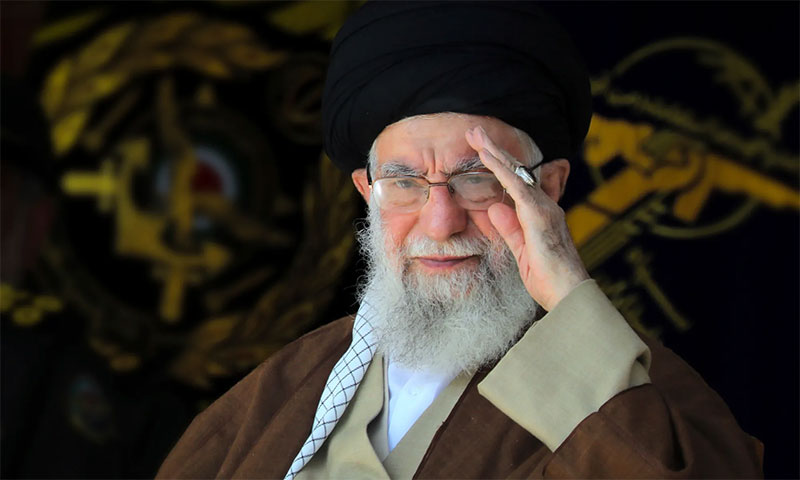
Iran’s Supreme Leader Khamenei Killed in US-Israeli Strikes, 40 days of mourning announced in Iran
Iran’s Supreme Leader Ayatollah Ali Khamenei has been killed in joint military strikes by the United States and Israel, Iranian state media confirmed early Sunday, marking one of the most significant escalations in Middle East tensions in decades. The attacks targeted his compound in Tehran as part of a broader offensive launched late Saturday under what U.S. officials have described as a pre-emptive military campaign. Khamenei, 86, had led the Islamic Republic since 1989, holding ultimate authority over political, military and religious affairs in Iran. His death was confirmed shortly after U.S. President Donald Trump publicly announced the strike, calling it a decisive action against what he described as a persistent threat to U.S. and regional security. 📹 اعلام خبر شهادت رهبر معظم انقلاب اسلامی ایران pic.twitter.com/5k68tVkbHN— خبرگزاری تسنیم (@Tasnimnews_Fa) March 1, 2026 Government Declares Mourning and Public Holidays Following the confirmation, the Iranian government declared 40 days of official mourning nationwide and announced seven days of public holidays as a mark of respect for the late leader. State media also reported that several of Khamenei’s family members, including his daughter, son-in-law and granddaughter, were killed in the attack, with additional reports indicating that another relative was also among the casualties. US and Israeli Military Operation The strike forms part of a major joint operation by the United States and Israel, known in military circles as Operation Epic Fury and Operation Roaring Lion, targeting Iran’s leadership, nuclear infrastructure and strategic military sites. U.S. officials said the attack was timed to coincide with a high-level meeting of Khamenei and senior aides, based on intelligence that ensured the operation’s maximum impact. President Trump described the strikes as a necessary step to protect American forces and allies, asserting that advanced intelligence systems enabled precise targeting. He wrote that Khamenei was unable to evade capture or destruction, even with sophisticated tracking and surveillance efforts. Immediate Retaliation from Iran Hours after the strikes, Iran launched missile and drone attacks against U.S. bases in the Gulf and Israeli territory, escalating the conflict into a broader regional confrontation. Reports have emerged of civilian and military casualties on both sides, as well as damage to infrastructure across the region. The Islamic Revolutionary Guard Corps has pledged continued retaliation, portraying Khamenei’s death as martyrdom at the hands of “vicious terrorists” and vowing that the “hand of revenge” will not let the attackers go unpunished. Global Reactions and Consequences World leaders have reacted with alarm to the rapid escalation. The United Nations and major powers called for restraint and urgent diplomacy to prevent further spillover into neighboring countries. Oil markets also reacted sharply, with global crude prices rising due to fears of disrupted supplies through the Strait of Hormuz. Analysts say Khamenei’s death creates a significant power vacuum in Tehran. His successor has not yet been named, and Iran’s Assembly of Experts, a clerical body responsible for selecting the next supreme leader, is expected to convene soon. Some experts believe hardliners within the Islamic Revolutionary Guard Corps could assert greater influence during the transition. The conflict, which erupted amid months of failed nuclear negotiations, regional proxy tensions and internal Iranian protests driven in part by economic hardship, now stands on the brink of broader war with global implications.
