
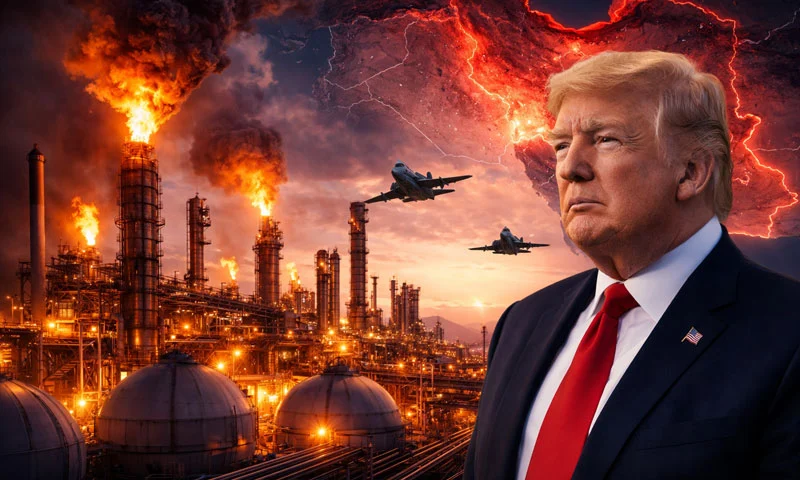
US President Donald Trump has announced a fresh 10-day pause on attacks targeting Iran’s energy infrastructure, just three days after initially ordering a 5-day halt. The move signals a cautious shift toward diplomacy, even as tensions between the two sides remain high. Trump said negotiations are “going very well,” but added that he is not certain whether the United States will ultimately reach a deal with Iran. From 5 Days to 10 Days, A Window for Diplomacy The United States had first paused strikes for five days to allow space for talks. Now, that pause has been extended by another 10 days, giving both sides more time to negotiate and avoid further escalation. Reports indicate that the new deadline will run until April 6, during which diplomatic engagement is expected to intensify. The extension suggests that discussions have shown some progress, or at least that Washington is willing to give diplomacy a longer chance. Mixed Signals on a Possible Deal Despite the extension, Trump’s remarks reflect uncertainty. While he praised ongoing talks, he clearly stated that he does not know if the US is willing to make a deal with Iran. This dual messaging highlights a strategy where military pressure and diplomacy are being used at the same time. Iran, meanwhile, has reportedly raised concerns over certain US conditions, making negotiations more complex. Why Energy Targets Matter Iran’s energy infrastructure has been a central focus of US strategy in the conflict. Strikes on these facilities can disrupt global oil supply, making them a powerful tool in both economic and military terms. The pause in attacks has provided temporary relief to global markets, though uncertainty continues to drive volatility. Oil prices have remained elevated due to fears of supply disruption, especially around the Strait of Hormuz, a key global shipping route. Global Mediation Efforts Underway Several countries are actively working to mediate between Washington and Tehran. These diplomatic efforts aim to reduce tensions and prevent a wider regional conflict. However, major differences remain, particularly over Iran’s nuclear program and its regional influence. A Critical Moment for the Conflict The additional 10-day pause creates a narrow but important window for diplomacy. Trump has warned that if talks fail, attacks on Iran’s energy facilities could resume. For now, the situation remains fragile, with both sides balancing negotiation and confrontation. The coming days are likely to determine whether this pause leads to a breakthrough or a renewed escalation.
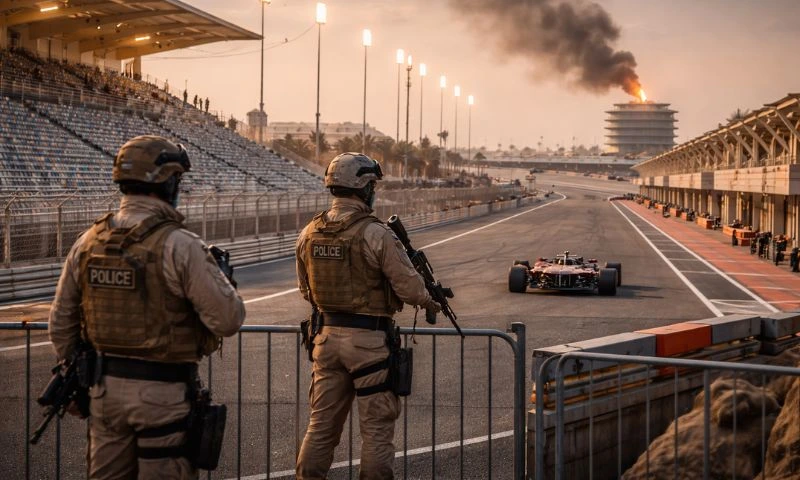
Iran War Disrupts Formula One as Bahrain and Saudi Races Face Cancellation
Escalating tensions in the Middle East due to the ongoing conflict involving Iran have begun to affect global sporting events, with Formula One expected to cancel two major races scheduled in the Gulf region. The Bahrain and Saudi Arabian Grands Prix are likely to be removed from the 2026 Formula One calendar because of growing security concerns linked to the regional conflict. Iran has launched missile attacks targeting US military bases located in Gulf countries, including Bahrain and Saudi Arabia, in response to joint US and Israeli strikes on Iranian territory. The security situation has raised serious concerns about the safety of teams, staff and spectators involved in the championship. April races unlikely to take place According to reports, the Bahrain Grand Prix was scheduled to take place on April 12, while the Saudi Arabian Grand Prix was planned for April 19. Although it remains uncertain whether the conflict will continue until those dates, Formula One must make an early decision due to logistical deadlines. Teams must ship equipment and infrastructure to race venues weeks in advance, which makes delaying the decision difficult. Because the F1 calendar is already packed with events, replacing the cancelled races is considered unlikely. If both events are removed, the 2026 championship season would be reduced from 24 races to 22. Large gap expected in the race calendar The cancellations would also create an unusually long break in the racing calendar. The Japanese Grand Prix, scheduled for March 29, would remain the third race of the season. After that event, there would be a five-week gap before the Miami Grand Prix on May 3. Such a break is rare in modern Formula One seasons, which usually run on a tight schedule with races almost every two weeks. Lewis Hamilton backs F1 leadership Seven-time world champion Lewis Hamilton has voiced confidence that Formula One will make the right decision regarding the races. Speaking ahead of the Chinese Grand Prix, the Scuderia Ferrari driver said he trusts the leadership of Formula One to prioritize the safety of everyone involved. “I know that Stefano Domenicali will do what is right for all of us and the sport,” Hamilton said while referring to the Formula One chief executive. Conflict continues to affect global events The ongoing conflict has already disrupted various international industries, including aviation, energy markets and global travel. Major sporting events are now also feeling the impact. If confirmed, the cancellation of the Bahrain and Saudi Arabian races would mark one of the most significant disruptions to the Formula One season in recent years, highlighting how geopolitical conflicts can extend far beyond politics and economics into the world of sports.
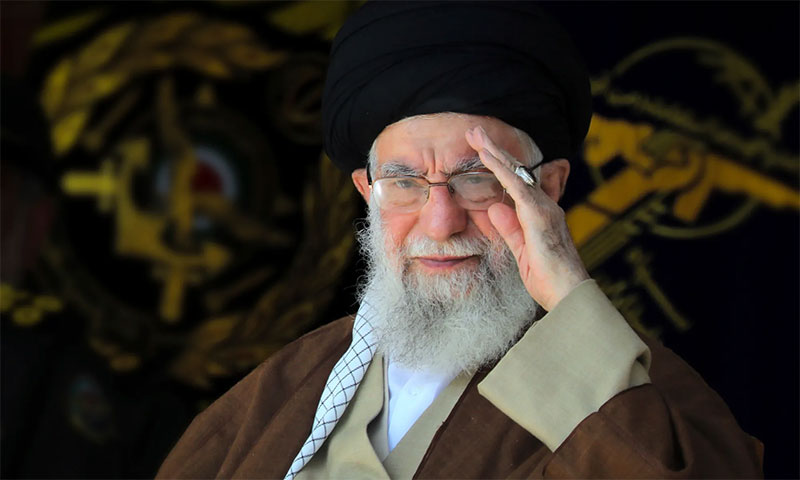
Iran’s Supreme Leader Khamenei Killed in US-Israeli Strikes, 40 days of mourning announced in Iran
Iran’s Supreme Leader Ayatollah Ali Khamenei has been killed in joint military strikes by the United States and Israel, Iranian state media confirmed early Sunday, marking one of the most significant escalations in Middle East tensions in decades. The attacks targeted his compound in Tehran as part of a broader offensive launched late Saturday under what U.S. officials have described as a pre-emptive military campaign. Khamenei, 86, had led the Islamic Republic since 1989, holding ultimate authority over political, military and religious affairs in Iran. His death was confirmed shortly after U.S. President Donald Trump publicly announced the strike, calling it a decisive action against what he described as a persistent threat to U.S. and regional security. 📹 اعلام خبر شهادت رهبر معظم انقلاب اسلامی ایران pic.twitter.com/5k68tVkbHN— خبرگزاری تسنیم (@Tasnimnews_Fa) March 1, 2026 Government Declares Mourning and Public Holidays Following the confirmation, the Iranian government declared 40 days of official mourning nationwide and announced seven days of public holidays as a mark of respect for the late leader. State media also reported that several of Khamenei’s family members, including his daughter, son-in-law and granddaughter, were killed in the attack, with additional reports indicating that another relative was also among the casualties. US and Israeli Military Operation The strike forms part of a major joint operation by the United States and Israel, known in military circles as Operation Epic Fury and Operation Roaring Lion, targeting Iran’s leadership, nuclear infrastructure and strategic military sites. U.S. officials said the attack was timed to coincide with a high-level meeting of Khamenei and senior aides, based on intelligence that ensured the operation’s maximum impact. President Trump described the strikes as a necessary step to protect American forces and allies, asserting that advanced intelligence systems enabled precise targeting. He wrote that Khamenei was unable to evade capture or destruction, even with sophisticated tracking and surveillance efforts. Immediate Retaliation from Iran Hours after the strikes, Iran launched missile and drone attacks against U.S. bases in the Gulf and Israeli territory, escalating the conflict into a broader regional confrontation. Reports have emerged of civilian and military casualties on both sides, as well as damage to infrastructure across the region. The Islamic Revolutionary Guard Corps has pledged continued retaliation, portraying Khamenei’s death as martyrdom at the hands of “vicious terrorists” and vowing that the “hand of revenge” will not let the attackers go unpunished. Global Reactions and Consequences World leaders have reacted with alarm to the rapid escalation. The United Nations and major powers called for restraint and urgent diplomacy to prevent further spillover into neighboring countries. Oil markets also reacted sharply, with global crude prices rising due to fears of disrupted supplies through the Strait of Hormuz. Analysts say Khamenei’s death creates a significant power vacuum in Tehran. His successor has not yet been named, and Iran’s Assembly of Experts, a clerical body responsible for selecting the next supreme leader, is expected to convene soon. Some experts believe hardliners within the Islamic Revolutionary Guard Corps could assert greater influence during the transition. The conflict, which erupted amid months of failed nuclear negotiations, regional proxy tensions and internal Iranian protests driven in part by economic hardship, now stands on the brink of broader war with global implications.
