

GameStop is preparing a potential offer for eBay as CEO Ryan Cohen pushes an aggressive strategy to dramatically increase the struggling retailer’s market value, the Wall Street Journal reported on Friday. The report said GameStop has quietly built a stake in eBay ahead of a possible bid. Cohen could take the proposal directly to eBay shareholders if the company resists, according to people familiar with the matter. Shares reacted sharply to the news. eBay jumped about 14 percent in extended trading, while GameStop gained around 4 percent. eBay currently holds a market capitalization of roughly $46 billion, compared to GameStop’s nearly $12 billion. Details of the potential offer remain unclear. The report added that a formal bid could come as soon as later this month. Neither company nor Cohen responded immediately to requests for comment. Unusual deal structure raises stakes A potential acquisition would defy conventional dealmaking norms. Public companies rarely target firms significantly larger than themselves. Such deals often rely on heavy borrowing, stock issuance, or both. Analysts say the move reflects Cohen’s willingness to take bold risks. His strategy hinges on leveraging future earnings of a combined entity to justify the scale of the transaction. Read More: Major Shake-up in Cement Sector as Fauji Cement and KAPCO Take Joint Control of Attock Cement GameStop has spent years trying to adapt to a rapidly shifting retail environment. The company struggled as consumers moved toward digital downloads and online shopping. It responded by closing stores and pivoting toward a more digital-first model. Cohen, who joined the board in January 2021 and became CEO in September 2023, has driven cost-cutting measures that helped restore profitability. Still, revenue pressure persists. The company reported a 14 percent drop in revenue to $1.10 billion during the holiday quarter, highlighting ongoing challenges in its core business. Turnaround pressure mounts GameStop recently unveiled a compensation package worth about $35 billion for Cohen. The package ties rewards to ambitious performance targets. These include lifting the company’s market value to $100 billion and achieving $10 billion in cumulative EBITDA. The retailer’s shares remain far below the peaks seen during the 2021 meme stock rally, when retail investors propelled the stock to historic highs. Read More: inDrive Joins WEF Unicorn Club, Puts Pakistan on Global Tech Map Meanwhile, eBay has shown stronger momentum. Its shares have risen more than 19 percent this year. The company recently forecast second-quarter revenue above Wall Street expectations. Growth drivers include collectibles, motor accessories, and live-streamed auctions. Industry observers say a deal could reshape both companies. GameStop would gain a massive online marketplace platform, while eBay could see renewed strategic direction under Cohen’s leadership. However, execution risks remain high. Financing such a transaction and integrating two very different business models would test even seasoned management teams.
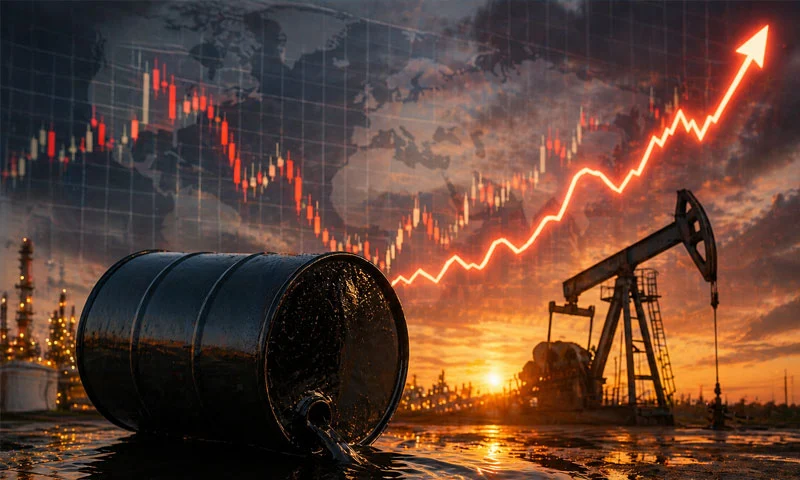
Crude Rally Sparks Fears of $140 Oil Amid Rising Tensions
Global markets jolted as the oil price surge global markets intensified following fears that Donald Trump could tighten or prolong measures affecting Iranian oil flows, pushing crude prices sharply higher and fuelling inflation concerns. Oil Prices Spike on Geopolitical Fears Brent crude jumped about 6 percent overnight to a four-year high of $122.53 a barrel. Traders reacted to concerns that the Strait of Hormuz could remain constrained, a critical route for global energy supplies. The sharp rise in oil prices amplified volatility across financial markets. Higher energy costs raised expectations that inflation pressures will persist, especially in major economies. Read More: Oil, Weapons and Gold: The Industries Profiting From the Iran-US Tensions The surge weighed on global bonds, where yields climbed as investors reassessed interest rate outlooks. Markets now expect fewer chances of rate cuts by the Federal Reserve this year. Pricing suggests an almost even chance of a rate hike by next spring. The shift follows one of the most divided Federal Reserve decisions since 1992. Three policymakers opposed an easing bias, while another supported a rate cut. The central bank also warned that rising energy prices were feeding inflation risks. Investors are now closely watching signals from the European Central Bank and the Bank of England, both expected to adopt a more hawkish stance. Markets React as Dollar Strengthens Equity markets in Asia showed resilience despite the broader uncertainty. Technology and artificial intelligence-linked stocks gained support from strong earnings. Futures tracking US tech shares also advanced, reinforcing optimism around AI-driven growth. However, caution persisted as geopolitical tensions continued to shape investor sentiment. “Macroeconomic risks are significant at this juncture, but stock market bulls hope a rosy path for artificial intelligence can continue to offset cyclical weakness,” said Jose Torres, senior economist at Interactive Brokers. Read More: Pakistan Holds Four Weeks of Fuel as Global Oil Routes Face Disruption He added: “If earnings, capital expenditures and outlooks are buoyant, investors could remain sanguine even as the threat of a slowdown in overall activity, loftier borrowing costs and widening credit spreads raise eyebrows.” Currency markets reflected diverging policy expectations. The US dollar strengthened alongside rising yields, while the Japanese yen weakened. Iran Pushes Back on US Measures Iran’s parliament speaker Mohammad Bagher Ghalibaf rejected claims that US actions had disrupted Iran’s oil sector. He said production remained intact despite the measures. Read More: Major Oil & Gas Discovery in Khyber Pakhtunkhwa: What It Means for Pakistan’s Energy Supply “Three days in, no well exploded,” Ghalibaf said. “We could extend to 30 and livestream the well here.” 3 days in, no well exploded.We could extend to 30 and livestream the well here. That was the kind of junk advice the US admin gets from people like Bessent who also push the blockade theory and cranked oil up to $120+. Next stop:140. The issue isn't the theory, it's the mindset.— محمدباقر قالیباف | MB Ghalibaf (@mb_ghalibaf) April 29, 2026 He criticised US officials, including Treasury Secretary Scott Bessent, accusing them of relying on flawed assessments. “They push the blockade theory and cranked oil up to $120+. Next stop: 140. The issue isn’t the theory, it’s the mindset,” he said. The comments highlight escalating rhetoric between Tehran and Washington over sanctions and oil market stability. Analysts say tensions in the region continue to influence global energy prices and investor behaviour.
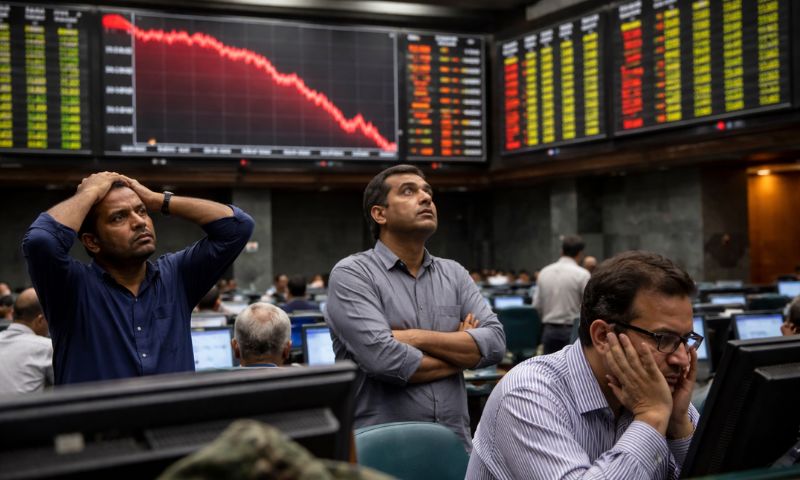
KSE-100 Records Historic 15,000-Point Crash as Geopolitical Fears Rattle Markets
The Pakistan Stock Exchange (PSX) witnessed one of the most dramatic sell-offs in its history on Monday as the benchmark KSE-100 Index plunged more than 15,000 points shortly after the market opened. Trading commenced normally in Karachi, but panic selling quickly swept across sectors within minutes, sending shockwaves through the investor community. Sharp Drop Triggers Trading Suspension Shortly after the opening bell, the KSE-100 index fell by over 15,000 points, representing a decline of nearly 9 percent compared to its previous close of 168,062.16 points. This steep fall triggered an automatic trading suspension under PSX market rules, designed to halt activity when extreme volatility occurs and to prevent further panic-driven losses. When trading eventually resumed around 10:30 am, the index was still down by 12,334.88 points from the previous close, marking a 7.34 percent drop, before marginal recovery efforts brought it back within more moderate losses later in the morning session. Read More: PSX Sees Intense Volatility as KSE-100 Declines Over 1,600 Points All Sectors Hit Hard Investors saw heavy declines across multiple sectors, with fewer than five companies remaining in positive territory during the early session. The vast majority of stocks registered sharp losses as shareholders rushed to exit positions amid the sudden downturn. Data from trading summaries shows other market indexes and indices also suffered, with the KSE-100 dropping to around 152,991 points during the most intense phase of the sell-off. Geopolitical Tensions and Oil Prices Analysts and market observers have largely attributed the extreme turbulence in the Pakistan market to escalating geopolitical tensions in the Middle East. Reports indicate that rising conflict in the region has riled global markets and sparked risk aversion among investors. At the same time, Brent crude oil prices surged sharply, rising by approximately 10 percent to around $80 per barrel amid concerns that widening conflict could disrupt supply. Such spikes in commodity prices often elevate uncertainty in emerging markets like Pakistan. Read More: Oil Prices Surge 10% as Iran Conflict Threatens Key Supply Routes, Analysts Warn $100 Oil Possible Local Market Context Just weeks ago, the KSE-100 had shown more stabilized conditions, with occasional rallies and declines typical of stock market cycles. For example, in mid-February, after days of selling pressure, the index managed to result in positive gains due to renewed buying interest. Despite these intermittent positives, the broader trend over the previous month was downward even before Monday’s crash, with the KSE-100 shedding nearly 10.8 percent month-to-date, according to historical data. What This Means for Investors The sudden crash and trading halt have left many investors concerned about near-term market stability. Trading suspensions are used globally in such situations but also reflect the severity of selling pressure and investor sentiment during periods of high uncertainty. Financial analysts caution that external shocks such as geo-political conflict and oil price volatility can sharply affect risk appetite among both domestic and international investors. How the market will respond in the next sessions remains closely watched by traders
