
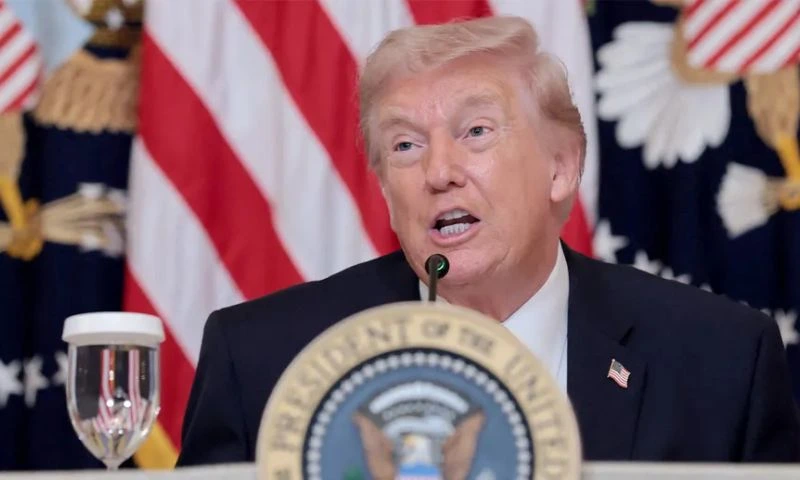
Global oil markets surged sharply after US President Donald Trump warned of intensified military action against Iran, raising fears of prolonged conflict and further disruption to global energy supplies. Brent crude jumped to $107.60 per barrel, while West Texas Intermediate rose about 6.4% to around $106.50, as traders reacted immediately to the remarks. The spike reversed earlier optimism that prices might stabilise. Trump’s Threat Triggers Market Shock In a televised address from the White House, Trump signalled that the United States would escalate its offensive in Iran over the coming weeks. He said the US would complete its strategic objectives “very shortly” and warned that American forces could spend the next “two to three weeks bombing Iran back to the Stone Ages.” The remarks rattled markets that had been hoping for clarity on a possible exit strategy. Instead, the speech reinforced expectations of a prolonged conflict. Oil prices, which had briefly dipped below $100 earlier in the day on hopes of de-escalation, surged within minutes of the address. Strait of Hormuz Disruption Fuels Crisis The ongoing Iran conflict has severely disrupted global oil and gas flows, particularly through the Strait of Hormuz, one of the world’s most critical energy chokepoints. Shipments through the strait have largely stalled after Iran threatened to target tankers attempting to pass, in response to US and Israeli strikes that began on 28 February. Analysts note that nearly one fifth of the world’s oil supply typically passes through this narrow waterway, making any disruption highly sensitive for global markets. In his speech, Trump said the US no longer depends on Middle Eastern energy and called on other nations to intervene and restore shipping routes. “To those countries that can’t get fuel, many of which refuse to get involved in the decapitation of Iran… build up some delayed courage, go to the Strait and just take it,” he said. Markets React as War Outlook Darkens Energy analysts said the price surge reflects a shift in market expectations. Alberto Bellorin of InterCapital Energy described the rise as a “clear market reality check following the earlier optimism for an imminent ceasefire.” He added that Trump’s speech lacked a “concrete timeline” for reopening the Strait of Hormuz and warned that normal supply conditions could take months rather than weeks to return. Experts say the absence of a clear de-escalation plan has removed hopes of a quick resolution, prompting investors to price in prolonged supply shortages. Tina Soliman-Hunter from Macquarie University said Trump’s comments signal that the war is likely to continue, reinforcing expectations that oil markets will remain tight. Asian Markets Slide Amid Energy Fears The impact was not limited to oil. Stock markets across Asia fell sharply following the speech, reflecting concerns over rising energy costs and economic instability. Japan’s Nikkei 225 dropped 2.4%, South Korea’s KOSPI fell 4.5%, and Hong Kong’s Hang Seng Index declined 1.3%. The region remains particularly vulnerable because many Asian economies rely heavily on Middle Eastern oil imports. Global Energy Risks Intensify The Iran war has already strained global supply chains, with energy markets experiencing sustained volatility since late February. Industry observers warn that continued disruption in the Gulf could push oil prices even higher, increasing inflationary pressures worldwide and affecting fuel costs, transportation, and manufacturing. With no clear timeline for resolution and escalating rhetoric from Washington, markets are bracing for further instability in the weeks ahead.

Oil Prices Drop After Trump Signals Possible End to Middle East War
Global oil prices fell sharply after surging to their highest levels in years, following comments from US President Donald Trump suggesting that the ongoing war in the Middle East could end sooner than expected. The sudden shift in sentiment eased fears of prolonged supply disruptions that had rattled energy markets earlier in the week. The volatility highlights how geopolitical tensions can quickly affect global energy markets and investor confidence. Oil Retreats After Sharp Rally Oil prices dropped significantly after reaching a three-year high in the previous session. Brent crude futures fell by $6.28, or about 6.35 percent, to $92.68 per barrel, while US West Texas Intermediate (WTI) crude dropped $6.24, or 6.58 percent, to $88.53 per barrel during trading in Asian markets. Both benchmarks had surged earlier after fears that the escalating conflict involving Iran could disrupt global energy supplies. Oil had climbed above $100 per barrel on Monday, reaching its highest level since mid-2022. Energy markets reacted strongly because the Middle East remains one of the most critical regions for global oil production and shipping routes. Trump’s Remarks Calm Markets The sharp drop in prices came after Donald Trump said he believed the conflict involving Iran could end sooner than initially expected. In an interview with CBS News, Trump said the war “is very complete” and that the timeline had progressed faster than anticipated. Market sentiment improved further after Russian President Vladimir Putin reportedly discussed proposals for a quick settlement during a call with Trump, according to a Kremlin aide. The possibility of diplomatic progress reduced concerns that oil shipments could face long-term disruptions. Energy analysts say markets often react strongly to geopolitical signals, especially when conflicts involve key oil-producing regions. Middle East Tensions Drive Energy Volatility The recent surge in oil prices was fueled by fears that the conflict could disrupt supply chains, particularly shipping through the Strait of Hormuz, a critical passage through which roughly one fifth of global oil trade flows. When tensions rise in the Gulf region, traders often expect supply shortages, pushing oil prices higher. The sudden rally above $100 per barrel earlier this week reflected those fears. However, the quick reversal after diplomatic signals shows how sensitive markets are to changes in the geopolitical outlook. Analysts Warn of Continued Uncertainty Despite the price drop, analysts caution that oil markets remain fragile. Any escalation in the conflict or disruption to energy infrastructure could trigger another spike in prices. Suvro Sarkar, energy sector team lead at DBS Bank, said markets may be reacting too strongly to short-term developments. He noted that risks remain even as prices fall. He said the market may be “underappreciating risks at these levels for Brent.” The Group of Seven nations have also discussed potential measures to stabilize oil markets if prices surge again, although they have not yet decided to release strategic oil reserves. Global Economic Impact Fluctuations in oil prices affect economies worldwide. Higher energy costs increase transportation and production expenses, which can push inflation higher and slow economic growth. For oil-importing countries, including many developing economies, sudden price spikes can strain national budgets and widen trade deficits. As diplomatic efforts continue, investors and governments will closely monitor developments in the Middle East. For now, the latest decline in prices offers temporary relief to global markets, but uncertainty remains.
