
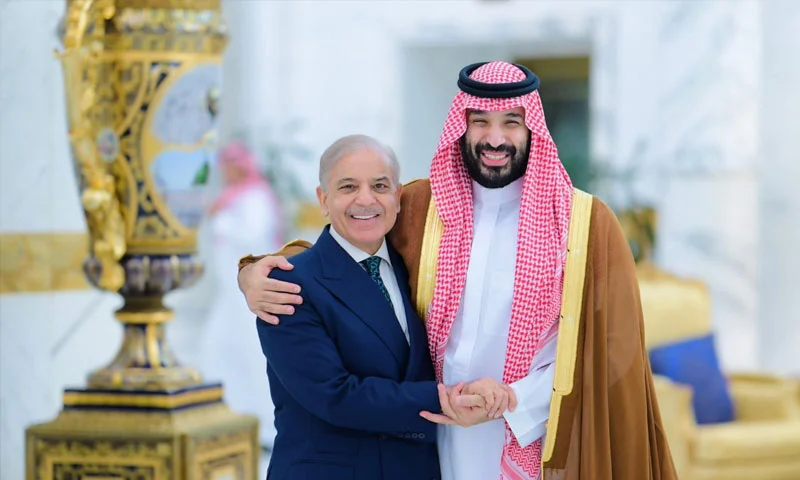
Prime Minister Shehbaz Sharif has underscored Pakistan’s growing diplomatic role in the Middle East after meeting Saudi Crown Prince Mohammed bin Salman in Jeddah, where he reaffirmed Islamabad’s commitment to regional peace and stability following recent developments involving the United States and Iran. In a statement shared on social media, the prime minister said, “I had the pleasure and honour of meeting my dear brother, His Royal Highness Crown Prince Mohammed bin Salman, in Jeddah today.” He added that he conveyed Pakistan’s “unwavering solidarity with the Kingdom” and expressed appreciation for Saudi Arabia’s “patience and restraint” under the crown prince’s leadership during challenging times. Shehbaz Sharif also highlighted Pakistan’s recent diplomatic efforts, stating that he shared “developments related to Pakistan’s peace efforts which helped facilitate the U.S.–Iran ceasefire and historic peace talks in Islamabad.” He reiterated that Pakistan remains committed to encouraging both Washington and Tehran toward “an agreement aimed at lasting peace and stability in the region.” I had the pleasure and honour of meeting my dear brother, His Royal Highness Crown Prince Mohammed bin Salman, in Jeddah today.During the course of which, I conveyed Pakistan’s unwavering solidarity with the Kingdom and expressed my deep appreciation of its patience and… pic.twitter.com/C6fIobxM58— Shehbaz Sharif (@CMShehbaz) April 15, 2026 The prime minister further expressed gratitude for Saudi Arabia’s continued economic support, noting that he had conveyed “sincere appreciation for the Kingdom’s consistent support for Pakistan’s economic stability,” while both sides reaffirmed their commitment to strengthening long-standing defence and strategic ties. Military and diplomatic outreach expands Pakistan’s parallel diplomatic engagement continued as Chief of Defence Forces (CDF) and Chief of the Army Staff Field Marshal Asim Munir arrived in Tehran, where he held meetings with Iranian leadership, according to Iranian media reports. The discussions focused on regional security, bilateral cooperation and ongoing efforts to sustain de-escalation following recent tensions. The visit is being viewed as part of a broader coordinated effort by Pakistan to maintain communication channels with all key stakeholders, reinforcing its position as a facilitator in ongoing diplomatic efforts between Iran and the United States. Delighted to welcome Field Marshal Munir to Iran.Expressed gratitude for Pakistan's gracious hosting of dialogue, emphasizing that it reflects our deep and great bilateral relationship. Our commitment to promoting peace and stability in the region remains strong—and shared. pic.twitter.com/e74lm6hL8r— Seyed Abbas Araghchi (@araghchi) April 15, 2026 Observers say the simultaneous engagement with Riyadh and Tehran reflects Islamabad’s attempt to balance its regional relationships while pushing forward its role in peacebuilding initiatives. Islamabad likely venue for next round of talks Meanwhile, diplomatic signals from Washington suggest that Pakistan could continue to play a central role in upcoming negotiations. The White House spokesperson indicated that a second round of US-Iran talks could again take place in Islamabad, following the initial round hosted by Pakistan. The development comes amid cautious optimism for continued dialogue, even as tensions remain. Reports indicate that discussions are ongoing despite disagreements on key issues, particularly Iran’s nuclear programme and regional security arrangements. At the same time, recent measures by the United States targeting Iran’s maritime trade underscore the complexity of the situation, highlighting the gap between diplomatic engagement and strategic pressure. 🚨 TRUMP PRESS SEC. KAROLINE LEAVITT PRAISES PAKISTAN!"I just want to make one point that's important to the President. The Pakistanis have been incredible mediators throughout this process and we really appreciate their friendship and their efforts to bring this deal to a… pic.twitter.com/tJHjx01cLi— Eric Daugherty (@EricLDaugh) April 15, 2026 Despite these challenges, Pakistan’s role in facilitating the earlier ceasefire and bringing both sides to the negotiating table has drawn international attention. Analysts say the country’s ability to engage with multiple regional actors places it in a unique position to support continued dialogue. As diplomatic activity intensifies, Pakistan’s leadership appears focused on sustaining momentum toward a broader agreement. With Islamabad once again being considered as a venue for future talks, the coming days could prove critical in determining whether recent efforts translate into lasting stability in the region.
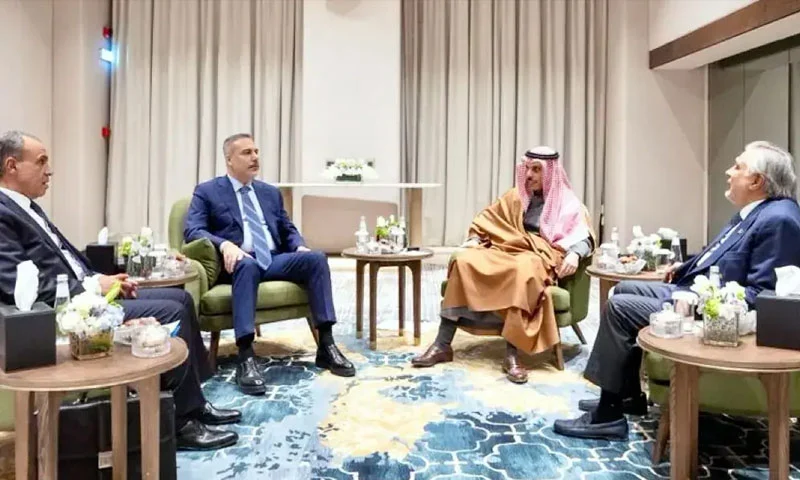
Pakistan Steps Into Global Spotlight as Saudi, Turkish, Egyptian FMs to arrive in Islamabad for Urgent Peace Talks
Foreign ministers from Saudi Arabia, Türkiye and Egypt are set to arrive in Islamabad for crucial talks aimed at de-escalating tensions in the Middle East amid the ongoing US-Israel conflict with Iran. The visit, scheduled for March 29 to 30, comes at the invitation of Pakistan’s Deputy Prime Minister and Foreign Minister Ishaq Dar. Officials said the leaders will hold “in-depth discussions on a range of issues, including efforts to de-escalate tensions in the region.” Pakistan Emerges as Key Mediator Pakistan is increasingly positioning itself as a key diplomatic bridge between global and regional powers in the ongoing crisis. According to officials, Islamabad has already conveyed proposals between the United States and Iran and has offered to host formal negotiations between the two sides. Recent reports suggest that Iran has indicated willingness to consider talks in Pakistan or Türkiye, highlighting Islamabad’s growing role in mediation efforts. Focus on De-Escalation and Ceasefire Efforts The visiting foreign ministers will meet Pakistani leadership, including Prime Minister Shehbaz Sharif, to discuss ways to reduce tensions and move toward a ceasefire. Türkiye’s Foreign Minister Hakan Fidan said the meeting aims to create a mechanism for de-escalation and assess the direction of ongoing negotiations. He stated, “We would discuss where the negotiations in this war are heading and what can be done.” Regional Powers Step Up Diplomatic Efforts Saudi Arabia, Türkiye and Egypt have been actively involved in diplomatic efforts to ease tensions between Washington and Tehran. These countries share concerns about disruptions to global energy supplies and key trade routes, especially as the conflict impacts the wider region. Pakistan has also engaged with several international stakeholders, including China and Gulf nations, to coordinate efforts aimed at stabilising the situation. War Impact Driving Urgent Talks The diplomatic push comes as the Middle East conflict continues to affect global markets and regional security. Oil prices have surged, and fears remain over potential disruptions to shipping routes such as the Strait of Hormuz. Regional powers are now seeking urgent solutions to prevent further escalation and economic fallout. A Critical Opportunity for Diplomacy The Islamabad talks are being seen as a significant opportunity to advance peace efforts. With multiple countries involved and backchannel communication already underway, the meeting could pave the way for broader negotiations between the United States and Iran. However, major challenges remain, including differences over Iran’s nuclear programme and regional influence. Strengthening Regional Cooperation Officials say the visit will also strengthen cooperation between Pakistan and the three countries across multiple areas of mutual interest. The talks highlight growing coordination among regional powers to address shared security and economic concerns.
