

Pakistan has taken a major step toward next-generation connectivity as the Pakistan Telecommunication Authority has formally authorized leading Cellular Mobile Operators including Jazz, Ufone and Zong to begin 5G services across the country. In an official announcement shared on X, PTA stated, “The Pakistan Telecommunication Authority (PTA) is pleased to announce that Cellular Mobile Operators (CMOs), namely Jazz, Ufone and Zong have formally been authorized to start the 5G services across Pakistan.” The development marks the beginning of Pakistan’s transition into a high-speed digital ecosystem, with telecom operators now preparing to roll out commercial 5G networks in phases. <blockquote class=”twitter-tweet”><p lang=”en” dir=”ltr”>The Pakistan Telecommunication Authority (PTA) is pleased to announce that Cellular Mobile Operators (CMOs), namely Jazz, Ufone and Zong have formally been authorized to start the 5G services across Pakistan. In order to ensure a high-quality user experience during this initial… <a href=”https://t.co/YJ43ke19X8″>pic.twitter.com/YJ43ke19X8</a></p>— PTA (@PTAofficialpk) <a href=”https://twitter.com/PTAofficialpk/status/2034903390690713846?ref_src=twsrc%5Etfw”>March 20, 2026</a></blockquote> <script async src=”https://platform.twitter.com/widgets.js” charset=”utf-8″></script> Phased Rollout to Ensure Quality According to PTA, operators will not launch nationwide services immediately. Instead, 5G will be introduced gradually to ensure service stability and quality. The authority explained, “In order to ensure a high-quality user experience during this initial transition, all CMOs will introduce 5G services in a phased manner.” This approach aligns with global telecom practices, where operators prioritize network optimization and performance before expanding coverage. Industry experts believe that a phased rollout will help address challenges such as infrastructure readiness, spectrum management, and device compatibility, which are critical for successful 5G deployment. Consumer Awareness and Device Compatibility To support users during the transition, PTA has placed a strong emphasis on transparency and awareness. The statement added, “To facilitate consumer awareness and ensure a seamless user experience, all CMOs will publish updated lists on their official websites, identifying specific areas where 5G services are available, as well as details of 5G-enabled mobile handset models compatible in Pakistan.” This move is expected to help consumers understand whether their devices support 5G and where they can access the new service. Currently, many smartphones sold in Pakistan are technically 5G-capable, but compatibility with local frequency bands remains a key factor for optimal performance. Pakistan’s Journey Toward 5G Pakistan has been working toward 5G adoption for several years. Early trials were conducted by telecom operators, with Zong becoming the first to test 5G in the country in 2019. More recently, operators have reported speeds exceeding 1 Gbps in controlled environments, demonstrating the potential of the technology. However, commercial rollout has faced delays due to spectrum allocation issues, regulatory planning, and economic constraints. What 5G Means for Pakistan The introduction of 5G is expected to transform multiple sectors, including healthcare, education, manufacturing, and entertainment. Faster speeds and lower latency can enable applications such as remote surgeries, smart cities, industrial automation, and immersive digital experiences. For consumers, 5G promises significantly improved internet speeds, smoother streaming, and enhanced mobile connectivity. At the same time, experts caution that widespread adoption will depend on affordability, device penetration, and infrastructure expansion. A Turning Point for Digital Pakistan The PTA’s authorization signals a new phase in Pakistan’s telecom evolution. With operators now cleared to launch services, the focus will shift toward execution, coverage expansion, and user adoption. As 5G begins to roll out across major cities, Pakistan moves closer to realizing its vision of a fully connected digital economy.

Pakistan’s IT Exports Near $3 Billion in 8 Months of FY26
Pakistan’s information technology sector continues its strong upward trajectory, with exports reaching nearly $3 billion during the first eight months of fiscal year 2025-26, reflecting steady growth in one of the country’s most promising industries. The increase highlights the growing global demand for Pakistani IT services, including software development, freelancing, and IT-enabled solutions. The sector has become a key source of foreign exchange for the country, helping ease pressure on Pakistan’s external accounts. Consistent growth driven by freelancers and IT firms According to industry data, Pakistan’s IT exports have maintained a consistent upward trend throughout the fiscal year. Earlier figures showed exports reaching $2.61 billion in the first seven months of FY26, marking a significant year-on-year increase. The growth is being driven by a combination of freelancers, software houses, and outsourcing firms, all of which are serving international clients across North America, Europe, and the Middle East. Experts say Pakistan’s competitive pricing, skilled workforce, and increasing digital adoption have positioned the country as an emerging hub for global IT services. Read More: Pakistani Freelancers Earn Over $2.22 Billion in Just Six Months Monthly fluctuations but overall upward momentum Despite the strong overall performance, monthly export figures have shown some fluctuations. For example, IT export receipts stood at around $374 million in January 2026, slightly lower than December’s peak levels but still significantly higher compared to the same period last year. Analysts attribute these fluctuations to seasonal trends, payment cycles, and global economic conditions, but emphasize that the broader growth trend remains intact. IT sector becomes key pillar of Pakistan’s economy Pakistan’s IT and IT-enabled services sector is now among the fastest-growing segments of the economy. It has become a major contributor to services exports, which themselves have shown strong growth during FY26. According to official data, Pakistan’s overall services exports reached $5.66 billion in the first seven months of FY26, with IT services leading the increase. The sector’s ability to generate foreign exchange without heavy reliance on imports makes it especially valuable for Pakistan’s economic stability. Industry experts also note that the country has a large pool of freelancers and young professionals, which continues to support expansion in digital exports. Read More: Pakistan’s 5G Journey Begins: When Will Ultra-Fast Internet Reach Everyone? Future outlook remains positive The outlook for Pakistan’s IT exports remains strong, with expectations that the sector could cross new milestones by the end of the fiscal year. Government initiatives aimed at improving digital infrastructure, easing payment systems, and supporting startups are expected to further boost growth. However, experts also highlight challenges such as payment barriers, talent migration, and infrastructure limitations that need to be addressed to sustain long-term growth. Overall, the steady rise in IT exports reflects Pakistan’s increasing integration into the global digital economy and its potential to become a major player in the international tech market.

Pakistan’s 5G Journey Begins: When Will Ultra-Fast Internet Reach Everyone?
Pakistan has taken a major step toward next-generation connectivity after successfully raising $507 million in a nationwide 5G spectrum auction, paving the way for ultra-fast internet services across the country. The auction was conducted by the Pakistan Telecommunication Authority (PTA), where telecom operators Jazz, Ufone and Zong secured the spectrum needed to deploy 5G networks. A total of 480 MHz spectrum was sold out of 597 MHz offered, marking one of the largest telecom spectrum auctions in Pakistan’s history. While this is a major milestone, experts say Pakistan still needs to complete several technical and infrastructure stages before 5G becomes widely available to consumers. Where 5G Is Already Transforming the World 5G services are already operational in many countries including the United States, China, South Korea, Japan, the United Kingdom, Germany, the UAE and Saudi Arabia. According to global telecom industry data, 5G networks are expected to cover nearly one-third of the world’s population by the mid-2020s, highlighting the rapid pace of adoption worldwide. Countries that adopted 5G early are already seeing major benefits. In Europe, nations like Denmark have achieved very high connectivity and digital business adoption due to strong network infrastructure, enabling companies to integrate technologies like artificial intelligence, cloud computing and big data. Research by global telecom organizations also shows that 5G will play a critical role in the Fourth Industrial Revolution, enabling smart cities, autonomous vehicles, remote healthcare and advanced manufacturing. When Will 5G Be Available Across Pakistan? According to government officials, the newly acquired spectrum will first be used to improve 4G network quality and capacity before the full rollout of 5G services. Initial 5G launches are expected to begin in Islamabad and provincial capitals, with telecom operators gradually expanding coverage to other cities. However, industry experts say full nationwide availability could take two to three years, depending on infrastructure upgrades, fiber deployment and consumer adoption of 5G-compatible smartphones. Telecom analysts also note that Pakistan currently relies heavily on 4G infrastructure, and the transition to 5G requires new base stations, fiber networks and upgraded spectrum utilization. Economic Impact: What 5G Could Bring to Pakistan Experts believe 5G could significantly boost Pakistan’s digital economy. Faster connectivity can increase productivity in sectors such as e-commerce, banking, healthcare, education and manufacturing. Studies indicate that high-speed digital infrastructure improves productivity and competitiveness while creating jobs and boosting economic growth. For businesses, 5G can enable real-time data processing, automation and smarter logistics systems. Technology companies also expect faster internet to attract more global investment into Pakistan’s technology sector. Freelancers and Digital Workers Could Benefit the Most Pakistan is already among the world’s leading freelance markets. Faster internet speeds could significantly improve productivity for freelancers working in fields like software development, graphic design, video editing and digital marketing. Experts say 5G will allow freelancers to upload large files faster, participate in high-quality video meetings and use cloud-based tools more efficiently. For example, activities such as 4K video streaming, cloud computing, gaming, artificial intelligence tools and remote collaboration require high-speed, low-latency connections that 5G can provide. What Still Needs to Happen Before Full 5G Rollout Although the spectrum auction is complete, several steps remain before widespread adoption: Expansion of fiber-optic infrastructure Installation of new telecom towers and base stations Upgrading existing networks to support 5G technology Availability of affordable 5G-enabled smartphones Experts also stress the importance of policy support, investment and digital literacy to ensure the technology benefits the entire population. Pakistan’s Digital Future With the successful spectrum auction, Pakistan has officially entered the global 5G race. If implemented effectively, the technology could transform how businesses operate, how freelancers work and how people access digital services. Industry analysts believe that the coming years will determine how quickly Pakistan can convert this technological milestone into real economic growth and digital transformation.

Pakistan Raises $507 Million as Jazz, Zong and Ufone Win Key 5G Spectrum
Pakistan has taken a major step toward next-generation digital connectivity after successfully raising $507 million in its long-awaited 5G spectrum auction, a milestone expected to improve internet speeds and accelerate the country’s digital economy. The auction, conducted by the Pakistan Telecommunication Authority (PTA), marks one of the most significant developments in Pakistan’s telecom sector in recent years. The auction drew participation from three major telecom operators and resulted in the sale of a large portion of the spectrum that will enable the rollout of 5G services across the country. Key Details of the 5G Auction The federal government sold 480 MHz of spectrum out of the 597 MHz offered, generating $507 million in revenue. Telecom operators Jazz, Zong and Ufone secured the spectrum to expand high-speed mobile connectivity and prepare for 5G deployment. According to official results, Jazz emerged as the largest buyer in the auction. The company secured 190 MHz of spectrum, including allocations in multiple frequency bands such as 700 MHz, 2300 MHz, 2600 MHz and 3500 MHz. Ufone acquired 180 MHz, largely in the 3500 MHz and 2600 MHz bands, while Zong secured 110 MHz in the 3500 MHz and 2600 MHz bands. These frequency bands are essential for building next-generation mobile networks and improving data speeds, coverage and capacity. Government Leaders Call It a Technological Milestone The auction ceremony was attended by senior government officials including Finance Minister Muhammad Aurangzeb, IT Minister Shaza Fatima Khawaja and Information Minister Attaullah Tarar, along with PTA Chairman Major General (retd) Hafeez Ur Rehman. IT Minister Shaza Fatima described the auction as a landmark moment for Pakistan’s digital future. She said the country had reached a “choking point” in terms of spectrum availability, highlighting the urgent need for additional capacity to support growing internet demand. PTA Chairman Hafeez Ur Rehman emphasized the importance of digital connectivity, describing it as “the digital highway and the engine of Pakistan’s economy.” Officials believe the additional spectrum will significantly improve mobile network quality and pave the way for faster data services. Why 5G Matters for Pakistan Pakistan currently has more than 130 million broadband connections, but internet quality has often struggled due to limited spectrum availability and rapid growth in data usage. The introduction of 5G technology is expected to transform several sectors. High-speed connectivity can support emerging technologies such as artificial intelligence, cloud computing, smart manufacturing and blockchain applications. Finance Minister Aurangzeb noted that stronger connectivity could also boost Pakistan’s IT exports and digital services sector, which has become one of the country’s fastest-growing industries. In addition, the government recently removed Right-of-Way charges for telecom infrastructure expansion, a move aimed at encouraging fiber deployment and faster network rollout. When 5G Services Will Arrive Consumers may begin seeing improvements in 4G service quality within four to five months, as operators start using the newly acquired spectrum to upgrade their networks. Full 5G services are expected to launch in major cities within about six months, according to officials involved in the auction process. Initially, the technology will likely be introduced in federal and provincial capitals before expanding to other urban centers across the country. The successful auction marks the beginning of a new technological chapter for Pakistan, with policymakers hoping that better connectivity will drive innovation, investment and economic growth.

5G Rollout in Pakistan Gains Momentum After 600 MHz Spectrum Auction
Pakistan has taken another step toward launching next-generation mobile connectivity as the government conducted a 600 MHz spectrum auction aimed at enabling the rollout of 5G services across the country. Officials say the move is part of a broader strategy to modernize Pakistan’s telecom sector, improve internet speeds, and support the country’s digital economy. Government Conducts 600 MHz Spectrum Auction The government recently held an auction for the 600 MHz spectrum band, a key frequency range widely used around the world to deploy 5G services. The auction was organized by Pakistan’s telecom authorities as part of preparations for commercial 5G rollout in the country. The 600 MHz band is considered highly valuable because it allows signals to travel longer distances and penetrate buildings more effectively than higher-frequency bands. This makes it particularly suitable for expanding mobile broadband coverage in both urban and rural areas. Officials believe that allocating this spectrum will strengthen Pakistan’s digital infrastructure and help telecom operators deliver faster internet speeds and improved network reliability. Pakistan has been working toward launching 5G for several years. While trials have already been conducted by major telecom companies, a full commercial rollout has been delayed due to regulatory issues, economic constraints, and spectrum allocation challenges. Read More: Pakistan Set for Historic 5G Auction as Jazz, Zong and Ufone Compete Telecom Sector Preparing for 5G Expansion Pakistan’s telecom industry has repeatedly urged the government to accelerate spectrum allocation so operators can prepare their networks for 5G technology. Industry experts say the 600 MHz spectrum can significantly enhance coverage, particularly in remote areas where network infrastructure is limited. Lower frequency bands require fewer towers to provide wide coverage, which reduces deployment costs. Telecom companies operating in Pakistan including Jazz, Zong, Telenor and Ufone are expected to participate in future spectrum allocations linked to 5G deployment. Analysts say the introduction of 5G will allow telecom operators to offer ultra-fast data speeds, lower latency, and improved connectivity for emerging technologies such as artificial intelligence applications, smart cities, autonomous transport systems, and industrial automation. According to global telecom studies, 5G networks can deliver speeds up to 100 times faster than current 4G networks, enabling data-heavy applications like cloud gaming, remote healthcare, and high-definition video streaming. Pakistan’s Digital Economy Push The government has highlighted digital connectivity as a key pillar of economic growth. Officials believe that introducing 5G will boost innovation, encourage foreign investment, and accelerate digital services across sectors such as education, healthcare, agriculture, and e-commerce. Pakistan currently has more than 190 million cellular subscribers and over 130 million broadband users, according to the Pakistan Telecommunication Authority. However, average internet speeds and network quality still lag behind many regional markets. Improved spectrum availability and investment in telecom infrastructure could help bridge this gap. Experts also note that expanding digital connectivity will play a crucial role in supporting Pakistan’s growing tech ecosystem, including startups, fintech platforms, and digital payment systems. Read More: Pakistan Sets March 10 for 5G Spectrum Auction to Transform Connectivity Challenges Before Full 5G Rollout Despite the progress, several challenges remain before Pakistan can fully implement 5G networks nationwide. Telecom operators have raised concerns about high spectrum prices, heavy taxation, and the financial pressures facing the industry. Pakistan’s telecom sector has also been dealing with declining revenues due to currency fluctuations and rising operational costs. Infrastructure upgrades required for 5G deployment may require billions of dollars in investment over the coming years. However, policymakers believe that strategic spectrum management and industry collaboration can help overcome these obstacles and enable Pakistan to transition toward next-generation connectivity. As global demand for faster and more reliable internet continues to grow, Pakistan’s move to auction spectrum for 5G is seen as an important milestone in the country’s digital transformation journey.

Pakistan Set for Historic 5G Auction as Jazz, Zong and Ufone Compete
Pakistan is preparing to take a major step toward next generation mobile connectivity as the Pakistan Telecommunication Authority (PTA) moves ahead with the country’s long awaited 5G spectrum auction, scheduled to begin on March 10, 2026. The auction will determine which telecom companies will deploy 5G services across the country and how quickly Pakistan can transition to ultra fast mobile internet. The auction is expected to be one of the largest telecom spectrum sales in Pakistan’s history and could reshape the country’s digital infrastructure in the coming years. Three Major Telecom Operators to Compete PTA has confirmed that three major telecom operators have qualified to participate in the 5G spectrum auction. These include: Pakistan Mobile Communications Limited (Jazz) CMPak Limited (Zong) Pak Telecom Mobile Limited (Ufone) These companies completed the application process under the PTA’s Information Memorandum and will compete to secure spectrum needed to roll out 5G services. The telecom sector in Pakistan has recently seen consolidation after PTCL acquired Telenor Pakistan, meaning the Ufone-PTCL group now represents the merged telecom entity in the auction. Industry experts say this consolidation has effectively reduced the market to three main competitors, making the upcoming auction a high stakes contest among the country’s largest telecom providers. Spectrum on Offer for 5G Services Under the PTA’s plan, around 597 MHz of spectrum will be auctioned across multiple frequency bands. The spectrum will be used to enable both improved 4G services and the launch of 5G networks in Pakistan. The government has also confirmed that several of these bands are being offered for the first time in Pakistan, which will help operators deliver faster speeds and better coverage. Officials have described the upcoming auction as the largest spectrum sale in Pakistan’s history, with preparations underway to ensure strong participation from telecom operators. To qualify for the bidding process, companies were required to deposit around $15 million as earnest money, which will be adjusted against the final license fee for successful bidders. Read More: Pakistan Sets March 10 for 5G Spectrum Auction to Transform Connectivity Why the 5G Auction Matters Pakistan has been preparing for the transition to 5G for several years. Major telecom operators including Jazz, Zong, Ufone, and Telenor previously conducted trial runs of 5G technology to test the network capabilities. The introduction of 5G is expected to bring significant improvements in internet speeds, network reliability, and digital services. It could also support new technologies such as smart cities, autonomous systems, industrial automation, and advanced cloud services. According to officials, telecom operators have already begun ordering 5G equipment, while local production of 5G-enabled smartphones has also started, with hundreds of thousands of units already manufactured. Challenges Facing Telecom Operators Despite the excitement surrounding the auction, telecom companies have raised concerns about the financial viability of the new spectrum. Operators say they are facing pressure from high taxes, rising energy costs, and currency depreciation, which could make large investments in 5G infrastructure challenging. Pakistan’s telecom industry also has one of the lowest average revenues per user globally, which limits how much operators can spend on network upgrades. Even so, industry observers believe the 5G rollout will be a crucial step for Pakistan’s digital economy. Read More: Pakistan Sets 5G Auction Prices, Clearing Path for Faster Mobile Internet Pakistan’s Digital Future If the auction proceeds as planned, telecom operators could begin deploying commercial 5G services within months, marking the start of a new era in Pakistan’s telecom sector. Experts believe faster connectivity could support innovation in fintech, e commerce, artificial intelligence, and digital services while improving internet access across the country. The upcoming auction therefore represents not just a telecom milestone but also a major step toward Pakistan’s broader digital transformation.
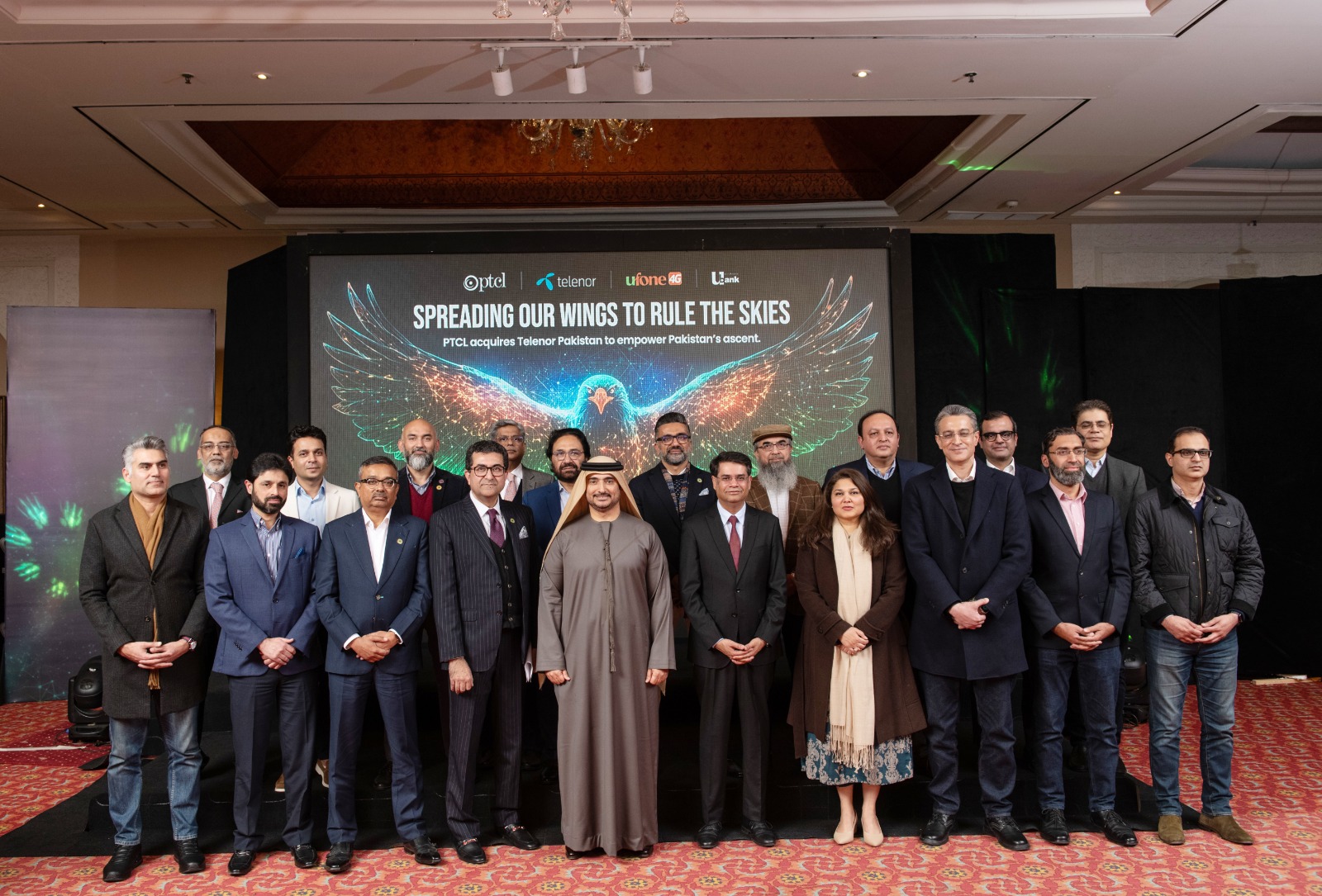
Pakistan’s Telecom Industry Transformed as PTCL Takes Over Telenor
Pakistan’s telecom landscape entered a new phase on December 31, 2025, as Pakistan Telecommunication Company Limited (PTCL) officially completed the acquisition of 100% shareholding of Telenor Pakistan and Orion Towers, marking one of the most consequential consolidations in the country’s digital history. With this transaction, both Telenor Pakistan and Orion Towers now operate as wholly owned subsidiaries of PTCL, alongside Ufone 4G and U Microfinance Bank. The acquisition brings to a close Telenor ASA’s nearly two-decade journey in Pakistan, during which the Norwegian group played a major role in expanding mobile connectivity and raising service standards. PTCL acknowledged Telenor’s contribution, describing the deal as a coming together of complementary strengths rather than a simple ownership change. For customers, the immediate message is continuity: Telenor Pakistan will continue to function as a separate legal entity during the transition phase. Looking ahead, PTCL plans to integrate Telenor Pakistan with Pak Telecom Mobile Limited (PTML), which operates Ufone 4G, into a single merged entity, commonly referred to as MergeCo, subject to regulatory approvals. Industry observers say this integration could reshape competition in Pakistan’s telecom market by creating a larger player with improved spectrum utilization, broader network reach, and greater capacity to invest in next-generation technologies. Speaking on the milestone, PTCL Group President and CEO Hatem Bamatraf called the acquisition a proud moment for both the company and the sector. He emphasized that the focus would remain on customer-centric services, seamless connectivity, and improved user experience. Bamatraf also stressed that the transition would respect existing talent, ensuring continuity for employees while integrating global best practices. Analysts see the move as strategically timed. Pakistan’s telecom sector is under pressure from rising operational costs, slowing revenues, and the need for heavy investment in data infrastructure. By consolidating assets, PTCL aims to optimize costs, strengthen network resilience, and accelerate innovation in areas such as 4G expansion, digital financial services, and enterprise solutions. The acquisition also fits into Pakistan’s broader digital ambitions, where improved connectivity is seen as essential for economic growth, e-commerce, fintech, and public service delivery. With millions of subscribers now under a single strategic umbrella, PTCL is positioning itself as a central force in shaping the country’s digital future. As 2026 begins, this landmark deal signals not just a change in ownership, but a recalibration of Pakistan’s telecom ecosystem—one that could redefine how millions connect, communicate, and do business in the years ahead.
