
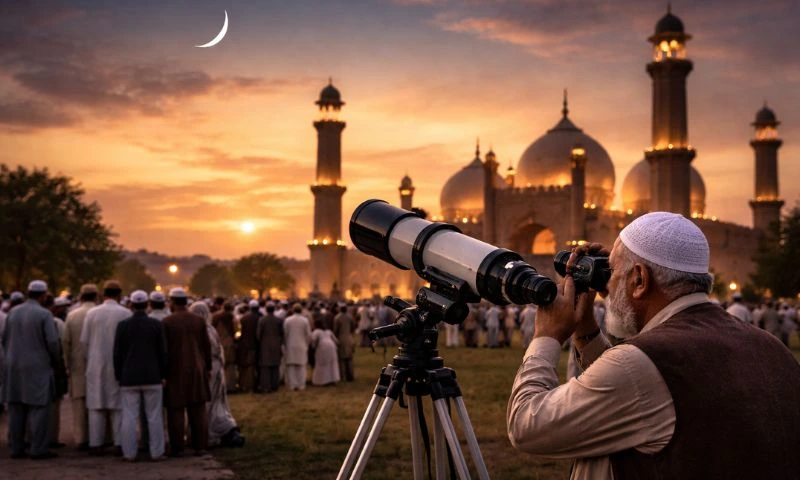
The federal government of Pakistan has officially announced public holidays for Eid ul Fitr 2026, allowing citizens across the country to celebrate the end of Ramadan with family and loved ones. According to a notification issued by the Cabinet Division, Prime Minister Shehbaz Sharif has approved Friday, March 20, and Saturday, March 21, 2026, as public holidays for the occasion of Eid ul Fitr. The holidays will apply to government offices and institutions observing both five-day and six-day working weeks. The announcement enables public and private sector employees to prepare for one of the most important Islamic festivals, which marks the end of the holy month of fasting. Eid expected on March 21 Experts believe Eid ul Fitr is likely to be observed on March 21, 2026, assuming Ramadan completes the full 30 days. The Pakistan Space and Upper Atmosphere Research Commission (SUPARCO) has released astronomical calculations regarding the appearance of the Shawwal moon. According to SUPARCO, “The new moon of Shawwal 1447 AH is expected to be born on March 19, 2026, at 06:23 PST.” The agency further explained that by sunset on March 19 the moon would be approximately 12 hours and 41 minutes old, with an estimated 28-minute gap between sunset and moonset along Pakistan’s coastal regions. However, the final confirmation of Eid will depend on the official moon sighting announcement. Ruet-e-Hilal Committee to make final decision Despite the astronomical predictions, the Central Ruet-e-Hilal Committee will make the official announcement after evaluating moon sightings across the country. The committee traditionally meets on the evening of the 29th day of Ramadan to receive testimony from various regions regarding the sighting of the Shawwal crescent. If the moon is sighted on March 19, Eid will fall on March 20. If not, Ramadan will complete 30 days and Eid will be celebrated on March 21. Moon sighting remains an important religious and cultural tradition in Pakistan, where the announcement is closely followed by millions of citizens. Travel preparations begin across the country With the Eid holidays approaching, preparations for travel and celebrations have already started nationwide. Public transport services are experiencing increasing demand as people plan trips to their hometowns. To facilitate travellers during the festive season, Pakistan Railways has announced the operation of four special Eid trains on major routes across the country. According to railway officials, the special trains will operate between cities including Lahore, Karachi, Quetta, Rawalpindi and Peshawar, helping accommodate the surge in passenger traffic during the holiday period. Authorities say the additional train services aim to ensure safe, timely and convenient travel for passengers heading home for Eid celebrations. Eid preparations underway Eid ul Fitr marks the end of Ramadan, the month of fasting observed by Muslims worldwide. The festival is celebrated with congregational prayers, charity, family gatherings and festive meals. Markets across Pakistan usually witness a sharp rise in shopping activity during the final days of Ramadan, with people purchasing clothes, gifts and food items in preparation for the holiday. The government’s announcement of Eid holidays helps businesses, travellers and families plan their schedules ahead of the celebrations.
Pakistan Moves Toward Shorter Workweek With Friday Off
Pakistan has announced a major shift in its official workweek as Prime Minister Shehbaz Sharif declared Friday as the country’s third weekly holiday. The decision aims to promote work life balance, encourage family time, and align the country’s schedule more closely with cultural and religious priorities. The announcement has sparked widespread discussion across government departments, businesses, and education sectors about how the change may affect productivity and administrative operations. Government Announces Friday as Third Weekly Holiday The announcement was made during a high level meeting chaired by Prime Minister Shehbaz Sharif where officials discussed reforms aimed at improving governance and workplace efficiency. According to reports, the prime minister directed relevant authorities to implement Friday as an additional weekly holiday alongside the existing weekend days. The move will effectively reduce the official working week while allowing employees more time for rest, family activities, and religious obligations. Officials said the decision is intended to create a healthier work environment and improve overall well being among workers in both public sector institutions and other workplaces. The government is expected to issue detailed guidelines on how the policy will be implemented across federal departments and potentially other sectors. Read More: PM Shehbaz Announces Austerity Plan as Iran War Triggers Fuel Crisis Cultural and Religious Significance Friday holds special importance in Muslim majority countries because it is the day of the congregational prayer known as Jumuah. Many governments and organizations already adjust working hours on Fridays to allow employees time to attend the weekly prayer. By declaring Friday a full holiday, the government aims to ensure that citizens can observe religious practices without work related constraints. Experts say the move reflects Pakistan’s social and cultural priorities while also responding to growing calls for improved work life balance. Impact on Workplaces and Institutions The introduction of a third weekly holiday could lead to significant adjustments in the country’s administrative and economic systems. Government offices, educational institutions, and businesses may need to revise schedules and operational hours to accommodate the shorter workweek. Some analysts believe the change could improve employee productivity by allowing workers more time to rest and recharge. However, others caution that reduced working hours could require more efficient management practices to maintain service delivery and economic output. Countries around the world have experimented with shorter workweeks in recent years. Trials conducted in several European nations have shown that reduced working hours can sometimes increase productivity while improving employee satisfaction. Global Trend Toward Flexible Workweeks Pakistan’s decision comes amid a growing global discussion about work life balance and flexible working arrangements. Several countries and companies have tested four day workweeks to evaluate their impact on productivity, employee health, and economic performance. Experts say such initiatives reflect changing workplace expectations, particularly after the global shift toward remote work and flexible schedules during recent years. If implemented effectively, Pakistan’s new holiday policy could become part of a broader effort to modernize workplace practices while respecting cultural traditions. The government is expected to release further details soon regarding the policy’s timeline and implementation across various sectors.
