
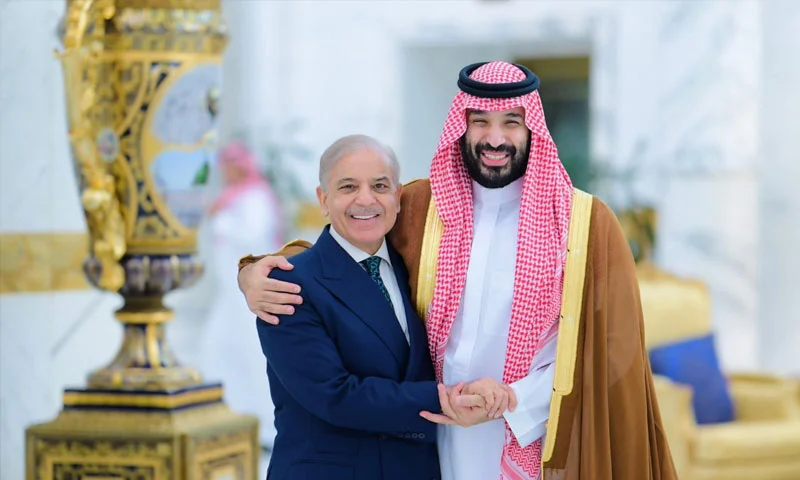
Prime Minister Shehbaz Sharif has underscored Pakistan’s growing diplomatic role in the Middle East after meeting Saudi Crown Prince Mohammed bin Salman in Jeddah, where he reaffirmed Islamabad’s commitment to regional peace and stability following recent developments involving the United States and Iran. In a statement shared on social media, the prime minister said, “I had the pleasure and honour of meeting my dear brother, His Royal Highness Crown Prince Mohammed bin Salman, in Jeddah today.” He added that he conveyed Pakistan’s “unwavering solidarity with the Kingdom” and expressed appreciation for Saudi Arabia’s “patience and restraint” under the crown prince’s leadership during challenging times. Shehbaz Sharif also highlighted Pakistan’s recent diplomatic efforts, stating that he shared “developments related to Pakistan’s peace efforts which helped facilitate the U.S.–Iran ceasefire and historic peace talks in Islamabad.” He reiterated that Pakistan remains committed to encouraging both Washington and Tehran toward “an agreement aimed at lasting peace and stability in the region.” I had the pleasure and honour of meeting my dear brother, His Royal Highness Crown Prince Mohammed bin Salman, in Jeddah today.During the course of which, I conveyed Pakistan’s unwavering solidarity with the Kingdom and expressed my deep appreciation of its patience and… pic.twitter.com/C6fIobxM58— Shehbaz Sharif (@CMShehbaz) April 15, 2026 The prime minister further expressed gratitude for Saudi Arabia’s continued economic support, noting that he had conveyed “sincere appreciation for the Kingdom’s consistent support for Pakistan’s economic stability,” while both sides reaffirmed their commitment to strengthening long-standing defence and strategic ties. Military and diplomatic outreach expands Pakistan’s parallel diplomatic engagement continued as Chief of Defence Forces (CDF) and Chief of the Army Staff Field Marshal Asim Munir arrived in Tehran, where he held meetings with Iranian leadership, according to Iranian media reports. The discussions focused on regional security, bilateral cooperation and ongoing efforts to sustain de-escalation following recent tensions. The visit is being viewed as part of a broader coordinated effort by Pakistan to maintain communication channels with all key stakeholders, reinforcing its position as a facilitator in ongoing diplomatic efforts between Iran and the United States. Delighted to welcome Field Marshal Munir to Iran.Expressed gratitude for Pakistan's gracious hosting of dialogue, emphasizing that it reflects our deep and great bilateral relationship. Our commitment to promoting peace and stability in the region remains strong—and shared. pic.twitter.com/e74lm6hL8r— Seyed Abbas Araghchi (@araghchi) April 15, 2026 Observers say the simultaneous engagement with Riyadh and Tehran reflects Islamabad’s attempt to balance its regional relationships while pushing forward its role in peacebuilding initiatives. Islamabad likely venue for next round of talks Meanwhile, diplomatic signals from Washington suggest that Pakistan could continue to play a central role in upcoming negotiations. The White House spokesperson indicated that a second round of US-Iran talks could again take place in Islamabad, following the initial round hosted by Pakistan. The development comes amid cautious optimism for continued dialogue, even as tensions remain. Reports indicate that discussions are ongoing despite disagreements on key issues, particularly Iran’s nuclear programme and regional security arrangements. At the same time, recent measures by the United States targeting Iran’s maritime trade underscore the complexity of the situation, highlighting the gap between diplomatic engagement and strategic pressure. 🚨 TRUMP PRESS SEC. KAROLINE LEAVITT PRAISES PAKISTAN!"I just want to make one point that's important to the President. The Pakistanis have been incredible mediators throughout this process and we really appreciate their friendship and their efforts to bring this deal to a… pic.twitter.com/tJHjx01cLi— Eric Daugherty (@EricLDaugh) April 15, 2026 Despite these challenges, Pakistan’s role in facilitating the earlier ceasefire and bringing both sides to the negotiating table has drawn international attention. Analysts say the country’s ability to engage with multiple regional actors places it in a unique position to support continued dialogue. As diplomatic activity intensifies, Pakistan’s leadership appears focused on sustaining momentum toward a broader agreement. With Islamabad once again being considered as a venue for future talks, the coming days could prove critical in determining whether recent efforts translate into lasting stability in the region.
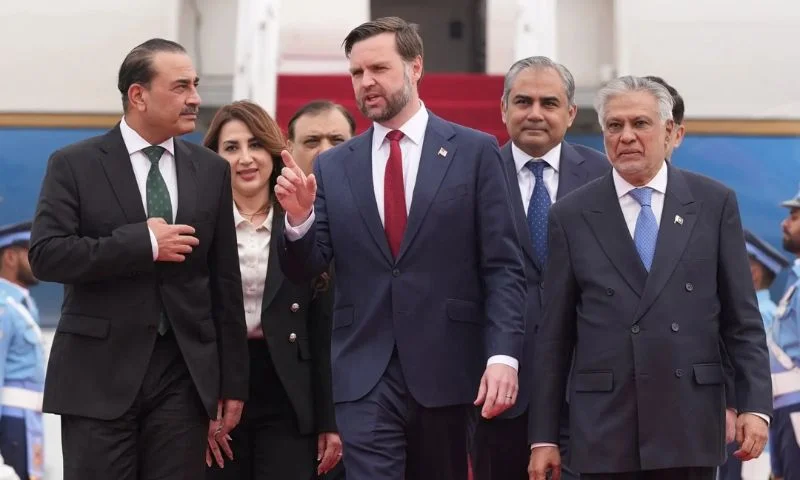
“Constructive Step Forward” — Dar Calls for Ceasefire Continuation Despite Failed Talks
Pakistan now finds itself at a delicate crossroads after hosting historic but inconclusive negotiations between the United States and Iran, with officials and analysts warning that the next phase could prove even more critical than the talks themselves. The marathon discussions in Islamabad, which lasted nearly 21 hours, ended without an agreement, leaving key disputes unresolved and the fragile ceasefire hanging in the balance. Read More: 21 Hours, No Deal — What Really Happened in US-Iran Talks in Islamabad? While both delegations departed without a deal, the fact that direct, high-level engagement took place at all has been widely described as a significant diplomatic achievement for Islamabad, which played a central role in bringing the two sides together. Pakistan’s leadership moved quickly to frame the outcome as part of a longer diplomatic process rather than a setback. Deputy Prime Minister and Foreign Minister Ishaq Dar said the talks were “a constructive step forward” despite the absence of an agreement, stressing that dialogue between the United States and Iran must continue. “Pakistan remains committed to facilitating peace and stability in the region and will continue to support all efforts aimed at de-escalation,” he said, adding that Islamabad’s role was to “provide a neutral platform where both sides can engage meaningfully.” No deal, but dialogue continues US Vice President JD Vance said Washington had made its “best, final offer,” but talks collapsed after Tehran refused to accept key conditions, particularly around nuclear commitments. Iran, for its part, described the discussions as “intensive” and signaled that responsibility for the next move lies with the United States, reflecting deep mistrust that continues to define relations between the two countries. Core disagreements remain entrenched. Washington is seeking limits on Iran’s nuclear programme and missile capabilities, while Tehran is demanding sanctions relief, sovereignty guarantees and regional security concessions. Despite the lack of immediate progress, diplomats say the willingness to engage directly marks a shift from years of indirect negotiations, keeping the door open for future rounds. Pakistan’s role under spotlight For Pakistan, the outcome represents both a success and a challenge. The country managed to broker a two-week ceasefire earlier and host one of the most significant diplomatic encounters between the US and Iran in decades. Officials in Islamabad have framed the talks as part of a broader effort to promote regional stability, positioning Pakistan as a neutral mediator capable of bridging divides between major powers. Security preparations and logistical coordination were extensive, with Islamabad effectively transformed into a high-security diplomatic zone during the talks, reflecting the sensitivity of the moment. Analysts say Pakistan’s credibility as a mediator has been strengthened, even without a deal, but sustaining momentum will be the real test. What happens next The immediate concern is the durability of the ceasefire. Experts warn that without tangible progress, the truce could collapse, potentially triggering renewed hostilities in a region already strained by conflict and economic disruption. Diplomatic sources suggest that Pakistan may continue its backchannel efforts, encouraging both sides to return to the table while working with regional and global stakeholders to maintain pressure for dialogue. There is also growing expectation that future negotiations may expand to include broader regional issues, including security arrangements in the Gulf and freedom of navigation in the Strait of Hormuz, which has been central to the dispute. At the same time, global powers including France and Russia have called for restraint and urged both sides to use the Islamabad talks as a foundation for further diplomacy. For Pakistan, the coming weeks will be decisive. Its role could evolve from host to long-term facilitator, or risk being sidelined if talks shift elsewhere. For now, the outcome remains uncertain. The talks may have ended without a deal, but they have opened a narrow path forward, one that Islamabad will be under pressure to keep alive. Read More: Trump Hands JD Vance High-Risk Mission to Lead Iran Talks in Pakistan
