
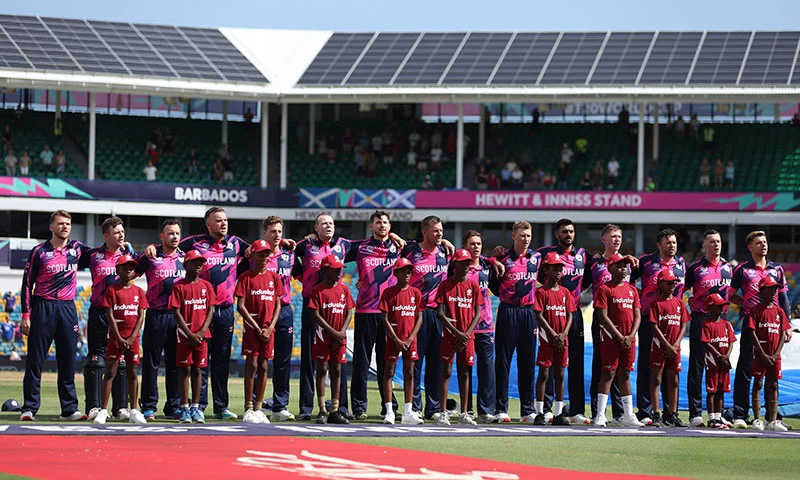
Scotland’s surprise entry into the T20 World Cup 2026 has brought excitement—and urgency—as the team races to secure visas for its players ahead of the tournament in India and Sri Lanka. The situation has drawn particular attention due to visa sensitivities involving players of Pakistani heritage, including fast bowler Safyaan Sharif. Scotland replaced Bangladesh in the upcoming global event, earning a late but historic place in the marquee tournament. However, the short turnaround has left officials focused on logistical hurdles rather than on-field preparations. Sharif, one of Scotland’s key pace bowlers, was born in Huddersfield, England, to a Pakistani father and a British-Pakistani mother. He moved to Scotland at the age of seven and has since become a mainstay of the national side. His background has placed him at the center of visa-related concerns as the squad prepares to travel to India. Introducing your Scotland squad heading to the ICC Men's #T20WorldCup in India and Sri Lanka 🤩➡️ https://t.co/cmtJB52phQ pic.twitter.com/2EQgZb5CdH— Cricket Scotland (@CricketScotland) January 26, 2026 Speaking on Monday, Trudy Lindblade, Chief Executive of Cricket Scotland, said the board is working closely with tournament authorities to resolve the matter. “We are all committed to working with the ICC to make that happen,” Lindblade said. “The visa piece is always slightly unknown, and it doesn’t matter whether you’ve got three days or whether you’ve got 45 days.” She added that securing travel clearance for players has been the organization’s top priority since Scotland’s qualification was confirmed. “Certainly that’s been our focus in the last 48 hours—just getting those visas done so our players are all ready to go,” Lindblade said. “They’re in the middle of submitting their visas, and we’ll be on the ground in India as quickly as we can.” According to Lindblade, International Cricket Council has provided assurances on matters within its control and is coordinating with the Board of Control for Cricket in India and local authorities to support all participating teams. “There’s a team working very hard not just to help us, but to help 19 other teams going to a World Cup,” she said. “Right now, though, we are their intense focus.” The issue follows recent comments from Ali Khan, who said several USA players of Pakistani origin were initially denied visas for travel to India. Tournament officials later clarified that the issue was due to procedural delays rather than outright rejection. With the clock ticking, Scotland remains hopeful that all squad members will receive clearance in time, allowing the team to focus fully on its first appearance at a T20 World Cup hosted across India and Sri Lanka.
India Stayed Away From Pakistan, Bangladesh Shown the Door — ICC Under Fire
The International Cricket Council (ICC)’s decision to replace Bangladesh with Scotland at the Men’s T20 World Cup 2026 has reignited debate over how global cricket’s governing body applies security assessments, venue policies and travel refusals across major tournaments. Bangladesh were excluded from the event after the Bangladesh Cricket Board (BCB) declined to play its scheduled matches in India, citing security concerns and requesting that their fixtures be moved to Sri Lanka, a co-host of the tournament. The ICC rejected that request, stating that independent security reviews found no “credible or verifiable” threat, and that altering the schedule so close to the tournament’s start was not feasible. Criticism and Comparisons With Past ICC Decisions The ICC’s hard line has drawn criticism from former players and administrators, who argue that the approach contrasts sharply with past instances where tournament structures or venues were modified due to one team’s refusal to travel. Much of the criticism centres on the 2025 ICC Champions Trophy, where an ICC-approved framework allowed India and Pakistan matches to be played at a neutral venue during the 2024–27 broadcast cycle. Critics say that precedent raised expectations that Bangladesh might be offered a similar compromise rather than being removed from the competition. Former Pakistan captain Shahid Afridi publicly questioned why India’s security concerns were accommodated in the Champions Trophy framework while Bangladesh’s request was rejected. Former Australia international Jason Gillespie also raised concerns, asking why Bangladesh could not be permitted to play outside India, referencing the same precedent. How Bangladesh Were Replaced The ICC engaged in discussions with the BCB for more than three weeks after Bangladesh formally objected to playing in India. Despite multiple rounds of dialogue, Bangladesh did not confirm participation under the published schedule. After a final deadline passed without confirmation, the ICC invoked its governance and qualification procedures and confirmed Scotland — the next-highest ranked eligible T20I side — as Bangladesh’s replacement. Key Precedents: When Cricket Events Changed Venues or Formats The controversy has revived scrutiny of several past ICC and Asian Cricket Council (ACC) decisions where tournaments were altered due to security or travel disputes: Champions Trophy 2025 (Neutral Venue Model)India declined to travel to Pakistan, leading the ICC to approve a neutral-venue framework for India–Pakistan matches during the 2024–27 cycle. Asia Cup 2023 (Hybrid Model)Pakistan retained hosting rights, but India’s refusal to travel resulted in a hybrid model, with matches split between Pakistan and Sri Lanka. The International Cricket Council (ICC)’s decision to replace Bangladesh with Scotland at the Men’s T20 World Cup 2026 has reignited debate over how global cricket’s governing body applies security assessments, venue policies and travel refusals across major tournaments. Bangladesh were excluded from the event after the Bangladesh Cricket Board (BCB) declined to play its scheduled matches in India, citing security concerns and requesting that their fixtures be moved to Sri Lanka, a co-host of the tournament. The ICC rejected that request, stating that independent security reviews found no “credible or verifiable” threat, and that altering the schedule so close to the tournament’s start was not feasible. Criticism and Comparisons With Past ICC Decisions The ICC’s hard line has drawn criticism from former players and administrators, who argue that the approach contrasts sharply with past instances where tournament structures or venues were modified due to one team’s refusal to travel. Much of the criticism centres on the 2025 ICC Champions Trophy, where an ICC-approved framework allowed India and Pakistan matches to be played at a neutral venue during the 2024–27 broadcast cycle. Critics say that precedent raised expectations that Bangladesh might be offered a similar compromise rather than being removed from the competition. Former Pakistan captain Shahid Afridi publicly questioned why India’s security concerns were accommodated in the Champions Trophy framework while Bangladesh’s request was rejected. Former Australia international Jason Gillespie also raised concerns, asking why Bangladesh could not be permitted to play outside India, referencing the same precedent. How Bangladesh Were Replaced The ICC engaged in discussions with the BCB for more than three weeks after Bangladesh formally objected to playing in India. Despite multiple rounds of dialogue, Bangladesh did not confirm participation under the published schedule. After a final deadline passed without confirmation, the ICC invoked its governance and qualification procedures and confirmed Scotland — the next-highest ranked eligible T20I side — as Bangladesh’s replacement. Key Precedents: When Cricket Events Changed Venues or Formats The controversy has revived scrutiny of several past ICC and Asian Cricket Council (ACC) decisions where tournaments were altered due to security or travel disputes: Champions Trophy 2025 (Neutral Venue Model)India declined to travel to Pakistan, leading the ICC to approve a neutral-venue framework for India–Pakistan matches during the 2024–27 cycle. Asia Cup 2023 (Hybrid Model) Pakistan retained hosting rights, but India’s refusal to travel resulted in a hybrid model, with matches split between Pakistan and Sri Lanka. Champions Trophy 2009 (Relocated) Originally awarded to Pakistan, the tournament was postponed and later moved to South Africa amid security concerns. Cricket World Cup 2011 (Pakistan Matches Removed) Following the 2009 Lahore attack on the Sri Lanka team, Pakistan lost the right to host World Cup matches. Cricket World Cup 1996 (Walkovers) Australia and West Indies refused to travel to Sri Lanka, resulting in walkovers — one of the most cited examples of travel refusal in World Cup history. Cricket World Cup 2003 (Kenya Fixture) New Zealand refused to play in Kenya due to security concerns, requested a venue change, and were denied; Kenya were awarded the points. Why the Debate Is Intensifying The current backlash stems from the contrast between the ICC’s refusal to relocate Bangladesh’s matches and earlier cases where schedules were adjusted, venues changed or neutral solutions adopted to accommodate team concerns. Supporters of the ICC’s decision argue that late-stage changes can disrupt tournament planning and undermine governance consistency. The ICC has repeatedly stated that it will not amend schedules without verified threats, warning that doing so could set precedents affecting future events. With Bangladesh now excluded and Scotland stepping in,

PSL 2026: Player Auction, Increased Salary Purse and New Venue Confirmed
The HBL Pakistan Super League (HBL PSL) has unveiled a series of major reforms ahead of its 11th edition, marking a significant step in the League’s evolution as it looks to enhance competitiveness, transparency, and commercial growth. In a historic shift after a decade of operations, HBL PSL 11 will adopt a Player Auction Model, replacing the traditional Player Draft system. The move represents one of the most substantial structural changes in the League’s history and is aimed at creating greater competitive balance among franchises, increasing transparency in player selection, and offering enhanced earning opportunities for players. Key Changes to Player Recruitment Under the revised player acquisition framework, franchises will now be allowed to retain a maximum of four players, with only one player permitted per category. This marks a significant reduction from the previous model, under which franchises could retain up to eight players from their squads, along with additional provisions such as Mentors, Brand Ambassadors, and the Right to Match (RTM) option, which allowed teams to retain a ninth player during the Player Draft. For HBL PSL 11, the rules governing Mentors, Brand Ambassadors, and RTM have been completely abolished, simplifying the player retention structure and placing greater emphasis on the auction process. Newly inducted franchises will be given the opportunity to select and retain four players from the available player pool before the Player Auction takes place, ensuring competitive parity as new teams enter the League. Additionally, each franchise will be allowed one direct signing of a foreign player who did not feature in the previous season, HBL PSL X. This provision is designed to enable teams to inject fresh international talent into their squads and broaden the League’s global appeal. Increased Salary Cap Signals Commercial Growth Further strengthening the League’s competitive and commercial outlook, the player salary purse has been increased to USD 1.6 million per franchise. The increase reflects HBL PSL’s growing financial strength and its commitment to attracting top-tier domestic and international cricketers while rewarding player performance at the highest level. League officials said the reforms are part of a broader strategy to ensure long-term sustainability, maintain competitive balance, and align the HBL PSL with global best practices in franchise-based cricket. Season 11 to Begin in March 2026 HBL PSL 11 is scheduled to commence on 26 March 2026, with Faisalabad added as an additional venue for the upcoming season. The inclusion of Faisalabad marks the city’s return to top-tier cricket and further expands the League’s national footprint, reinforcing its commitment to taking elite cricket to more regions across Pakistan. More Details to Follow The Pakistan Super League management confirmed that further information regarding the Player Auction process, timelines, and operational guidelines will be announced in due course. The latest set of reforms underline the League’s ambition to build on its success while continuing to promote cricketing excellence, deepen fan engagement, and elevate the HBL PSL to new heights on the global stage.
Sindh Sweeps Men’s and Women’s Titles at National Padel Championship 2026
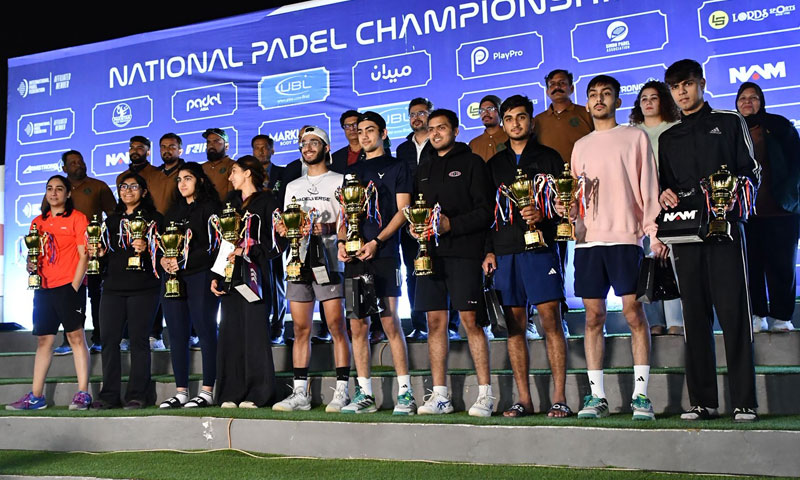
The National Padel Championship 2026 concluded on a celebratory note at Neo Maidan, with Team Sindh delivering a commanding performance by clinching both the men’s and women’s national titles, underlining the province’s growing strength in the sport. The championship was organised by the Pakistan Padel Federation (PPF) under the auspices of the International Padel Federation (FIP), in collaboration with the Sindh Padel Association and Neo Maidan, Karachi Metropolitan Corporation. Sindh claims women’s crown The women’s final saw Sindh (MUV) face off against the Punjab team, with the Sindh pair securing a straight-sets 2–0 victory to lift the national title. Champions: Sindh (MUV) — Natalia Zaman & Mehak Tehrani Runners-up: Punjab — Saimra Umer & Hasnat Third place: Sindh (M&A) — Alisha Elhai & Musfira Zahid All-Sindh showdown in men’s final The men’s final featured an all-Sindh contest between Sindh Team and Sindh Padel-X, highlighting the province’s depth in the sport. The Sindh Team emerged victorious with a 2–0 win, claiming the men’s national championship. Champions: Sindh Team — Rehan Abdullah & Nafees Yaqoob Runners-up: Sindh Padel-X — Sheroz & Rahim Saeed Third place: Team Sindh King — Rayyan Younas & Saad Noman Strong national participation The championship featured 26 women players and 66 men players representing different regions of Pakistan. Over the course of the tournament, players displayed high technical skill, competitive spirit, and strong sportsmanship, reflecting the rapid growth and rising standard of padel in the country. Awards and closing ceremony The closing ceremony was attended by officials and dignitaries from the padel community. Muhammad Mateen, President of the Pakistan Padel Federation, attended as chief guest and distributed trophies, certificates, and cash prizes worth PKR 500,000 among the winning and participating players. Other officials present included Danish Ahmed, Syed Rehanuddin, Syed Nadeem Uddin, and Karima Khan, along with several guests and tournament officials. In a statement, the Pakistan Padel Federation congratulated all teams, players, officials, and partners, describing the National Padel Championship 2026 as a major step forward in promoting padel at the national level and strengthening Pakistan’s presence in the international padel community.

PSL Enters New Era as League Expands and Auction Model Gains Support
The Pakistan Super League is poised for a major structural shift in its 11th season, with the league’s governing council moving closer to adopting a player auction system and reshaping long-standing retention rules. Deliberations took place during an extended late-night session of the PSL governing council’s working committee, where officials reviewed several operational and commercial aspects of the upcoming season. The discussions focused on modernising the player recruitment process, adjusting retention mechanisms, and reassessing the league’s salary framework as the tournament prepares for expansion. Franchises rally behind auction format A broad consensus emerged in favour of replacing the traditional draft with an auction-based system. According to Geo News, most franchises supported the move, viewing it as a more flexible and market-driven approach to squad building. Defending champions Lahore Qalandars were among the teams backing the proposal, joined by Quetta Gladiators, Islamabad United, Karachi Kings, and the newly introduced Hyderabad franchise. Support for the auction model also came from Peshawar Zalmi and the Sialkot franchise, which endorsed the hybrid “drauction” concept currently under consideration. Revised retention structure Under the proposed system, existing franchises would be allowed to retain up to four players each, limited to one player per category. Officials have also discussed permitting one retained player to be moved into a lower category and assigned a brand ambassador role, offering teams greater financial and branding flexibility. Newly added franchises, meanwhile, are expected to assemble their squads primarily through the auction. Two of the new teams reportedly argued for zero retentions, favouring a clean slate approach that would allow them to compete on equal footing with established sides. Players not retained by franchises will be entered into a central auction pool, from which teams will complete their rosters. Final approval awaited The working committee’s recommendations will now be forwarded to Mohsin Naqvi, chairman of the Pakistan Cricket Board, for formal approval. Should further discussion be required, a full meeting of the PSL governing council may be convened. An official announcement detailing the final auction and retention framework is expected within the next few days. Reports have also indicated that the long-standing requirement to include an Emerging category player in the playing XI may be dropped under the revised regulations. Auction timeline and commercial push Preparations are underway for the PSL 11 player auction, which is likely to be held in the first week of February. Earlier, Mohsin Naqvi urged franchise owners to consider increasing the player salary cap, citing the league’s growing commercial appeal and rising franchise valuations. He encouraged teams to embrace the auction model, arguing that it would allow franchises greater autonomy in securing players aligned with their strategies. Expansion signals new chapter PSL 11 is scheduled to begin on March 26 and will mark the league’s expansion from six to eight teams, following the inclusion of franchises from Sialkot and Hyderabad. The expansion was finalised earlier this year when FKS Group and OZ Developers acquired the new teams for Rs 1.75 billion and Rs 1.85 billion, respectively, at the PSL auction held on January 8 at the Jinnah Convention Centre. With structural reforms, new teams, and a possible auction-based future, PSL 11 is shaping up to be one of the most transformative seasons in the league’s history.
T20 World Cup Uncertainty Continues as Ireland Confirms It Will Not Play in India
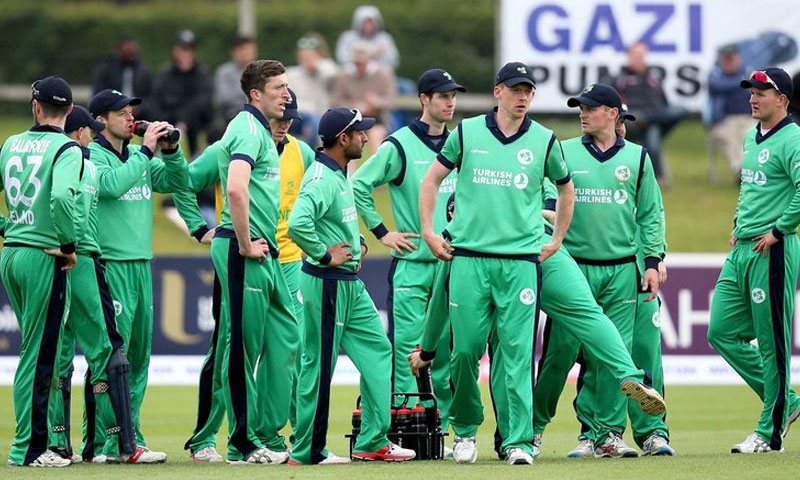
Cricket Ireland has firmly stated that Ireland will not play its ICC Men’s T20 World Cup 2026 group-stage matches in India, dismissing speculation that a group swap with Bangladesh was being considered. The clarification comes after claims from Bangladesh that the Bangladesh Cricket Board (BCB) had approached the International Cricket Council (ICC) to explore exchanging groups with Ireland due to security concerns related to travel and participation in India. A Cricket Ireland official confirmed that the matter has been conclusively settled. “We’ve received definitive assurances that we won’t move from the original schedule. We’re definitely playing the group stage in Sri Lanka,” the official said. Ireland fixed in Sri Lanka-based group Ireland have been drawn in Group C, alongside Sri Lanka, Australia, Zimbabwe and Oman, with all of their group-stage matches scheduled to be played in Sri Lanka, one of the two co-hosts of the tournament. Cricket Ireland’s stance makes clear that the board has no intention of relocating its matches to India, regardless of any discussions involving other teams or groups. Bangladesh seeks venue change Bangladesh, meanwhile, are placed in Group B with West Indies, England, Nepal and Italy. Under the current schedule, Bangladesh are due to play their first three matches in Kolkata — against West Indies on February 7, Italy on February 9 and England on February 14 — before facing Nepal in Mumbai on February 17. The BCB confirmed that it raised the possibility of a group change during a meeting with ICC officials in Dhaka, citing concerns over the safety and security of its players, support staff, fans and media personnel. In a statement, the board said that “among other points, the possibility of moving Bangladesh to a different group as a means of facilitating the matter with minimum logistical adjustments was discussed.” However, Cricket Ireland’s confirmation indicates that any such proposal does not involve Ireland, and that the original group allocations remain intact. ICC discussions yield no change The ICC delegation at the Dhaka meeting included Gaurav Saxena, General Manager for Events and Corporate Communications, and Andrew Ephgrave, General Manager of the ICC Integrity Unit. Saxena joined the discussions virtually after receiving his Bangladesh visa later than expected, while Ephgrave attended in person. The BCB delegation was led by president Md Aminul Islam, along with vice-presidents Md Shakawath Hossain and Faruque Ahmed, Director and Cricket Operations Committee chairman Nazmul Abedeen, and CEO Nizam Uddin Chowdhury. In a separate statement, the BCB reiterated that it had formally requested the ICC to relocate Bangladesh’s matches to Sri Lanka, adding that the request reflected concerns expressed by the Bangladeshi government. Tensions remain The BCB has maintained that it is unwilling to send its team to India under the current circumstances, pointing to heightened tensions following Bangladesh pacer Mustafizur Rahman’s withdrawal from the Indian Premier League, an episode that sparked strong reactions in Dhaka. Despite the disagreement, the BCB said discussions with the ICC were conducted in a “constructive, cordial and professional” manner, and that dialogue on the issue would continue. Tournament overview The ICC Men’s T20 World Cup 2026 is scheduled to be held in India and Sri Lanka from February 7 to March 8. While Bangladesh’s participation venues remain under discussion, Cricket Ireland has made it clear that Ireland’s group-stage fixtures will remain in Sri Lanka and will not be shifted to India.
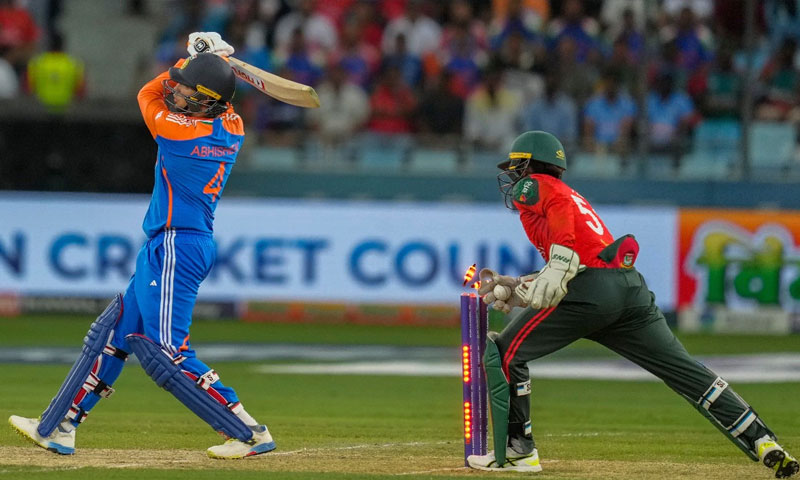
T20 World Cup: ICC Considers Venue Change for Bangladesh Matches, BCCI Responds
The International Cricket Council is examining possible changes to the venues for Bangladesh Cricket Board matches in the upcoming T20 World Cup, following a formal request from Bangladesh citing security concerns. India and Sri Lanka are scheduled to co-host the T20 World Cup, which begins on February 7. Bangladesh’s cricket board recently wrote to the ICC, asking that its matches be shifted to Sri Lanka amid rising tensions between the two neighbouring countries. According to BCB officials, the ICC has acknowledged the request and assured them that the matter is under consideration. ICC exploring alternative venues Recent media reports suggest that while Sri Lanka was Bangladesh’s preferred alternative, the ICC is instead evaluating Indian venues as a possible solution. Chennai and Thiruvananthapuram have reportedly emerged as potential options, replacing the originally assigned venues of Kolkata and Mumbai. However, no official announcement has been made by the ICC so far. The ICC, as the tournament’s governing body, is understood to be assessing logistical, security and operational aspects before taking a final call. Any change would require coordination with the host board and other stakeholders involved in the tournament schedule. BCCI says no communication received Reacting to the reports, Board of Control for Cricket in India secretary Devajit Saikia said the Indian board has not received any formal communication from the ICC regarding a venue change for Bangladesh’s matches. “The BCCI has not received any update about shifting Bangladesh matches to Chennai or any other venue. This matter is between the BCB and the ICC, as the ICC is the governing authority,” Saikia said in a statement to IANS. “If the ICC communicates any decision to us, the BCCI, as a host, will take the necessary steps. At present, we are not aware of any such development.” Bangladesh’s current schedule As per the existing fixture list, Bangladesh are set to play three group matches in Kolkata — against the West Indies on February 7, Italy on February 9, and England on February 14. The team is then scheduled to travel to Mumbai to face Nepal on February 17. For now, the schedule remains unchanged, with the ICC expected to take a final decision after consultations with all concerned boards.
