

US President Donald Trump has dramatically escalated pressure on Iran, announcing a sweeping new tariff policy aimed not only at Tehran but also at countries that continue to trade with it. In a social media post on Monday, Trump said the United States would impose a 25 percent tariff on any country doing business with Iran while also maintaining commercial ties with the US. He said the measure would take effect immediately, describing it as “final and conclusive,” though he did not clarify which countries would be targeted first. The announcement comes as Iran faces its most serious wave of unrest in years. Protests, initially sparked by economic grievances, have spread nationwide and evolved into a broader challenge to the ruling system that has governed the country since the 1979 Islamic Revolution. According to economic data platform Trading Economics, Iran’s largest trading partners include China, Turkiye, the United Arab Emirates, and Iraq — all nations with varying degrees of trade exposure to the United States. Iranian authorities have responded to the unrest with force and a near-total internet blackout, measures that rights groups say are intended to obscure the true scale of casualties. The Norway-based NGO Iran Human Rights warned that the communications shutdown has made independent verification of deaths and injuries nearly impossible. “The international community has a duty to protect civilian protesters against mass killing by the Islamic republic,” said IHR director Mahmood Amiry-Moghaddam. Despite the crackdown, protests have persisted for more than two weeks, defying heavy security deployments. Iranian officials have blamed foreign powers for inflaming the unrest and have organised mass pro-government rallies in response. On Monday, Iran’s supreme leader Ayatollah Ali Khamenei, who has ruled since 1989, claimed the demonstrations had failed. Speaking on state television, he said large counter-rallies across the country sent a “warning” to the United States and showed that foreign-backed plans had been thwarted. At a rally in Tehran’s Enghelab Square, parliament speaker Mohammad Bagher Ghalibaf accused the US and Israel of waging a “four-front war” against Iran, citing economic, psychological, military and internal security pressures. He warned that any direct attack would provoke a severe response. Meanwhile, Washington signalled that military options remain on the table. The White House said Trump was “unafraid” to use force if necessary, while still prioritising diplomacy. The US State Department also issued a fresh warning to Americans in Iran, urging dual nationals to leave the country using Iranian passports and cautioning that US citizens face a high risk of detention. China swiftly rejected Trump’s tariff threat. A spokesperson for the Chinese embassy in Washington said Beijing opposed “unilateral sanctions and long-arm jurisdiction,” warning that tariff wars benefit no one and vowing to protect China’s interests. Europe, meanwhile, has taken a harder political stance. The European Union said it was considering additional sanctions over Iran’s handling of protests, while the European Parliament banned Iranian diplomats from its premises. French President Emmanuel Macron condemned what he called indiscriminate state violence against protesters. Russia, a key ally of Tehran, criticised what it described as foreign interference in Iran’s internal affairs, signalling deepening geopolitical divisions as the crisis unfolds. With protests ongoing, diplomacy fragile, and economic pressure intensifying, Iran now finds itself facing mounting isolation — and the growing risk of a broader international confrontation.
Pakistan Advises Nationals to Avoid Travel to Iran Amid Nationwide Protests
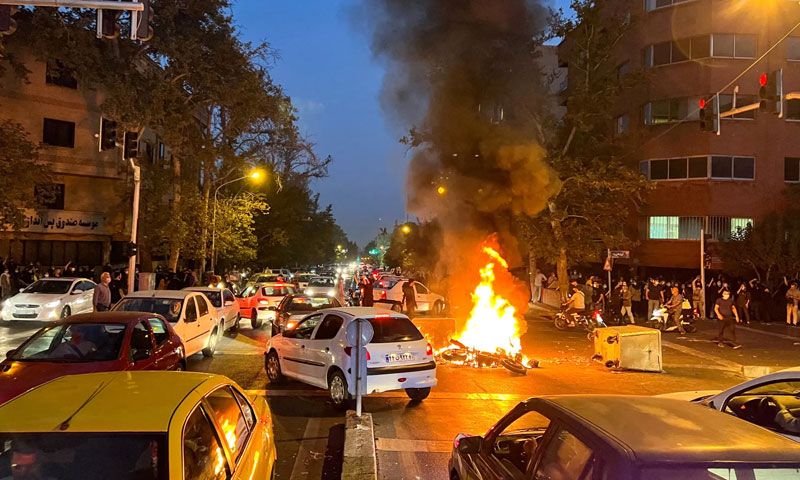
Pakistan Foreign Office has issued a fresh travel advisory urging Pakistani citizens to avoid all non-essential travel to Iran amid widening anti-government unrest across the country. In an official statement released on Saturday, Foreign Office Spokesperson Tahir Andrabi said the advisory was issued purely in the interest of public safety, as the situation inside Iran continues to evolve rapidly. Pakistani nationals currently residing in Iran have been advised to remain extremely cautious, limit movement to essential needs only, and stay alert to local developments. The spokesperson also urged citizens to maintain close contact with Pakistan’s diplomatic missions in Iran and to use emergency helplines whenever assistance is required. The Pakistani embassies in Tehran, Zahidan, and Mashhad have been instructed to remain accessible to citizens during this period of instability. Contact numbers for landline and mobile services have been shared to ensure round-the-clock communication and support. The advisory comes as protests that initially erupted in Tehran last month have now spread across all 31 provinces of Iran, signalling a deepening national crisis. What began as economic anger—particularly among shopkeepers in Tehran’s historic Grand Bazaar over the sharp depreciation of the Iranian rial—has expanded into broader demonstrations against the government. Unlike earlier protest movements, analysts note that the current wave is being driven largely by young men, rather than women and girls who were central to the Amini protests. Observers say this shift reflects a wider base of dissatisfaction within Iranian society. At the same time, Iran’s leadership is facing increasing international scrutiny, while domestically struggling to contain growing unrest. Political analysts argue that the developments point to a widening crisis of legitimacy for the ruling clerical establishment. According to the US-based Human Rights Activists News Agency (HRANA), at least 34 protesters and four members of security forces have been killed so far. The agency also reports that more than 2,200 people have been arrested during the demonstrations, underlining the scale of the unrest and the force used to suppress it. Given the volatile situation, Pakistani authorities have reiterated their call for caution, advising citizens to prioritise safety until conditions stabilise. Embassy Contact Numbers for Pakistani Nationals in Iran Embassy of Pakistan – Tehran☎ +98-21-66-9413-88 / 89 / 90 / 91 (Landline)☎ +98-21-66-9448-88 / 90 (Landline)📱 +98 910 764 8298 (Mobile) Consulate of Pakistan – Zahidan☎ +98 54 33 22 3389 (Landline)📱 +98 904 614 5412 (Mobile) Consulate of Pakistan – Mashhad📱 +98 910 762 5302📱 +98 937 180 7175
Khamenei Blames Iran Unrest on US Influence, Warns of Tougher Crackdown
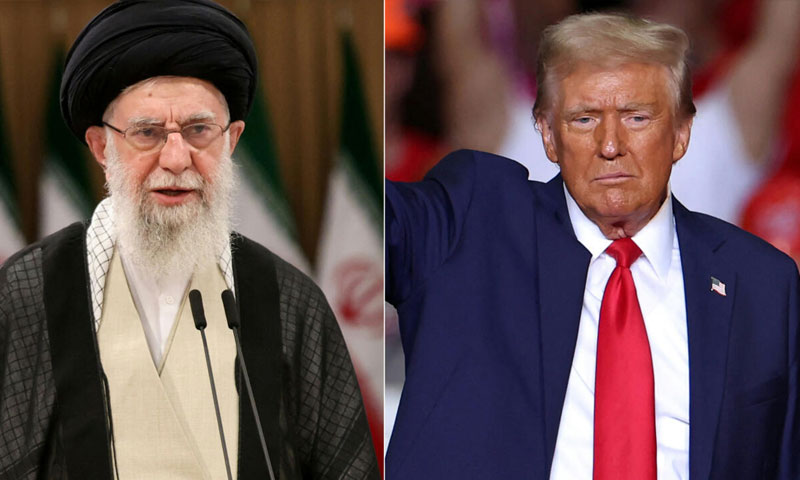
Iran’s Supreme Leader Ayatollah Ali Khamenei on Friday signalled a harder line against ongoing anti-government protests, accusing demonstrators of acting in the interests of foreign powers — particularly the United States — as unrest persisted across several Iranian cities under a sweeping communications blackout. In a short address broadcast on state television, the 86-year-old leader said some protesters were “destroying their own streets to please the president of another country,” a clear reference to Donald Trump. Responding to chants of “Death to America” from the audience, Khamenei warned that the Islamic Republic would not tolerate individuals he described as “mercenaries” working on behalf of external forces. Khamenei also lashed out at Trump directly, urging him to focus on domestic challenges in the United States rather than commenting on Iran’s internal affairs. Iranian officials have repeatedly accused Washington, Israel, and their allies of encouraging instability inside the country. Defiant Rhetoric and Historical Warnings Striking a defiant tone, Khamenei dismissed what he described as threats from Trump, drawing comparisons with historical figures he said were removed from power despite their dominance. He named Pharaoh, Nimrod, Reza Khan, and Mohammad Reza Pahlavi as examples of rulers who, he claimed, fell at the height of their authority — adding that Trump would meet a similar fate. The remarks underscored the leadership’s determination to frame the unrest as a foreign-backed plot rather than a domestic uprising. Protests Continue Despite Blackout The true scale of the demonstrations remains difficult to verify due to extensive internet shutdowns and restrictions on international phone services. However, the unrest is widely seen as the most serious challenge to Iran’s leadership in several years. The protests began on December 28 over rising prices, unemployment, and economic hardship. Since then, they have evolved into broader expressions of political anger, with demonstrators openly challenging the ruling system. Exiled Royal Figure Reappears in Public Discourse The protests have also revived debate over the influence of exiled crown prince Reza Pahlavi, who has urged Iranians to sustain demonstrations. Some rallies reportedly featured chants supporting the former shah — a taboo act in the past that once carried severe punishment — highlighting the depth of public frustration. Scenes of Unrest and Official Response Short video clips shared by activists online showed crowds chanting anti-government slogans around bonfires, with debris scattered across streets in Tehran and other cities. State media later acknowledged the unrest but blamed what it called “terrorist elements” linked to the US and Israel for setting fires and inciting violence, reporting casualties without providing details. Despite official warnings and an increased security presence, protesters were reported to have continued marching into Friday morning, defying authorities as international scrutiny of Iran’s response intensified.
Bangladesh–India Dispute: When and Where Did the Rift That Reached Cricket Begin?
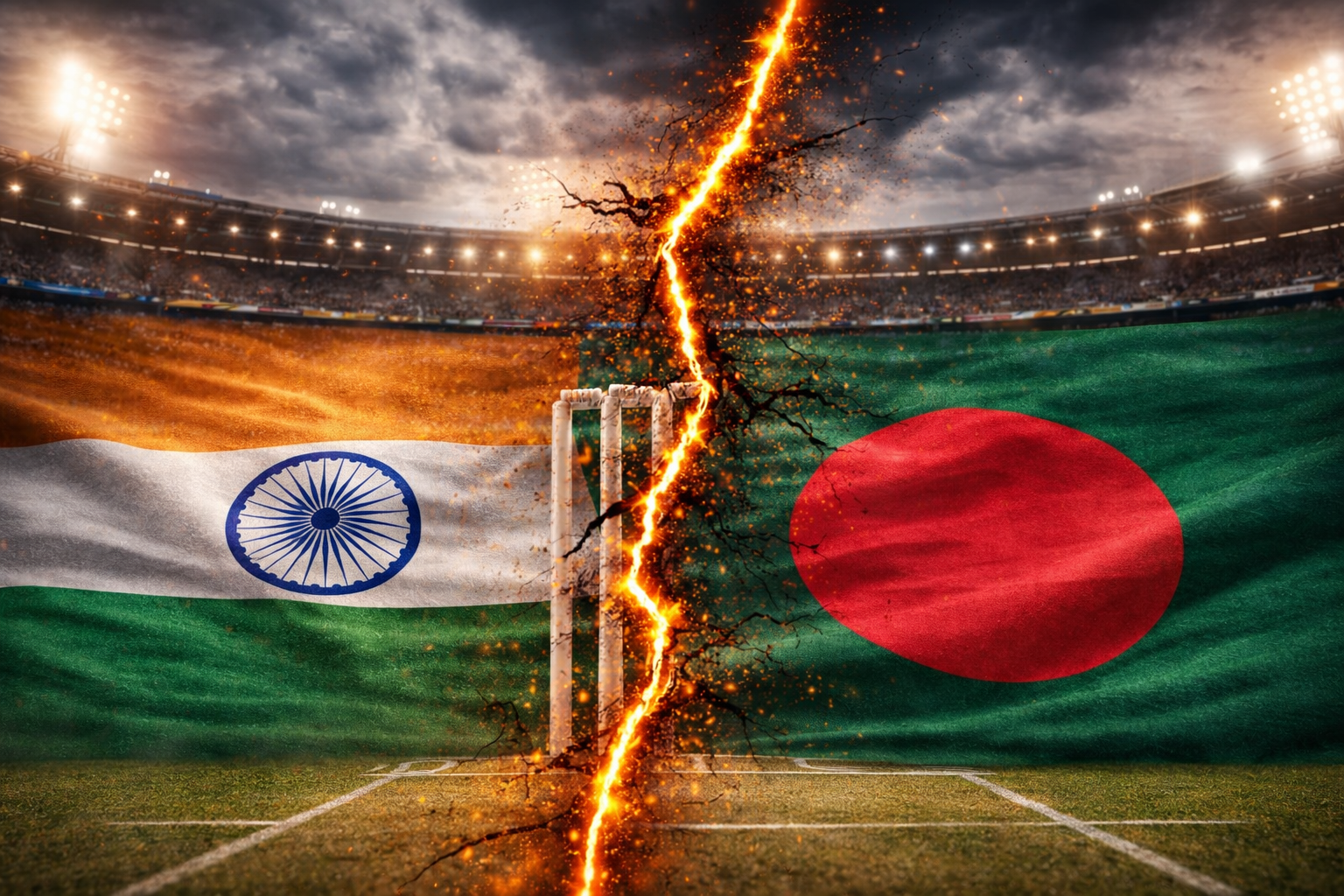
A growing diplomatic chill between Bangladesh and India has now spilled into international cricket, after Bangladesh’s board sought to avoid playing its scheduled ICC Men’s T20 World Cup 2026 matches in India—an escalation tied to a chain of events that began months earlier and later intensified around Bangladeshi fast bowler Mustafizur Rahman. The first spark: a killing and a surge of anger The deterioration in public sentiment accelerated after the death of a prominent Bangladeshi youth leader, which triggered unrest and violent protests in multiple cities. Reuters reported that the killing set off demonstrations and attacks on sites including media offices and political locations, as the government urged calm. In the aftermath, some political groups and activists in Bangladesh alleged Indian involvement, a claim that circulated widely in protests and online messaging, further worsening public emotions—though such allegations have been disputed and were not presented as established fact in credible reporting. Pressure builds: incidents and reactions across the border As unrest grew, bilateral tensions widened. Reuters later noted that the relationship was already strained due to other developments, including communal incidents and protests, and broader political complications involving Bangladesh’s former leader Sheikh Hasina being in India. This atmosphere, analysts say, created a new risk: that sport—usually kept separate—would become a public arena for anger and retaliation. The turning point: Mustafizur Rahman and Kolkata Knight Riders That risk became real when Mustafizur Rahman’s IPL participation turned into a controversy. Multiple outlets reported that the BCCI instructed Kolkata Knight Riders (KKR) to release Mustafizur from their IPL plans, linking the instruction to “recent developments” connected to the wider political situation. In Bangladesh, the decision was widely perceived as humiliating and politically driven. Some commentary framed it as the result of pressure from hardline groups and nationalist sentiment in India—though KKR and Indian cricket authorities publicly emphasized administrative and security considerations rather than street pressure narratives. The World Cup fallout: Bangladesh asks to move matches out of India Soon after, Bangladesh’s position hardened. Reuters reported Bangladesh would not play its scheduled T20 World Cup matches in India, citing security concerns, and that the BCB formally asked the ICC to relocate matches to a neutral venue, with Sri Lanka named as a preferred option. The report linked the cricket decision to the Mustafizur episode and worsening bilateral climate, showing how quickly a franchise-league move can trigger international consequences when relations are already tense. Why this matters World Cups run on fixed logistics: venues, visas, broadcasting, and security planning. A relocation request forces the ICC into a sensitive space—balancing safety, fairness, and tournament integrity—while both countries face intense public scrutiny at home.
At Least Six Dead as Cost-of-Living Protests Spread Across Iran
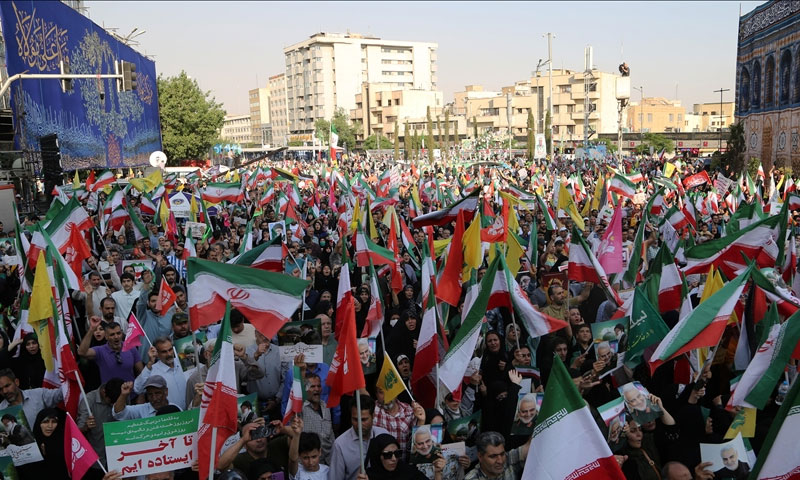
At least six people have been killed as demonstrations against soaring living costs widened across Iran, according to Iranian media and officials. The deadliest incident was reported in the city of Azna, in Lorestan province, where clashes during protests left at least three people dead and 17 others injured, the semiofficial Fars News Agency said on Thursday. Azna lies about 300 kilometres southwest of Tehran. Videos circulating online from the area appeared to show fires burning in the streets and the sound of gunfire as protesters chanted slogans accusing officials of being “shameless”. Earlier reports said two people were killed during demonstrations in Lordegan, a city in Chaharmahal and Bakhtiari province, around 470 kilometres south of the capital. According to Fars, some protesters threw stones at government buildings, banks and a mosque, prompting police to respond with tear gas. State television also reported that a member of the security forces was killed overnight in the western city of Kouhdasht. Officials said the 21-year-old belonged to the Basij, a paramilitary force linked to the Islamic Revolutionary Guard Corps. The unrest follows a wave of anger over a sharp fall in Iran’s currency and rapidly rising prices. Shopkeepers began protesting earlier this week, with demonstrations later spreading to Tehran and other major cities. Students from at least 10 universities joined the protests on Tuesday, giving the movement fresh momentum. Iran’s economy has been under severe strain, with inflation hovering around 40 percent amid long-standing Western sanctions. Tensions have been further heightened after recent air strikes by Israel and the United States targeted Iran’s nuclear facilities and senior military figures. President Masoud Pezeshkian has attempted to defuse the situation by acknowledging protesters’ grievances. Speaking on state television, he said people’s demands over livelihoods were legitimate and urged the government to act quickly to ease economic pressure. Government spokesperson Fatemeh Mohajerani said authorities would hold direct talks with representatives of trade unions and merchants, though no timetable was announced. At the same time, officials warned that any attempt to turn economic protests into violence or sabotage would be met with a firm legal response. Iran last witnessed mass nationwide demonstrations in 2022 and 2023 following the death of Mahsa Amini, who died in police custody after being arrested for allegedly violating the country’s dress code. While the current protests began peacefully, the growing death toll underscores the volatility of public anger over Iran’s deepening economic crisis.
