
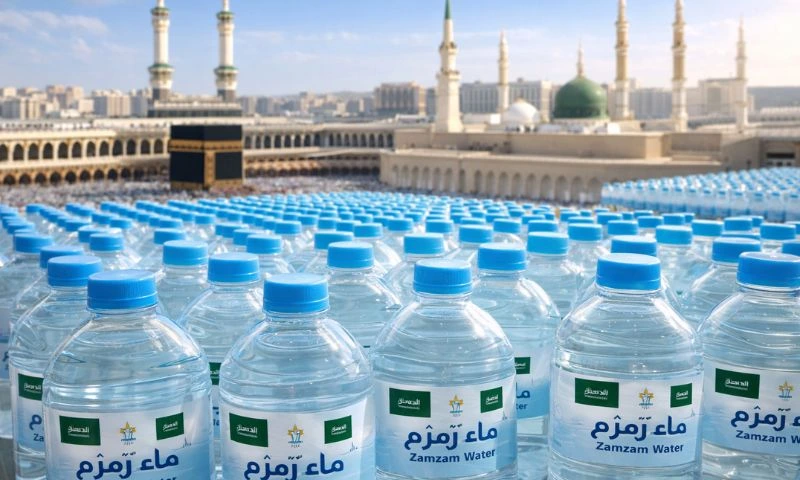
Saudi authorities have finalised extensive preparations to meet the spiritual and practical needs of millions of Muslim pilgrims ahead of Ramadan 2026, with a special focus on ensuring the supply of Zamzam water at key holy sites. The National Water Company (NWC) — the official operator of the King Abdullah bin Abdulaziz Zamzam Water Project — announced a strategic stockpile of 2.2 million bottles of blessed Zamzam water to serve worshippers throughout the holy month. Ramadan is one of the busiest periods of the year for ritual travel to the Two Holy Mosques in Makkah and Madinah. Millions of pilgrims and worshippers visit these sacred sites to pray, break fast, and partake in communal rites that require careful logistical planning by the Saudi authorities. The announcement comes amid other historic moments in the Kingdom this year, including record Umrah pilgrim visits during Ramadan’s early days. Robust Production and Distribution Plan The Zamzam Water Project has boosted its production capacity to 200,000 five-liter bottles per day, a scale needed to match the sharply increasing seasonal demand. Distribution will occur from the NWC’s headquarters and through a network of over 750 sales outlets across the country. Pilgrims and visitors can also purchase 330 ml bottles via the Nusuk smartphone application, reflecting the Saudi government’s effort to integrate digital services into pilgrimage logistics. Zamzam water holds deep religious significance for Muslims, believed to be blessed and spiritually noteworthy. It is traditionally consumed by pilgrims and taken home as a treasured gift. To ensure quality and safety, production operations are highly automated, starting from the well extraction point through bottling. More than 400 laboratory tests are conducted daily to maintain high standards before distribution. Read More: Saudi Arabia Breaks Umrah Record with 904,000 Pilgrims on Ramadan Day 4 Continuous Supply to Holy Mosques In addition to bottled water preparation, NWC confirmed that the continuous pumping of Zamzam water to the Grand Mosque (Masjid al-Haram) will operate around the clock. Coordination with relevant authorities also ensures that the Prophet’s Mosque in Madinah receives daily supplies exceeding 50 million liters in safe and hygienic manners. These efforts underscore the Kingdom’s commitment to high-volume service delivery during peak pilgrimage seasons. Strengthening Pilgrim Services During Ramadan This logistical milestone coincides with a surge in pilgrim services and crowd management measures in Saudi Arabia. Earlier in Ramadan, Saudi authorities recorded some of the highest single-day Umrah pilgrim counts ever, reflecting growing global interest in spiritual journeys during the holy month. These developments create additional pressure on infrastructure and service delivery, making strategic planning for basics like water supply a necessity. The Kingdom’s wider digital and service ecosystems — including app-based provision, smart crowd flow systems, and advanced safety protocols — play a central role in supporting pilgrims. This approach aligns with Saudi Arabia’s broader Vision 2030 goals of modernising services, enhancing visitor experiences, and promoting religious tourism. What This Means for Pilgrims For pilgrims, the announcement provides reassurance that essential services like access to Zamzam water will be available consistently throughout Ramadan, even during peak visitation days. Bottled water availability at outlets citywide helps reduce congestion at central water points, giving worshippers more flexibility in hydration and transport planning. Authorities continue to encourage early arrival and use of digital tools such as the Nusuk app for smoother experiences.
Saudi Arabia Breaks Umrah Record with 904,000 Pilgrims on Ramadan Day 4
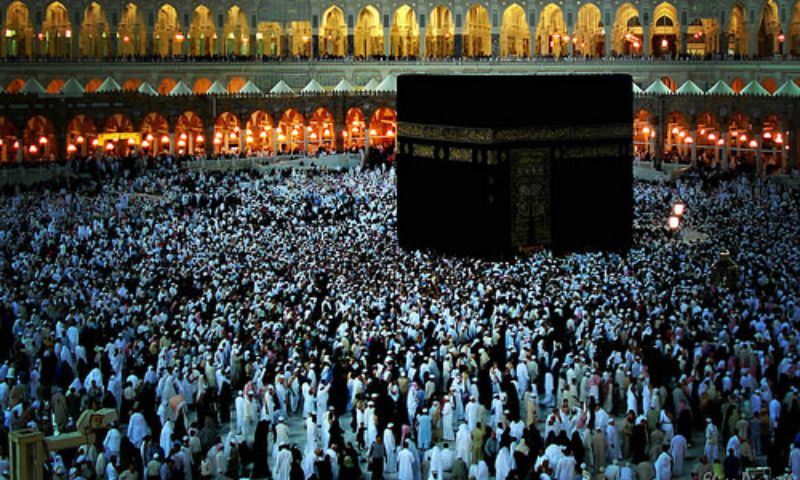
Makkah, Saudi Arabia Saudi Arabia has witnessed an unprecedented surge in Umrah pilgrims during the holy month of Ramadan 1447 AH (2026), with authorities announcing a record-breaking 904,000 worshippers performing Umrah in a single day — the fourth day of Ramadan. This figure marks the highest one-day attendance ever recorded at Masjid al-Haram, the Grand Mosque in Makkah, underscoring the scale of the annual religious observance. Historic One-Day Peak for Umrah Pilgrims On Saturday, February 21, 2026 — corresponding to 4 Ramadan 1447 AH — the General Presidency for the Affairs of the Grand Mosque and the Prophet’s Mosque confirmed that 904,000 pilgrims visited the Grand Mosque complex to perform Umrah and prayers. This turnout surpasses previous single-day high watermarks and reflects surging global interest in spiritual travel during the most sacred month of the Islamic calendar. Officials noted that the extraordinary turnout came at the start of Ramadan’s first weekend, when millions of Muslims travel to Saudi Arabia for the lesser pilgrimage and to participate in extended prayers such as Taraweeh. The sheer volume highlights the Kingdom’s growing capacity to host worshippers at Islam’s holiest site. Read More: Saudi Arabia Tightens Travel Sector Rules, Cracks Down on Unlicensed Umrah Agencies Managing Crowds at the Grand Mosque With such numbers, Saudi authorities have enhanced crowd management and logistical operations around the Haram and its courtyards. Traffic is regulated, pedestrian corridors are established, and public transport services are deployed to ensure worshippers can perform rituals safely and with dignity. The iconic Mataf area that surrounds the Kaaba has been kept open throughout the day to accommodate the continuous flow of pilgrims. Officials have also issued detailed guidelines to regulate access, including use of illuminated signals at mosque entrances that indicate capacity status. Green lights show available space while red indicates full capacity, so pilgrims know when to enter or wait. Ramadan Experience and Services The record crowd reflects the broader energy and spiritual uplift of Ramadan. Saudi Arabia has rolled out enhanced services at the Two Holy Mosques, including multilingual smart screens providing guidance in over 50 languages — crucial for the global array of visitors. Authorities have also launched digital pilgrim guides in 16 languages to help overseas visitors navigate the rites and practicalities of performing Umrah safely and respectfully. Read More: Zong vs Ufone vs Jazz: The Ramadan Bundles Everyone Talks About Pilgrimage Context and Growth This year’s record occurs amid a larger trend of increasing pilgrim traffic to Saudi Arabia. In 2025, the Kingdom reported that more than 19.5 million Hajj and Umrah pilgrims arrived from abroad, with satisfaction rates over 90 percent, reflecting improvements in services and infrastructure under Vision 2030 goals. Despite viral claims online, multiple sources clarify that figures like 11 million pilgrims in a single day are inaccurate; they reflect monthly totals across seasonal peaks, not daily headcounts. As Ramadan progresses, Saudi Arabia continues to balance spiritual devotion with safety and convenience, aiming to welcome as many pilgrims as possible while maintaining calm and order at Islam’s most sacred sites.
