

In a tournament built for sixes and superstars, the ICC Men’s T20 World Cup has repeatedly shown one constant: the teams that win big moments usually have bowlers who can take wickets under pressure. And no one has done it more often than Bangladesh all-rounder Shakib Al Hasan, who sits at the top of the all-time wicket-taking list. Shakib became the first bowler to reach 50 wickets in Men’s T20 World Cup history when he dismissed India captain Rohit Sharma during the Super Eight match at the 2024 tournament. The ICC match report described it as Shakib’s 50th T20 World Cup wicket, a milestone that underlines how long he has remained effective across different conditions and eras. What makes Shakib’s record stand out is the type of wickets he takes. He has often struck in the middle overs, breaking partnerships and forcing batters to take risks against the spinners at a time when teams try to “stabilise” an innings. That ability to flip momentum is exactly what wins World Cup games—especially on surfaces where grip, pace changes and accuracy matter more than raw speed. The leaders at the top: wicket-takers who shaped tournaments The list behind Shakib includes several specialists whose spells became part of T20 World Cup folklore. Shahid Afridi (Pakistan) – long celebrated as a match-winner with the ball as much as the bat, Afridi is one of the tournament’s most prolific wicket-takers. The ICC previously highlighted him among the tournament’s “leading lights,” crediting him with 39 wickets in the competition. Lasith Malinga (Sri Lanka) – the original T20 death-overs icon. Malinga’s yorkers and dipping slower balls made him a nightmare in knockout cricket, and he remains among the top wicket-takers historically. The ICC’s tournament stats have listed him among the leaders with 38 wickets. Saeed Ajmal (Pakistan) – in his peak years, Ajmal’s control and variations turned powerplays and middle overs into wicket opportunities. He is also listed among the top wicket-takers in ICC’s historical tournament numbers. Why wickets matter more than ever in modern T20 World Cups T20 batting has evolved fast: deeper line-ups, higher strike rates, and more “all-out attack” even in the powerplay. That makes wicket-taking bowling even more valuable. A team can survive an expensive over; it struggles to survive losing key batters at the wrong time. That is also why upcoming tournaments often see teams investing in: powerplay wicket-takers (swing/seam, hard lengths, new-ball pace), and middle-overs strike spinners (who don’t just “contain,” but actually remove set batters). As venues and pitches change from match to match, the bowlers who adapt—mixing pace, angle, length and variations—are usually the ones who climb these all-time lists.

New Faces, Big Omission: Pakistan’s T20 World Cup Squad Announced
Pakistan’s selectors have made a bold call ahead of the ICC Men’s T20 World Cup by dropping fast bowler Haris Rauf from the 15-member squad, while confirming Salman Ali Agha as captain for the global tournament. The squad was unveiled on Sunday morning at Gaddafi Stadium, Lahore, during a press conference attended by Aqib Javed, captain Salman Ali Agha, and white-ball head coach Michael James Hesson. Rauf’s omission is the most notable call, as Pakistan appear to have prioritised balance and recent form while finalising their squad for the 20-team tournament, which will run from February 7 to March 8. Several players will make their first appearance at a T20 World Cup. Captain Salman Ali Agha is joined by Faheem Ashraf, Khawaja Mohammad Nafay, Mohammad Salman Mirza, Sahibzada Farhan, and Usman Tariq, all of whom have earned maiden call-ups for a global ICC event. Road to 🏆 2026 begins!🇵🇰 Squad unveiled for the ICC Men’s T20 World Cup 🌍Read More 👉🏻 https://t.co/iooMXUS5g6#BackTheBoysInGreen #T20WorldCup pic.twitter.com/VOSkvs05MC— Pakistan Cricket (@TheRealPCB) January 25, 2026 The squad also features experienced campaigners who have represented Pakistan at previous T20 World Cups since 2021, including Abrar Ahmed, Babar Azam, Fakhar Zaman, Mohammad Nawaz, Naseem Shah, Saim Ayub, Shaheen Shah Afridi, Shadab Khan, and Usman Khan. The expanded 20-team format will see each side play four group matches, with the top teams advancing to the Super Eight stage followed by the knockout rounds. As part of their build-up to the tournament, Pakistan will host Australia in a three-match T20I series at Gaddafi Stadium on January 29, 31, and February 1, with the national training camp beginning today.
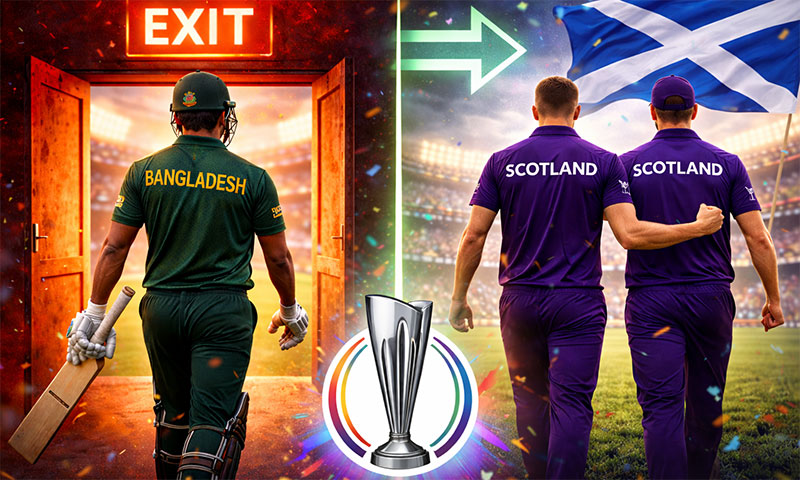
ICC Officially Replaces Bangladesh with Scotland at Men’s T20 World Cup 2026
The International Cricket Council has officially confirmed that Scotland will replace Bangladesh at the ICC Men’s T20 World Cup 2026, after the Bangladesh Cricket Board declined to participate under the tournament’s published match schedule. The decision was formally announced on Saturday, ending weeks of uncertainty surrounding Bangladesh’s participation. The ICC said Bangladesh would no longer compete in the tournament after the BCB refused to send its team to India, citing security concerns, despite repeated assurances from the governing body. Scotland have been drafted into Group C, where they will join England, Italy, Nepal and the West Indies. The tournament is scheduled to begin on February 7. In its official statement, the ICC said it had rejected the BCB’s request to relocate Bangladesh’s matches from India to Sri Lanka — a co-host of the tournament — after determining that there was no credible or verifiable security threat to the Bangladesh team. The ICC said the decision followed an extensive engagement process lasting more than three weeks, during which it held multiple rounds of discussions with the BCB through video conferences and in-person meetings. “As part of this process, the ICC reviewed the concerns raised by the BCB, commissioned and considered independent security assessments from internal and external experts, and shared detailed security and operational plans,” the statement said. According to the ICC, these plans covered federal and state-level security arrangements, as well as enhanced and escalating protocols for teams, officials and supporters. The assurances were reiterated at several stages, including discussions involving the ICC Business Corporation Board. “The ICC’s assessments concluded that there was no credible or verifiable security threat to the Bangladesh national team, officials or supporters in India,” the statement added. Given these findings and the proximity of the tournament, the ICC said it was not feasible to amend the event schedule. The board also cited broader implications for governance and consistency in global events. Following an ICC board meeting on Wednesday, the BCB was given a 24-hour deadline to confirm whether Bangladesh would travel to India as scheduled. When no confirmation was received within that timeframe, the ICC proceeded with its established governance and qualification procedures to identify a replacement team. Scotland were selected as they are the next-highest ranked T20I side to narrowly miss out on direct qualification. They are currently ranked 14th in the ICC T20I rankings, ahead of teams such as Namibia, the United Arab Emirates, Nepal, the United States, Canada, Oman and Italy. With this decision, Bangladesh will miss the ICC Men’s T20 World Cup 2026, while Scotland earn a late entry into the tournament through ICC’s official replacement process.
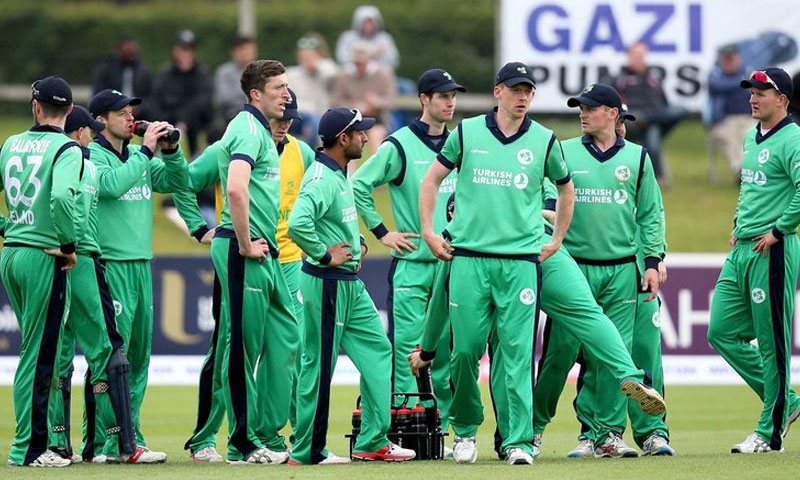
T20 World Cup Uncertainty Continues as Ireland Confirms It Will Not Play in India
Cricket Ireland has firmly stated that Ireland will not play its ICC Men’s T20 World Cup 2026 group-stage matches in India, dismissing speculation that a group swap with Bangladesh was being considered. The clarification comes after claims from Bangladesh that the Bangladesh Cricket Board (BCB) had approached the International Cricket Council (ICC) to explore exchanging groups with Ireland due to security concerns related to travel and participation in India. A Cricket Ireland official confirmed that the matter has been conclusively settled. “We’ve received definitive assurances that we won’t move from the original schedule. We’re definitely playing the group stage in Sri Lanka,” the official said. Ireland fixed in Sri Lanka-based group Ireland have been drawn in Group C, alongside Sri Lanka, Australia, Zimbabwe and Oman, with all of their group-stage matches scheduled to be played in Sri Lanka, one of the two co-hosts of the tournament. Cricket Ireland’s stance makes clear that the board has no intention of relocating its matches to India, regardless of any discussions involving other teams or groups. Bangladesh seeks venue change Bangladesh, meanwhile, are placed in Group B with West Indies, England, Nepal and Italy. Under the current schedule, Bangladesh are due to play their first three matches in Kolkata — against West Indies on February 7, Italy on February 9 and England on February 14 — before facing Nepal in Mumbai on February 17. The BCB confirmed that it raised the possibility of a group change during a meeting with ICC officials in Dhaka, citing concerns over the safety and security of its players, support staff, fans and media personnel. In a statement, the board said that “among other points, the possibility of moving Bangladesh to a different group as a means of facilitating the matter with minimum logistical adjustments was discussed.” However, Cricket Ireland’s confirmation indicates that any such proposal does not involve Ireland, and that the original group allocations remain intact. ICC discussions yield no change The ICC delegation at the Dhaka meeting included Gaurav Saxena, General Manager for Events and Corporate Communications, and Andrew Ephgrave, General Manager of the ICC Integrity Unit. Saxena joined the discussions virtually after receiving his Bangladesh visa later than expected, while Ephgrave attended in person. The BCB delegation was led by president Md Aminul Islam, along with vice-presidents Md Shakawath Hossain and Faruque Ahmed, Director and Cricket Operations Committee chairman Nazmul Abedeen, and CEO Nizam Uddin Chowdhury. In a separate statement, the BCB reiterated that it had formally requested the ICC to relocate Bangladesh’s matches to Sri Lanka, adding that the request reflected concerns expressed by the Bangladeshi government. Tensions remain The BCB has maintained that it is unwilling to send its team to India under the current circumstances, pointing to heightened tensions following Bangladesh pacer Mustafizur Rahman’s withdrawal from the Indian Premier League, an episode that sparked strong reactions in Dhaka. Despite the disagreement, the BCB said discussions with the ICC were conducted in a “constructive, cordial and professional” manner, and that dialogue on the issue would continue. Tournament overview The ICC Men’s T20 World Cup 2026 is scheduled to be held in India and Sri Lanka from February 7 to March 8. While Bangladesh’s participation venues remain under discussion, Cricket Ireland has made it clear that Ireland’s group-stage fixtures will remain in Sri Lanka and will not be shifted to India.
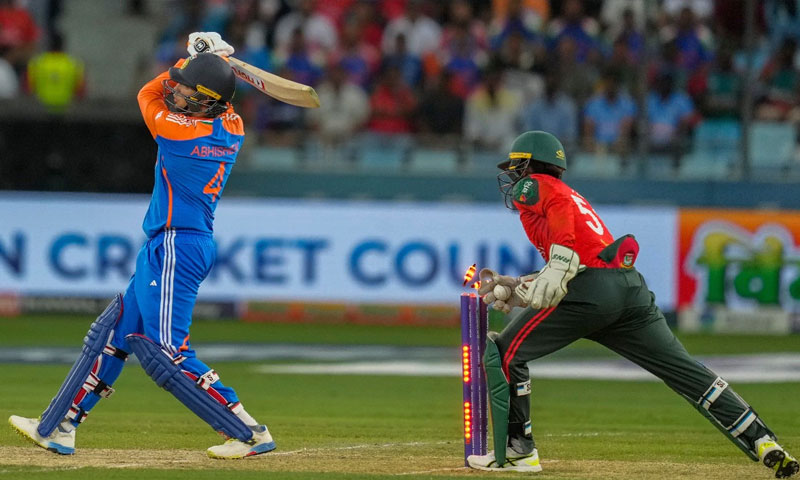
T20 World Cup: ICC Considers Venue Change for Bangladesh Matches, BCCI Responds
The International Cricket Council is examining possible changes to the venues for Bangladesh Cricket Board matches in the upcoming T20 World Cup, following a formal request from Bangladesh citing security concerns. India and Sri Lanka are scheduled to co-host the T20 World Cup, which begins on February 7. Bangladesh’s cricket board recently wrote to the ICC, asking that its matches be shifted to Sri Lanka amid rising tensions between the two neighbouring countries. According to BCB officials, the ICC has acknowledged the request and assured them that the matter is under consideration. ICC exploring alternative venues Recent media reports suggest that while Sri Lanka was Bangladesh’s preferred alternative, the ICC is instead evaluating Indian venues as a possible solution. Chennai and Thiruvananthapuram have reportedly emerged as potential options, replacing the originally assigned venues of Kolkata and Mumbai. However, no official announcement has been made by the ICC so far. The ICC, as the tournament’s governing body, is understood to be assessing logistical, security and operational aspects before taking a final call. Any change would require coordination with the host board and other stakeholders involved in the tournament schedule. BCCI says no communication received Reacting to the reports, Board of Control for Cricket in India secretary Devajit Saikia said the Indian board has not received any formal communication from the ICC regarding a venue change for Bangladesh’s matches. “The BCCI has not received any update about shifting Bangladesh matches to Chennai or any other venue. This matter is between the BCB and the ICC, as the ICC is the governing authority,” Saikia said in a statement to IANS. “If the ICC communicates any decision to us, the BCCI, as a host, will take the necessary steps. At present, we are not aware of any such development.” Bangladesh’s current schedule As per the existing fixture list, Bangladesh are set to play three group matches in Kolkata — against the West Indies on February 7, Italy on February 9, and England on February 14. The team is then scheduled to travel to Mumbai to face Nepal on February 17. For now, the schedule remains unchanged, with the ICC expected to take a final decision after consultations with all concerned boards.
Bangladesh–India Dispute: When and Where Did the Rift That Reached Cricket Begin?
A growing diplomatic chill between Bangladesh and India has now spilled into international cricket, after Bangladesh’s board sought to avoid playing its scheduled ICC Men’s T20 World Cup 2026 matches in India—an escalation tied to a chain of events that began months earlier and later intensified around Bangladeshi fast bowler Mustafizur Rahman. The first spark: a killing and a surge of anger The deterioration in public sentiment accelerated after the death of a prominent Bangladeshi youth leader, which triggered unrest and violent protests in multiple cities. Reuters reported that the killing set off demonstrations and attacks on sites including media offices and political locations, as the government urged calm. In the aftermath, some political groups and activists in Bangladesh alleged Indian involvement, a claim that circulated widely in protests and online messaging, further worsening public emotions—though such allegations have been disputed and were not presented as established fact in credible reporting. Pressure builds: incidents and reactions across the border As unrest grew, bilateral tensions widened. Reuters later noted that the relationship was already strained due to other developments, including communal incidents and protests, and broader political complications involving Bangladesh’s former leader Sheikh Hasina being in India. This atmosphere, analysts say, created a new risk: that sport—usually kept separate—would become a public arena for anger and retaliation. The turning point: Mustafizur Rahman and Kolkata Knight Riders That risk became real when Mustafizur Rahman’s IPL participation turned into a controversy. Multiple outlets reported that the BCCI instructed Kolkata Knight Riders (KKR) to release Mustafizur from their IPL plans, linking the instruction to “recent developments” connected to the wider political situation. In Bangladesh, the decision was widely perceived as humiliating and politically driven. Some commentary framed it as the result of pressure from hardline groups and nationalist sentiment in India—though KKR and Indian cricket authorities publicly emphasized administrative and security considerations rather than street pressure narratives. The World Cup fallout: Bangladesh asks to move matches out of India Soon after, Bangladesh’s position hardened. Reuters reported Bangladesh would not play its scheduled T20 World Cup matches in India, citing security concerns, and that the BCB formally asked the ICC to relocate matches to a neutral venue, with Sri Lanka named as a preferred option. The report linked the cricket decision to the Mustafizur episode and worsening bilateral climate, showing how quickly a franchise-league move can trigger international consequences when relations are already tense. Why this matters World Cups run on fixed logistics: venues, visas, broadcasting, and security planning. A relocation request forces the ICC into a sensitive space—balancing safety, fairness, and tournament integrity—while both countries face intense public scrutiny at home.
