
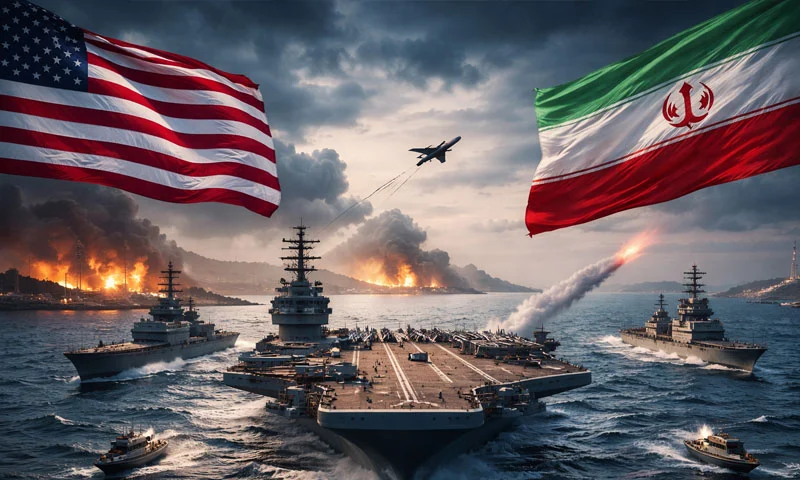
Tensions between the United States and the Islamic Republic of Iran have sharply increased in late January 2026, driven by renewed disputes over Iran’s nuclear program, continued internal unrest within Iran, and growing U.S. military pressure aimed at forcing Tehran back to negotiations. The escalation has raised serious concerns across the Middle East and beyond, with global powers closely watching developments due to their political, economic, and security stakes in the region. The Core Issue: Nuclear Program and Strategic Confrontation At the heart of the current standoff lies Iran’s nuclear program and Washington’s long-standing demand that Tehran permanently abandon any pathway toward nuclear weapons. The United States has reiterated that Iran must return to binding negotiations that impose strict and verifiable limits on its nuclear activities. President Donald Trump has publicly called on Iran to accept a new agreement focused on what he describes as a “no nuclear weapons” outcome, warning that failure to comply could result in military action. This nuclear dispute is not isolated. It is part of a broader strategic conflict that includes regional influence, sanctions enforcement, and long-running mistrust between the two countries following years of collapsed agreements and diplomatic disengagement. Human Rights Concerns and Domestic Unrest in Iran Alongside the nuclear issue, U.S. officials have cited Iran’s internal situation as a key concern. Washington has accused Iranian authorities of using excessive force against nationwide protests, with reports indicating large-scale civilian casualties. American leaders have linked these human rights concerns to their broader pressure strategy, arguing that Iran’s domestic conduct reflects its broader regional and international behavior. Tehran, however, rejects these accusations and views them as interference in its internal affairs. Military Build-Up and Pressure Tactics The escalation has been underscored by a visible U.S. military buildup in the Middle East. The United States has deployed a major naval carrier strike group, centered on the USS Abraham Lincoln, along with additional air and naval assets. Washington describes these deployments as defensive and deterrent in nature, intended to prevent regional instability. However, U.S. officials have also acknowledged that the military presence serves as leverage to push Iran toward negotiations. Iran has interpreted these moves as direct threats. In response, Tehran has conducted military exercises near the Strait of Hormuz and warned that any violation of its territorial waters would be met with force. Trump’s Position and Iran’s Rejection of Talks Under Threat President Trump has repeatedly stated that “time is running out” for diplomacy and that Iran must choose between negotiations and the risk of military confrontation. His administration has also expanded economic pressure, including new sanctions targeting Iranian oil shipments and related entities. Iran’s leadership has firmly rejected the idea of negotiating under coercion. Iranian officials have stated that no meaningful talks can occur in an environment dominated by military threats and economic punishment. Iran’s mission to the United Nations has warned that any U.S. attack would trigger a strong and unprecedented response. Potential Regional Consequences of a Military Conflict Analysts and regional officials warn that a U.S. attack on Iran could have far-reaching consequences. Iran maintains influence through allied groups and armed networks across Iraq, Syria, Lebanon, and Yemen. Any direct confrontation could therefore expand beyond Iran’s borders, increasing instability across the Middle East. The mere prospect of conflict has already heightened anxiety among regional governments, many of which fear being drawn into a wider confrontation. Global Oil Markets at Risk Iran remains a significant oil producer, with output estimated at over three million barrels per day. Rising tensions have already affected global energy markets, as traders factor in the risk of supply disruptions. A major concern is the Strait of Hormuz, a critical chokepoint through which a substantial portion of the world’s oil shipments pass. Any disruption to traffic through the strait could have immediate and severe consequences for global energy prices and economic stability. Reactions of Key Global Stakeholders China and Russia, both of which maintain strategic ties with Iran, have historically opposed unilateral military action by the United States. While neither has indicated support for a U.S. strike, both are expected to resist such action diplomatically and call for de-escalation. Pakistan, which seeks balanced relations with both Washington and Tehran, is unlikely to participate in any military action. However, a regional conflict could still affect Pakistan through economic pressures, energy price shocks, and potential refugee movements. Across the broader international community, calls for restraint and renewed diplomacy have grown louder. Several Gulf states have expressed concern that a full-scale conflict would destabilize the region and undermine economic and security interests. Outlook and Risks Ahead With diplomatic channels strained and military posturing intensifying, the current U.S.–Iran standoff represents one of the most serious escalations in recent years. The situation carries significant risks not only for the Middle East but also for global markets and international security. Whether the crisis moves toward renewed negotiations or further confrontation will likely depend on whether both sides find a way to reduce tensions without appearing to concede under pressure—a challenge that has repeatedly undermined past diplomatic efforts.

25% Tariff Shock: Trump Moves to Punish Nations Doing Business With Iran
US President Donald Trump has dramatically escalated pressure on Iran, announcing a sweeping new tariff policy aimed not only at Tehran but also at countries that continue to trade with it. In a social media post on Monday, Trump said the United States would impose a 25 percent tariff on any country doing business with Iran while also maintaining commercial ties with the US. He said the measure would take effect immediately, describing it as “final and conclusive,” though he did not clarify which countries would be targeted first. The announcement comes as Iran faces its most serious wave of unrest in years. Protests, initially sparked by economic grievances, have spread nationwide and evolved into a broader challenge to the ruling system that has governed the country since the 1979 Islamic Revolution. According to economic data platform Trading Economics, Iran’s largest trading partners include China, Turkiye, the United Arab Emirates, and Iraq — all nations with varying degrees of trade exposure to the United States. Iranian authorities have responded to the unrest with force and a near-total internet blackout, measures that rights groups say are intended to obscure the true scale of casualties. The Norway-based NGO Iran Human Rights warned that the communications shutdown has made independent verification of deaths and injuries nearly impossible. “The international community has a duty to protect civilian protesters against mass killing by the Islamic republic,” said IHR director Mahmood Amiry-Moghaddam. Despite the crackdown, protests have persisted for more than two weeks, defying heavy security deployments. Iranian officials have blamed foreign powers for inflaming the unrest and have organised mass pro-government rallies in response. On Monday, Iran’s supreme leader Ayatollah Ali Khamenei, who has ruled since 1989, claimed the demonstrations had failed. Speaking on state television, he said large counter-rallies across the country sent a “warning” to the United States and showed that foreign-backed plans had been thwarted. At a rally in Tehran’s Enghelab Square, parliament speaker Mohammad Bagher Ghalibaf accused the US and Israel of waging a “four-front war” against Iran, citing economic, psychological, military and internal security pressures. He warned that any direct attack would provoke a severe response. Meanwhile, Washington signalled that military options remain on the table. The White House said Trump was “unafraid” to use force if necessary, while still prioritising diplomacy. The US State Department also issued a fresh warning to Americans in Iran, urging dual nationals to leave the country using Iranian passports and cautioning that US citizens face a high risk of detention. China swiftly rejected Trump’s tariff threat. A spokesperson for the Chinese embassy in Washington said Beijing opposed “unilateral sanctions and long-arm jurisdiction,” warning that tariff wars benefit no one and vowing to protect China’s interests. Europe, meanwhile, has taken a harder political stance. The European Union said it was considering additional sanctions over Iran’s handling of protests, while the European Parliament banned Iranian diplomats from its premises. French President Emmanuel Macron condemned what he called indiscriminate state violence against protesters. Russia, a key ally of Tehran, criticised what it described as foreign interference in Iran’s internal affairs, signalling deepening geopolitical divisions as the crisis unfolds. With protests ongoing, diplomacy fragile, and economic pressure intensifying, Iran now finds itself facing mounting isolation — and the growing risk of a broader international confrontation.
Pakistan Advises Nationals to Avoid Travel to Iran Amid Nationwide Protests
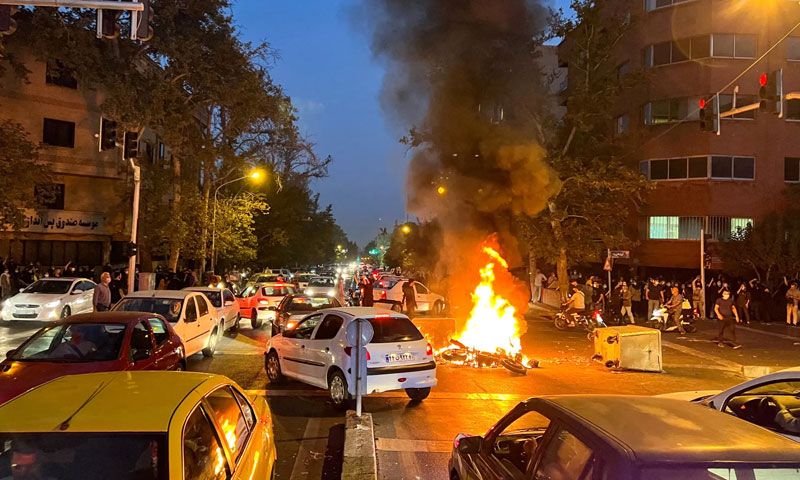
Pakistan Foreign Office has issued a fresh travel advisory urging Pakistani citizens to avoid all non-essential travel to Iran amid widening anti-government unrest across the country. In an official statement released on Saturday, Foreign Office Spokesperson Tahir Andrabi said the advisory was issued purely in the interest of public safety, as the situation inside Iran continues to evolve rapidly. Pakistani nationals currently residing in Iran have been advised to remain extremely cautious, limit movement to essential needs only, and stay alert to local developments. The spokesperson also urged citizens to maintain close contact with Pakistan’s diplomatic missions in Iran and to use emergency helplines whenever assistance is required. The Pakistani embassies in Tehran, Zahidan, and Mashhad have been instructed to remain accessible to citizens during this period of instability. Contact numbers for landline and mobile services have been shared to ensure round-the-clock communication and support. The advisory comes as protests that initially erupted in Tehran last month have now spread across all 31 provinces of Iran, signalling a deepening national crisis. What began as economic anger—particularly among shopkeepers in Tehran’s historic Grand Bazaar over the sharp depreciation of the Iranian rial—has expanded into broader demonstrations against the government. Unlike earlier protest movements, analysts note that the current wave is being driven largely by young men, rather than women and girls who were central to the Amini protests. Observers say this shift reflects a wider base of dissatisfaction within Iranian society. At the same time, Iran’s leadership is facing increasing international scrutiny, while domestically struggling to contain growing unrest. Political analysts argue that the developments point to a widening crisis of legitimacy for the ruling clerical establishment. According to the US-based Human Rights Activists News Agency (HRANA), at least 34 protesters and four members of security forces have been killed so far. The agency also reports that more than 2,200 people have been arrested during the demonstrations, underlining the scale of the unrest and the force used to suppress it. Given the volatile situation, Pakistani authorities have reiterated their call for caution, advising citizens to prioritise safety until conditions stabilise. Embassy Contact Numbers for Pakistani Nationals in Iran Embassy of Pakistan – Tehran☎ +98-21-66-9413-88 / 89 / 90 / 91 (Landline)☎ +98-21-66-9448-88 / 90 (Landline)📱 +98 910 764 8298 (Mobile) Consulate of Pakistan – Zahidan☎ +98 54 33 22 3389 (Landline)📱 +98 904 614 5412 (Mobile) Consulate of Pakistan – Mashhad📱 +98 910 762 5302📱 +98 937 180 7175
Khamenei Blames Iran Unrest on US Influence, Warns of Tougher Crackdown
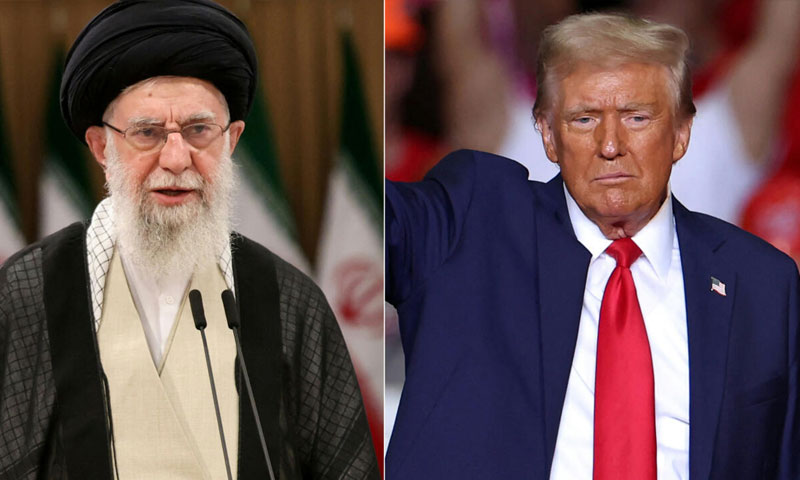
Iran’s Supreme Leader Ayatollah Ali Khamenei on Friday signalled a harder line against ongoing anti-government protests, accusing demonstrators of acting in the interests of foreign powers — particularly the United States — as unrest persisted across several Iranian cities under a sweeping communications blackout. In a short address broadcast on state television, the 86-year-old leader said some protesters were “destroying their own streets to please the president of another country,” a clear reference to Donald Trump. Responding to chants of “Death to America” from the audience, Khamenei warned that the Islamic Republic would not tolerate individuals he described as “mercenaries” working on behalf of external forces. Khamenei also lashed out at Trump directly, urging him to focus on domestic challenges in the United States rather than commenting on Iran’s internal affairs. Iranian officials have repeatedly accused Washington, Israel, and their allies of encouraging instability inside the country. Defiant Rhetoric and Historical Warnings Striking a defiant tone, Khamenei dismissed what he described as threats from Trump, drawing comparisons with historical figures he said were removed from power despite their dominance. He named Pharaoh, Nimrod, Reza Khan, and Mohammad Reza Pahlavi as examples of rulers who, he claimed, fell at the height of their authority — adding that Trump would meet a similar fate. The remarks underscored the leadership’s determination to frame the unrest as a foreign-backed plot rather than a domestic uprising. Protests Continue Despite Blackout The true scale of the demonstrations remains difficult to verify due to extensive internet shutdowns and restrictions on international phone services. However, the unrest is widely seen as the most serious challenge to Iran’s leadership in several years. The protests began on December 28 over rising prices, unemployment, and economic hardship. Since then, they have evolved into broader expressions of political anger, with demonstrators openly challenging the ruling system. Exiled Royal Figure Reappears in Public Discourse The protests have also revived debate over the influence of exiled crown prince Reza Pahlavi, who has urged Iranians to sustain demonstrations. Some rallies reportedly featured chants supporting the former shah — a taboo act in the past that once carried severe punishment — highlighting the depth of public frustration. Scenes of Unrest and Official Response Short video clips shared by activists online showed crowds chanting anti-government slogans around bonfires, with debris scattered across streets in Tehran and other cities. State media later acknowledged the unrest but blamed what it called “terrorist elements” linked to the US and Israel for setting fires and inciting violence, reporting casualties without providing details. Despite official warnings and an increased security presence, protesters were reported to have continued marching into Friday morning, defying authorities as international scrutiny of Iran’s response intensified.
Crude Prices Climb as Venezuelan Oil Export Uncertainty and Iran Unrest Shake Markets
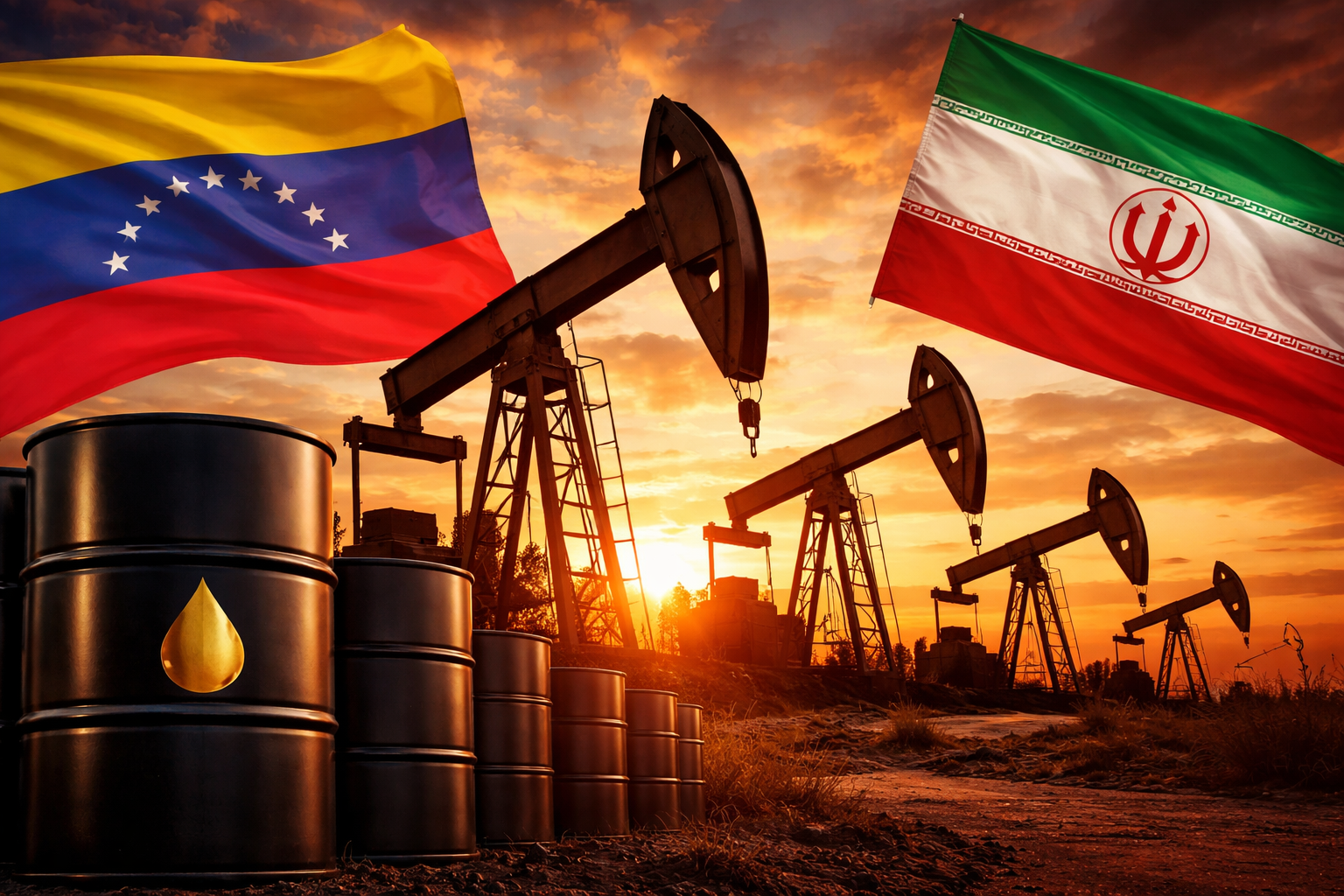
Oil prices climbed for a second straight session on Friday, positioning the market for a third consecutive weekly gain as traders weighed heightened geopolitical risk centered on Venezuela and growing unrest in Iran. Brent crude futures ticked up 0.71% to $62.43 a barrel, while U.S. West Texas Intermediate (WTI) crude rose 0.68% to $58.15 in early European trading. The uptick followed a rebound from recent losses, with Brent on track for about a 2.7% weekly advance and WTI up roughly 1.4% as concerns over future oil supplies intensified. Venezuela in Focus After U.S. Seizure of Maduro Market attention remains sharply focused on Venezuela after the U.S. captured President Nicolás Maduro in a high-profile operation earlier this month. The Trump administration has since signaled it will assert control over Venezuela’s oil production and exports, offering storage crude to global buyers and negotiating with U.S. traders including Chevron, Vitol, and Trafigura to move Venezuelan barrels. Traders say uncertainty about how stored Venezuelan crude will be sold — and whether inventories will be released quickly into the market — is keeping a geopolitical risk premium on oil prices. Iran Unrest Adds to Supply Risk Alongside Venezuelan tensions, unrest across Iran is adding to concerns about potential production disruptions. Nationwide protests over economic conditions have triggered internet blackouts and raised questions about the stability of Iran’s oil output. Analysts caution that unless Iran’s situation worsens significantly, the market’s rebound may prove limited, especially amid other factors weighing on crude. Oversupply and Inventories Still Key Bullish Check Despite geopolitical pressures, global oil inventories remain ample — a factor that could cap further gains in prices. Abundant supply from OPEC+ producers and rising stockpiles in consuming nations continue to exert downward pressure on crude markets. Energy analysts note that while headline risks are rising, structural oversupply and slower demand growth — driven by efficiency gains, alternative energy sources, and evolving consumption patterns — are keeping a lid on a more dramatic price surge. What’s Next for Oil Markets? Traders say the next major market catalysts will include: clarity on how Venezuelan crude will be marketed and delivered, further developments in Iran’s domestic unrest, and U.S. economic data related to oil demand and inventories. Absent significant escalation in supply disruptions, analysts believe the recent rebound may struggle to evolve into a sustained breakout rally.
