
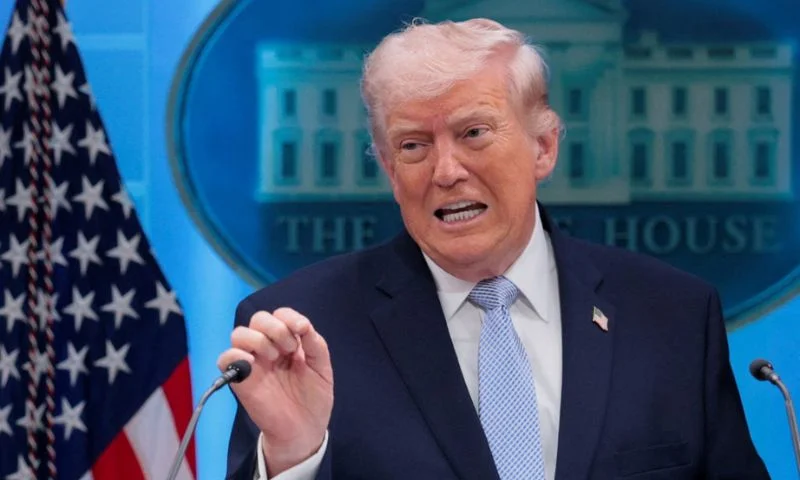
US President Donald Trump has indicated that he may travel to Pakistan as early as this weekend for a fresh round of negotiations with Iran, highlighting Islamabad’s growing role as a key diplomatic hub in efforts to de-escalate tensions in the Middle East. Speaking to reporters, Trump said a second round of talks with Iranian officials “could be happening over the next two days,” adding that Washington is “more inclined” to hold the next phase of negotiations in Pakistan. “It’s more likely, you know why? Because the Field Marshal is doing a great job. He’s fantastic, and therefore it’s more likely that we go back there,” Trump said, praising Pakistan’s Army Chief Field Marshal Asim Munir for facilitating dialogue. JUST IN: President Trump said he could travel to Islamabad to seal a deal, praising Pakistan’s leadership and signaling he “might go” if an agreement is signed there: “The field marshal has been great. The Prime Minister has been really great in Pakistan so I might go.”@pdoocy pic.twitter.com/W2CwvjutfC — Fox News (@FoxNews) April 16, 2026 Islamabad emerges as diplomatic center Pakistan has recently positioned itself at the center of mediation efforts between the United States and Iran, hosting a first round of direct talks earlier this month. The negotiations, held in Islamabad, marked a rare high-level engagement between the two sides but ended without a formal agreement after more than 20 hours of discussions. Officials from Pakistan, Iran and the United States have suggested that delegations could reconvene in Islamabad over the weekend, although no final schedule has been confirmed. The White House has also signaled that Pakistan remains a preferred venue for continued dialogue, citing its role in maintaining communication channels between both sides and helping sustain a fragile ceasefire. Talks linked to fragile ceasefire The renewed diplomatic push comes amid a delicate ceasefire between Washington and Tehran following weeks of heightened tensions. The ceasefire, which is set to expire later this month, has increased urgency for both sides to reach a negotiated understanding. Trump struck an optimistic tone about the talks, saying “something could be happening over the next two days,” suggesting momentum is building toward another round of negotiations. However, key issues remain unresolved, particularly disagreements over Iran’s nuclear program and broader regional security concerns. The previous round of talks in Islamabad ended without consensus, with both sides maintaining firm positions. Pakistan’s expanding diplomatic role Pakistan’s mediation efforts have drawn recognition from international actors, including the United Nations, which has encouraged continued dialogue. UN Secretary-General Antonio Guterres described it as “highly probable” that talks would resume, emphasizing the need for sustained engagement to prevent further escalation. Analysts say Islamabad’s role reflects a broader shift in regional diplomacy, with Pakistan acting as a neutral intermediary capable of engaging both Washington and Tehran. The country has also undertaken wider diplomatic outreach, engaging Gulf states and other regional stakeholders to support a negotiated resolution. Uncertainty remains despite momentum While momentum appears to be building, uncertainty remains over the timing and outcome of the next round. Officials caution that even if talks resume soon, reaching a comprehensive agreement could take time given the complexity of the issues involved. Still, Trump’s remarks about a possible visit to Pakistan underline the country’s growing importance in global diplomacy. As preparations continue, Islamabad is once again expected to host high-stakes negotiations that could shape the trajectory of one of the most closely watched geopolitical developments of the year.
21 Hours, No Deal — What Really Happened in US-Iran Talks in Islamabad?
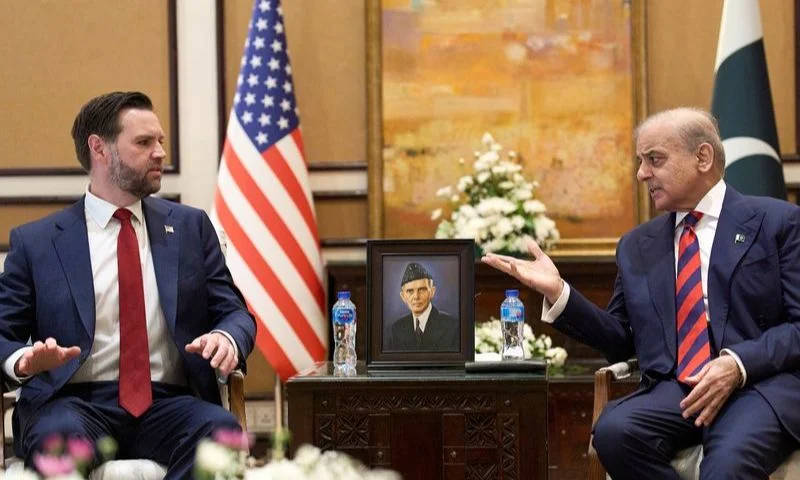
High-stakes face-to-face talks between the United States and Iran in Islamabad ended without a breakthrough after nearly 21 hours of negotiations, underscoring deep divisions but also highlighting Pakistan’s emerging diplomatic role in one of the world’s most volatile crises. The negotiations, described as historic, brought senior officials from Washington and Tehran to the table following weeks of military escalation that had raised fears of a wider regional conflict. While no agreement was reached, both sides signaled willingness to continue dialogue. US Vice President JD Vance, who led the American delegation, acknowledged the difficulty of the talks but praised Pakistan’s efforts in facilitating the dialogue. “These were long and tough discussions,” Vance said, adding that while no deal was finalized, “we appreciate Pakistan’s role in bringing both sides together.” Long talks, limited progress Officials familiar with the discussions said the negotiations focused on a range of contentious issues, including Iran’s nuclear programme, sanctions relief and security guarantees in the Strait of Hormuz. Despite extended sessions lasting nearly a full day, both sides remained far apart on key demands. Iranian officials reportedly pushed for immediate sanctions easing, while the US delegation emphasized stricter oversight of Tehran’s nuclear and missile activities. The talks were held in Islamabad under tight security, reflecting both the sensitivity of the discussions and the significance of Pakistan’s role as host. Diplomats described the meeting as a rare moment of direct engagement after years of indirect negotiations. According to officials, the absence of a deal does not signal failure but rather the complexity of the issues at hand. Both sides agreed to keep communication channels open, raising the possibility of further rounds in the coming weeks. Pakistan’s role gains global attention Pakistan’s mediation efforts drew international attention, with analysts noting that Islamabad’s ability to bring the two adversaries to the same table marked a significant diplomatic achievement. Prime Minister Shehbaz Sharif had earlier emphasized Pakistan’s commitment to peace, positioning the country as a neutral facilitator amid escalating tensions in the Middle East. Diplomatic sources said Pakistan played a key role in coordinating logistics, backchannel communication and security arrangements, enabling both delegations to engage directly in a controlled environment. Observers say this development reflects a broader shift in Pakistan’s foreign policy, with increasing emphasis on mediation and regional stability. Fragile ceasefire, uncertain path ahead The Islamabad talks come after a fragile ceasefire that followed weeks of confrontation involving missile strikes and heightened tensions across the region. While the truce has held for now, experts warn it remains vulnerable to collapse without a comprehensive agreement addressing underlying disputes. Analysts say the lack of an immediate breakthrough highlights the challenges facing negotiators, particularly given the high stakes and entrenched positions on both sides. At the same time, the willingness to engage directly is being seen as a positive sign. Diplomats note that even inconclusive talks can help build trust and lay the groundwork for future agreements. As global attention remains fixed on the Middle East, the Islamabad meeting may prove to be an important step in a longer diplomatic process, even if immediate results remain elusive.
