


A viral post claiming that a young woman earned enough through TikTok Live to buy a Rs5 million Honda Civic has stirred debate over social media’s influence on youth. The controversy widened after Pakistan Muslim League-Nawaz MPA Hina Parvez Butt accused creators of spreading “shamelessness” and “corrupting” children. Read More: Five Ways to Reduce Children’s Screen Time Without Arguments The post on X carried screenshots from a street interview and a transcript of the woman’s answers. Her financial claims have not been independently verified. Woman Claims TikTok Live Funded Rs5 Million Civic Asked about her work, income and bank balance, the woman replied, “I do TikTok Live,” and said she had 80,000 subscribers. She claimed TikTok had transformed her finances and helped her purchase a Rs5 million Honda Civic. “I’m not that famous yet, I’m just getting there,” she said. ٹک ٹاک لائیو پر جتنی بے حیائی پھیلاؤ اتنے پیسے کماؤ۔ ٹک ٹاک لائیو میں جتنا گند یہ لوگ مچاتے ہیں اللہ کی پناہ۔ بدقسمتی سے بچوں اور نوجوانوں کے یہ لوگ ہیرو ہیں، اب ہر کوئی راتو رات امیر ہونا چاہتا ہے، ہر کوئی شارٹ کٹ چاہتا ہے۔ سوشل میڈیا کے جتنے فوائد اتنے نقصانات بھی ہیں، سب سے… https://t.co/Xverf0hHnk— Hina Parvez Butt (@hinaparvezbutt) July 19, 2026 The woman also described her clothing and accessories. She claimed she wore Rs8,000 trousers and a Rs3,000 shirt while carrying a Rs50,000 handbag. She added that her bank account held millions of rupees. “The most expensive thing I own right now is my bank card,” she said. The post then targeted motivational speakers and entrepreneurship influencers. “After seeing all this,” it read, “I think of Qasim Ali Shah, Azad Chaiwala, Tanveer Nandla, Hisham Sarwar and Rehan Allahwala, who spend all day motivating young people, giving them business ideas and encouraging them to learn freelancing skills.” Read More: Which Countries Are Banning Social Media for Children? The Growing List It added: “Someone should tell them that the younger generation has now chosen TikTok Live over skills and degrees, because that’s where the money is.” Hina Parvez Butt Warns of Harm to Youth Reposting the claim, Hina wrote, “The more shamelessness you spread on TikTok Live, the more money you make.” “The filth these people create on TikTok Live. God forbid,” she added. The Punjab Assembly member said creators had become role models for young audiences. “Unfortunately, these are the people our children and young people look up to as heroes,” she wrote. “Now everyone wants to get rich overnight. Everyone is looking for a shortcut,” Hina said. She acknowledged that social platforms create opportunities but warned against ignoring their risks. “Social media has as many harms as it does benefits,” she wrote. Read More: Survey Shows Public Support for 5% Tax on Social Media Creators “The most toxic of all are family vloggers and TikTok Live streamers, who are corrupting our children,” she concluded. TikTok says eligible creators can earn through LIVE by collecting virtual Gifts and offering subscriptions. Viewers purchase Gifts, while creators may receive rewards linked to them. DataReportal said TikTok’s advertising tools indicated 79.9 million adult users in Pakistan in late 2025. That represented 54.6 percent of the country’s adult population. The exchange highlights a growing cultural divide. Critics believe TikTok Live rewards spectacle and shortcuts. Supporters see livestreaming and content creation as legitimate income sources when traditional opportunities remain limited.
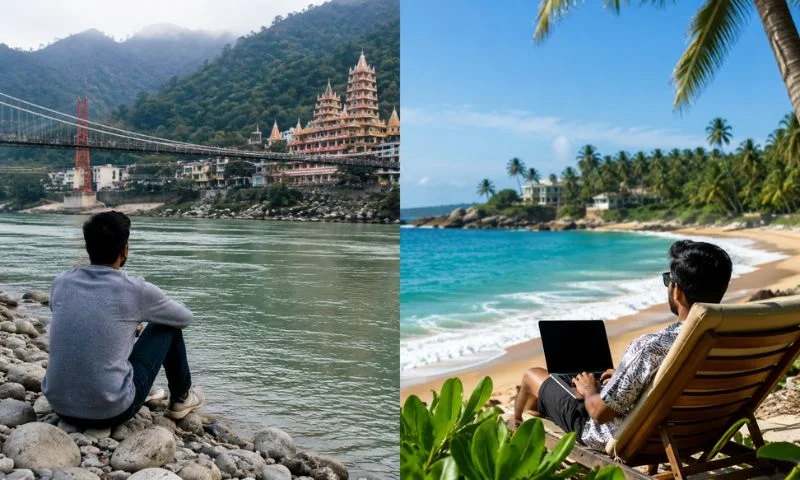
Rising Hotel Prices Push Indian Traveler to Book Sri Lanka Instead
A social media post comparing the cost of traveling to Rishikesh with a holiday in Sri Lanka has sparked fresh debate over the rising cost of domestic tourism in India. The discussion began after Indian content creator Paritsh Sharrma shared an experience involving a friend who changed his travel plans after comparing hotel and flight prices. According to Sharrma, his friend initially planned to visit Rishikesh in Uttarakhand but reconsidered after discovering that hotel prices had climbed significantly. “A friend was going to Rishikesh for a trip. Checked decent hotels, ₹9K–15K per night. Flights from Mumbai to Delhi were ₹7K–8K one way,” Sharrma wrote on X. He said the overall travel cost prompted his friend to look at international destinations instead. After comparing options, the traveler reportedly booked a holiday in Sri Lanka, where he found luxury accommodation at a lower price. “On the same budget, he booked Sri Lanka instead. Got a 5-star sea-facing hotel for ₹3K–5K, better value for money, cleaner air, more peaceful and tourism friendly,” Sharrma wrote. He concluded his post by questioning the affordability of domestic tourism. “Indian tourism is getting too expensive for what it offers. If this continues, the country will lose appeal as people find better value elsewhere.” The claims in the post reflect one traveler’s experience and have not been independently verified. Travelers Share Mixed Reactions The post quickly gained traction, with many users sharing similar experiences while others defended India’s tourism industry. One user argued that domestic tourism has become more expensive because demand surged after the Covid-19 pandemic. “Domestic Tourism has skyrocketed post Covid. That is what is causing higher prices. But demand still keeps growing despite rising prices. But Sri Lanka would be a good option for those looking for a good experience on a far more affordable budget,” wrote X user Aviraj Banerjee. Another traveler claimed he spent nearly ₹1.5 lakh on a last-minute trip to Rishikesh for three people. Read More: Viral Video Reveals Disgusting Indian Hotel Practices “I spent 1.5 lakhs for 3 people from Mumbai to Rishikesh round trip. I booked last minute and went for my yoga teacher training so didn’t have much choice. But dad did mention that we could have gone anywhere in Asia in that price,” the user wrote. Others challenged the comparison. “Rishikesh is not Sri Lanka. Cost of hotel room in Mumbai is not same as cost of hotel room in Kolkata. So that comparison is wrong. If he wanted to save money then better stay at home,” one user commented. Another questioned the hotel prices mentioned in the viral post. “Which 5 star sea facing at ₹3000??? I had to pay ₹15000 per night for the cheapest room at ITC Ratnadipa this month,” the user wrote. Tourism Industry Faces Growing Price Sensitivity The debate comes as India’s tourism sector continues to recover strongly after the pandemic. Domestic travel has reached record levels, pushing demand and accommodation prices higher in many popular destinations, especially during peak seasons. Meanwhile, destinations such as Sri Lanka have aggressively promoted international tourism through competitive hotel rates, simplified visa policies and attractive travel packages aimed at visitors from neighboring countries. Travel experts say travelers increasingly compare domestic and overseas vacations before making bookings. Lower airfares, online travel platforms and promotional hotel deals have made short international holidays more accessible than ever. Although one viral post does not reflect the entire tourism market, it has reignited discussion about affordability, value for money and the future competitiveness of India’s domestic travel industry.
