

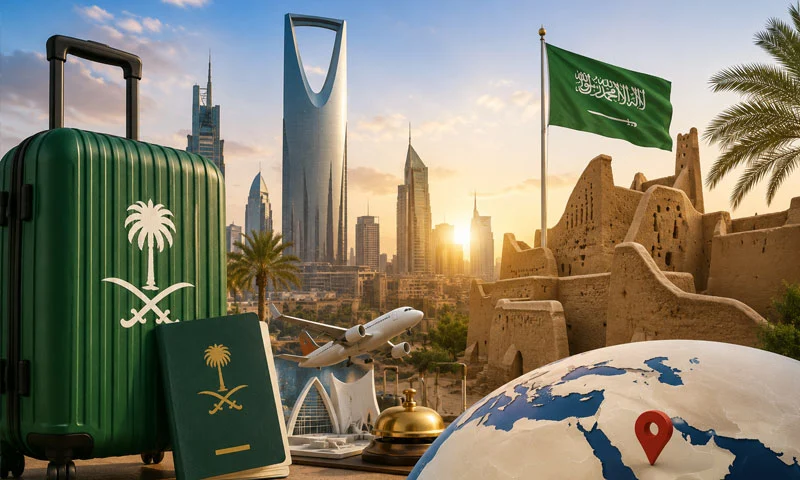
Saudi Arabia has introduced a new Package Visa initiative that allows eligible travelers to obtain a tourist visa through a single integrated travel package, marking another step in the Kingdom’s effort to simplify international travel under Vision 2030. The pilot programme combines flight bookings, hotel reservations and electronic tourist visa processing into one digital transaction. Travelers no longer need to submit a separate tourist visa application after purchasing an approved travel package. Read More: Saudi Arabia’s Vision 2030 Gains Global Attention at the UN According to the Saudi Ministry of Tourism, the service is currently available to visitors from Pakistan, Jordan, Egypt, India, Bangladesh, Indonesia and Mexico. Authorities said they will gradually expand the programme to additional nationalities in future phases. The initiative forms part of Saudi Arabia’s broader tourism strategy to attract more international visitors and diversify the economy beyond oil. Visa issued within 48 hours Under the new system, travelers must purchase an approved package through an authorized travel provider. After completing the booking and payment, they receive their tourist visa, travel insurance and other travel documents electronically. The Ministry of Tourism said the electronic visa is issued within 48 hours, removing the need to visit a Saudi embassy or complete a standalone visa application. Currently, the government has accredited Reserval and Almosafer as the first providers authorized to offer the Package Visa service. Only licensed travel companies with digital booking platforms and round the clock customer support qualify to participate in the programme. Each travel package must include a confirmed return flight, accommodation at a Ministry of Tourism licensed hotel with a minimum four star rating and electronic tourist visa processing. Read More: Saudi Arabia, Pakistan Sign Deal to Build Cricket Stadium in Jeddah Packages start from SR4,000 per adult for the first two days. Travelers pay an additional SR1,000 for every extra day. They can also add optional services such as event tickets, guided tours and tourism experiences. The Package Visa is valid for three months and allows a single entry into Saudi Arabia. Visitors can stay for a minimum of two days and a maximum of 88 days. Part of Saudi Arabia’s tourism expansion The Ministry of Tourism clarified that the Package Visa does not include Umrah arrangements or services in Makkah and Madinah. However, visitors may travel throughout Saudi Arabia after arrival, including both holy cities, provided they comply with tourism regulations. If travelers cancel the package after visa issuance, the associated visa is automatically revoked. The programme supports Saudi Vision 2030, which seeks to make tourism one of the Kingdom’s leading economic sectors. Read More: Saudi Arabia Uses 19,300-Ton Cooling System at Prophet’s Mosque The Ministry of Tourism developed the initiative in partnership with the Ministries of Foreign Affairs and Interior, together with the Insurance Authority. It complements existing entry options, including the tourist eVisa, visa on arrival and the Stopover Transit Visa. Saudi Arabia welcomed more than 29 million inbound visitors in 2025, reflecting rapid growth in its tourism sector as the Kingdom continues investing in infrastructure, entertainment, heritage sites and large scale projects designed to attract global travelers. Officials believe the new Package Visa will further simplify travel planning while encouraging longer stays and higher visitor spending.
Saudi Arabia’s Vision 2030 Gains Global Attention at the UN
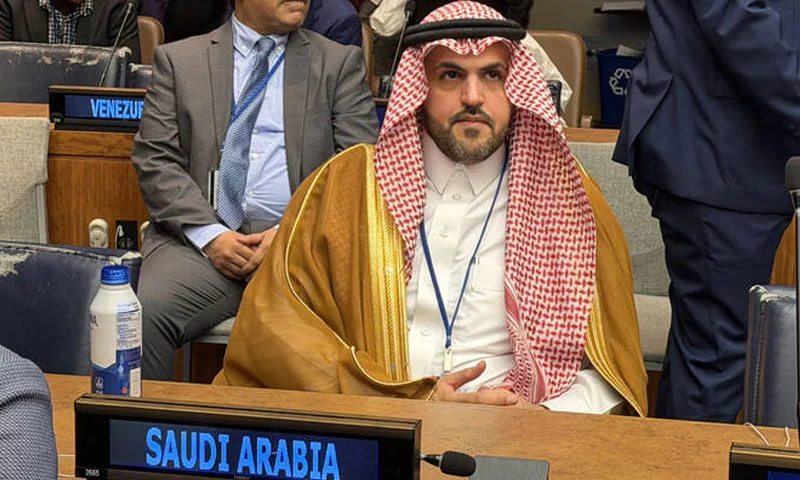
Saudi Arabia has told the United Nations that investing in human capital and localizing knowledge are the foundations of sustainable industrialization as the Kingdom highlighted the achievements of Vision 2030 during a high-level session on the UN Sustainable Development Goals. The remarks came during the High Level Political Forum on Sustainable Development at UN Headquarters in New York, where member states are reviewing progress toward the 2030 Agenda. Saudi Arabia used the forum to outline reforms aimed at strengthening innovation, infrastructure and industrial competitiveness under Sustainable Development Goal 9 (SDG 9). Speaking on behalf of the Kingdom, Saad bin Abdul Ghani Al Ghamdi, Deputy Minister for Planning and Development at the Ministry of Education, said sustainable industrial development begins with investing in people. “Pioneering and the sustainability of industrialization are based on investment in human capital and localizing knowledge as the basic engine for increasing productivity and competitiveness in order to face increasing international challenges,” Al Ghamdi said. He noted that Saudi Arabia has pursued major reforms through Vision 2030, the national transformation program launched in 2016 to diversify the economy and reduce dependence on oil. Vision 2030 drives innovation and digital transformation Al Ghamdi said Saudi universities are now ranked among the world’s leading institutions in artificial intelligence and that Saudi students continue to perform strongly in international competitions. He added that these investments have produced measurable results across several sectors. “This is our effort to invest in human capital, and this has led us to achieve many advances, particularly in electronic governance, in which we are ranked 10th worldwide,” he said. Saudi Arabia has steadily expanded digital government services under Vision 2030. According to the United Nations E Government Survey, the Kingdom has climbed significantly in global digital governance rankings in recent years through investments in technology, public services and digital infrastructure. Al Ghamdi also said the government has introduced several voluntary reporting mechanisms, including sustainability reports for the education sector, to strengthen transparency and prepare institutions for future economic and technological demands. The presentation took place during the forum’s session titled “SDG 9 and interlinkages with other SDGs: Industry, innovation and infrastructure.” UN highlights need for stronger global cooperation The High Level Political Forum is the United Nations’ main platform for monitoring progress on the 17 Sustainable Development Goals adopted in 2015. This year’s meeting runs from July 7 to July 15 under the Economic and Social Council. Delegates are conducting detailed reviews of SDG 6 on clean water and sanitation, SDG 7 on affordable and clean energy, SDG 9 on industry, innovation and infrastructure, SDG 11 on sustainable cities and communities, and SDG 17 on global partnerships. Thirty six member states, including Saudi Arabia, are also presenting Voluntary National Reviews that outline progress and remaining challenges. UN organizers describe SDG 9 as the “production engine” of the 2030 Agenda because it supports economic growth, poverty reduction, climate action and job creation through resilient infrastructure, industrial development and innovation. However, the UN warned that global progress remains uneven with fewer than four years left to meet the 2030 deadline. While investment in research, development and information technology continues to grow, many countries still face shortages in transport, energy and digital infrastructure. Limited financing for small and medium sized enterprises also remains a major obstacle to sustainable industrial growth. The UN has called for stronger international cooperation, increased investment, integrated policy planning and greater support for developing countries to accelerate progress toward achieving the Sustainable Development Goals by 2030.
Saudi Arabia Cuts Instant Work Visas for Young Businesses to Just Five
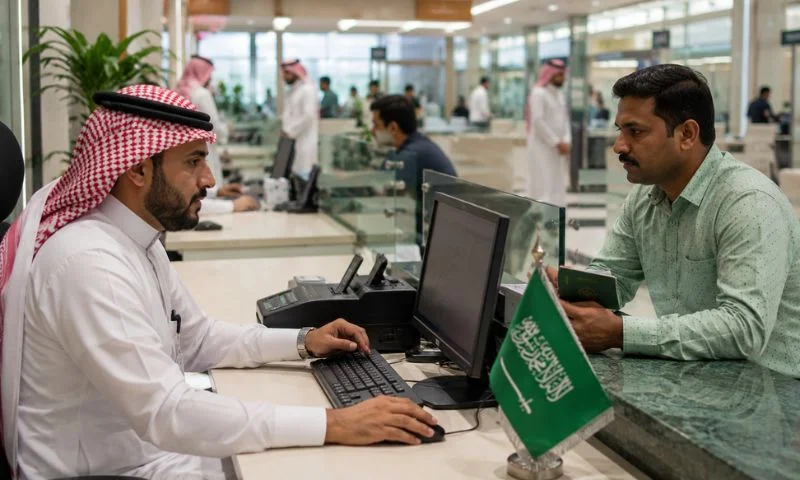
Saudi Arabia has reduced the number of instant work visas available to newly established businesses, introducing stricter limits as authorities continue efforts to regulate recruitment and strengthen labour market compliance. The Ministry of Human Resources and Social Development announced the change through its Qiwa platform, which manages labour market services and employment-related procedures across the Kingdom. According to Qiwa, businesses that have operated for less than two years can now obtain a maximum of five instant work visas. “Businesses that have been operating for less than two years will be eligible for a maximum of five instant visas.” The platform said companies that have operated for more than two years can receive up to 50 instant visas. “For companies older than two years, the limit rises to 50 visas in a single application or multiple applications submitted within the same week at the entity level.” The move forms part of Saudi Arabia’s broader labour market reforms under Vision 2030. Authorities continue to encourage private-sector growth while increasing compliance with employment regulations and Saudisation targets. Saudisation performance linked to visa allocations Qiwa also outlined special provisions for businesses enrolled in the Establishment Programme. The platform said eligible businesses will initially receive two visas. Additional allocations will depend on improvements in Saudisation performance. “The platform said businesses enrolled in the Establishment Programme and meeting the required criteria would initially receive two visas, with additional visa allocations available after increasing their Saudisation rates.” Saudi Arabia’s Saudisation programme, known as Nitaqat, aims to increase the participation of Saudi nationals in the private sector. Companies receive classifications based on their employment of Saudi citizens, ranging from red and yellow categories to green and platinum levels. Under the latest rules, employers must maintain at least a medium green classification or higher to qualify for overseas recruitment through instant visas. The Kingdom has expanded labour market reforms in recent years. These reforms seek to balance foreign workforce requirements with opportunities for Saudi citizens. Ten conditions for recruiting foreign workers Qiwa also detailed 10 requirements that companies must meet before recruiting non-Saudi workers from abroad. The conditions include maintaining active business status and holding valid commercial registration documents. Employers must also maintain valid work permits for existing employees and comply with Saudisation requirements. Additional conditions require compliance with the Wage Protection System and sufficient balances on government platforms such as Absher and Muqeem. Companies employing 10 or more workers must complete annual self-assessment requirements. Businesses must also register employee work locations through the Qiwa platform. Furthermore, employers must be at least 18 years old and maintain sufficient recruitment quota balances based on the visa category requested. The latest measures highlight Saudi Arabia’s continued focus on regulating labour market practices while supporting sustainable business growth and workforce development.

Saudi-Backed Mega Development Plan Could Reshape Karachi
Saudi Arabia is exploring the establishment of a crypto and blockchain zone in Karachi as part of a broader investment initiative that could reshape Pakistan’s commercial, financial and maritime landscape. The proposal forms part of a wider cooperation framework discussed during a visit by a Saudi delegation to Pakistan. Officials from both countries are also examining opportunities in energy, port infrastructure, digital finance and real estate development. The move comes as Pakistan accelerates efforts to regulate cryptocurrency trading and digital assets. The government has recently signalled support for a formal regulatory framework aimed at attracting foreign investment and promoting financial innovation. At the centre of the proposed collaboration is a Memorandum of Understanding signed between the Karachi Port Trust (KPT), Saudi Business Council-Najd Gateway Holding Company, Arif Habib Dolmen REIT Management Limited and the Pakistan Corporate Consortium. According to officials, the project will transform a 140-acre KPT site on MT Khan Road into a modern maritime and commercial district. Crypto, Banking and Digital Finance in Focus Sources familiar with the proposal said Pakistan has presented several flagship projects to Saudi investors. Among them is a dedicated crypto and blockchain zone designed to support digital asset businesses, blockchain innovation and emerging financial technologies. Officials have also proposed a digital banking park, Islamic finance centre and modern banking units as part of the development. The initiative aligns with Pakistan’s broader push to modernise its financial sector and attract technology-driven investment. Policymakers have increasingly highlighted blockchain technology, fintech and digital banking as potential drivers of economic growth. The project could also strengthen Pakistan’s position as a regional technology and financial hub if it secures regulatory approvals and investment commitments. At the same time, Saudi Arabia continues to expand its footprint in emerging technologies under its Vision 2030 diversification strategy, which seeks to reduce reliance on oil revenues and invest in innovation-driven sectors. Maritime Hub Planned for Karachi Waterfront The proposed development extends beyond financial technology. Pakistan has also suggested creating a marine technology and logistics zone, smart port integration facilities and digital customs and shipping services. Officials are additionally considering research and development initiatives focused on maritime software solutions. In healthcare and education, the proposal includes international hospitals, a medical university and a maritime and trade law school. Developers have also outlined plans for skyscrapers, luxury hotels, corporate headquarters and a convention centre. Minister for Maritime Affairs Muhammad Junaid Anwar Chaudhry described the project as a significant opportunity for economic transformation. “This strategic collaboration is a transformative opportunity to unlock the full potential of Karachi Port’s waterfront assets and position Pakistan as a regional hub for maritime commerce and investment,” he said. The minister added that authorities would fulfil all legal and regulatory requirements before moving forward. Officials said Saudi investors also expressed interest in wider maritime cooperation, including port infrastructure projects. The discussions come as Pakistan seeks greater foreign investment in strategic sectors. Saudi Arabia has already considered investments in mining, energy and infrastructure projects, while Islamabad has proposed an oil refinery and strategic oil reserves at Gwadar. If realised, the Karachi waterfront initiative could become one of the largest Saudi-backed urban development projects in Pakistan in recent years.
